Showing posts with label teen. Show all posts

Wednesday, June 6, 2012

Katniss' Allies


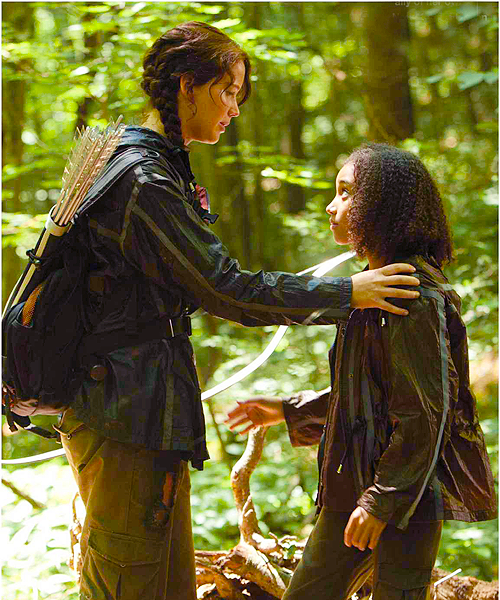
Of course you’ve seen the The Hunger Games movie. The Hunger Games is your favorite book; you’ve read it a dozen times. You’ve read Catching Fire and Mockingjay. Hell, you’ve read The Hunger Games Companion, and The Girl Who Was On Fire: Your Favorite Authors On Suzanne Collins’ Hunger Games Trilogy, and even The Unofficial Hunger Games Cookbook. But it’s not enough! What will you do without gritty, futuristic worlds stricken by environmental disasters and world wars? What will you without a revolution to bring down a sly Big Brother-like government? What will you do without a stubborn, sarcastic, tough-as-nails but secretly tenderhearted heroine to root for? Don’t worry! You’re in luck! There’s a whole new generation of rebel girls (and a few rebel boys) on the bookshelves, and they’re not going down without a fight.

Blood Red Road by Moira Young, 2011, Margaret K. McElderry Books (Teen Science Fiction). 


Eighteen-year-old Saba’s life is a hard one—eking out an existence on a drought-stricken homestead in a post-apocalyptic wasteland. But with her twin brother Lugh at her side, she can bear anything. So when a dust storm brings four horsemen who kidnap Lugh, Saba rises to the challenge with a ferocity that surprises even herself. Abandoning her home—but with her annoying kid sister in tow—Saba enters a desolate wilderness that is filled with enemies. Quickly captured and imprisoned, Saba earns the sobriquet “Angel of Death” when she’s forced to compete in cage matches for a maniacal ruler who styles himself after the Sun King and keeps his minions under control with drugs and violence. But when a rebel force of girl warriors and a ne’er-do-well fellow fighter named Jack offer Saba a chance to escape, she must decide if challenging her world’s order is worth the cost of losing Lugh forever. Like Katniss of The Hunger Games, Saba is at times surly, churlish, and single-minded. But, like Katniss, there are also hidden depths to Saba’s determination and untapped reserves of daring strength. With her direct, rough-and-tumble narration and nonstop intensity, readers will follow Saba to the ends of the earth and back.

 Dustlands Trilogy
1.) Blood Red Road
2.) Rebel Heart (released October 2012)
3.) to be announced

Enclave by Ann Aguirre, 2011, Feiwel and Friends Books (Teen Science Fiction).


When the world ended, the people left behind moved underground. Now they survive in barricaded enclaves below the streets, focused on three simple things: breeding, building, and hunting. When they turn sixteen, kids cease to be nameless brats and become working members of this desperate society. Deuce becomes a Huntress, specially trained to find food outside the enclave—and to fight the human-like, flesh-eating Freaks who roam the abandoned tunnels and sewers. Partnered with the enigmatic Fade, who came to the enclave as a young boy having survived on his own, Deuce begins to suspect that the Freaks are no longer the mindless monsters they used to be—they’re getting smarter. But the enclave elders dismiss Deuce’s reports, and Deuce is banished to keep her rumors from spreading. Unexpectedly, Fade agrees to go with Deuce. He claims he once lived Topside, and that the world above is not the blighted ruin the elders say it is. So Deuce leaves the only world she’s ever known for a whole new set of dangers in a world where nothing is as it seems. Enclave is the first of a planned trilogy and like The Hunger Games, it’s a page-turner with the first gritty volume hinting at more chaos to come.

 Razorland Trilogy
1.) Enclave
2.) Outpost (released September 2012)
3.) to be announced

Divergent by Veronica Roth, 2011, Katherine Tegen Books (Teen Science Fiction).


Beatrice Prior has lived her whole life in Abnegation, where you always put the needs of others before your own. But when Beatrice turns sixteen, she will be tested and have the option to join one of the other factions that her city is divided into—Amity (peace), Erudite (intelligence), Candor (truth), or Dauntless (bravery). The motto of this brave new world is “faction before blood,” and individuals are expected to dedicate their lives to the virtue their faction promotes. So Beatrice is shocked when her scores show that she could belong to more than one faction. She is labeled Divergent, and like Katniss in The Hunger Games, Beatrice must play a dangerous game with the authorities to minimize the danger she’s in. Dauntless seems the best place for Beatrice—now calling herself as Tris to match the punk stylings of her new faction—to find answers. As she and the other Dauntless initiates undergo a series of trials to prove their worth, Tris finds it impossible to forget her life in Abnegation, especially since many Dauntless want to trade cruelty for courage. Throw in a romance with a handsome instructor and growing rivalries between factions, and Divergent becomes the first of a hard-hitting, unpredictable new dystopian trilogy.

Divergent Trilogy
1.) Divergent
2.) Insurgent
 3.) to be announced

Matched by Ally Condie, 2010, Dutton Books (Teen Science Fiction).
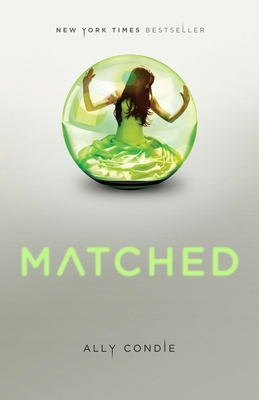


Like The Hunger Games, Matched begins with an annual ceremony at which a futuristic society’s young people are singled out for a new future. Katniss and her fellow twelve-to-eighteen-year-olds face the prospect of a forced fight to the death. Seventeen-year-old Cassia Reyes, however, is attending her Match Banquet. Her Society’s leaders, using a careful system of probability and statistical odds, have matched Cassia with her ideal future husband. Cassia is thrilled and excited—more so when her Match turns out to her best friend, Xander. But then something unusual happens. The face of a different boy altogether flashes across Cassia’s screen. His name is Ky, he’s been labeled an Aberration, and Cassia is told the whole thing is a computer glitch and not to give it a second thought. But for a naturally curious girl with a soft spot for old artifacts and banned literature, that’s much easier said than done. Soon the cracks in the facade of the seemingly perfect Society begin to show, and Cassia faces some crucial choices. With a love triangle to rival that of Katniss, Peeta, and Gale, Matched challenges the very notion of freedom of choice. It’s also immensely romantic, dramatic, and action-packed. Have the sequel close at hand.

Matched Trilogy
1.) Matched
2.) Crossed
3.) Reached (released November 2012)

Legend by Marie Lu, 2011, G.P. Putnam's Sons (Teen Science Fiction).


June Iparis is the opposite of Katniss Everdeen—while Katniss is a lowly citizen of Panem’s poverty-stricken District Twelve, June is the genius daughter of the Republic, a highly-trained soldier who is dedicated to the cause of putting down the rebellion. It’s the boy Day who most resembles Katniss. He’s the Republic’s most-wanted criminal, a street-wise justice fighter, a thorn in the side of the elite military officials. But when Day is accused of killing June’s brother, she vows revenge. And when the two finally meet, sparks fly—and supposedly known truths begin to crumble. Like Katniss and Peeta in The Hunger Games, June and Day form an unexpected alliance that begins to uncover secrets about the series of plagues that annually infest the poorest neighborhoods, the Trials that all ten-year-old citizens are required to take, and the ongoing war between the Republic and the outlying Colonies. June and Day tell their stories in distinct voices through alternating chapters, and there’s plenty of action, wit, mystery, and intriguing world-building. Star-crossed lovers who take on a totalitarian government? Hunger Games fans are practically guaranteed to be lining up for Legend and its upcoming sequels. 

Legend Trilogy
1.) Legend
2.) Prodigy (released January 2013)
3.) to be announced

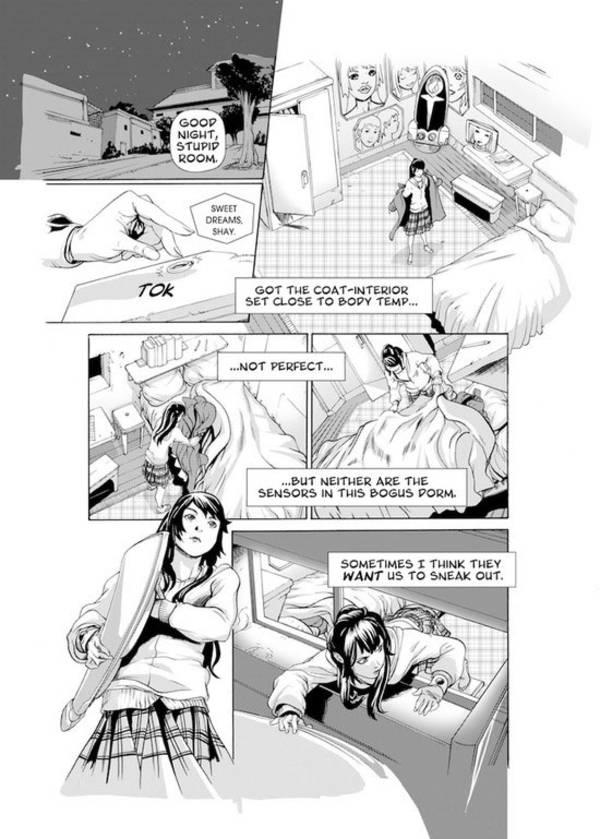
Uglies: Shay’s Story by Scott Westerfeld and Devin Grayson, illustrated by Steven Cummings, 2012, Del Ray Books (Teen Science Fiction/ Graphic Novel).


The first book of the Uglies series was published in 2005, three years before The Hunger Games. But a graphic novel version has been released, and the new story packs just as much punch. In the original Uglies, Tally eagerly waits her sixteenth birthday, when, through the miracle of her society’s high-tech plastic surgery, she will become beautiful. As a Pretty, her only goal in life will be the pursuit of a good time. But then Tally’s best friend Shay unexpectedly refuses her makeover, running off instead to the Smoke, an outside colony of Uglies. If Tally doesn’t spy on the Smoke, she won’t be allowed to become Pretty. The graphic novel version tells Shay’s side of the story—her attraction to the prankish Uglies gang calling itself “The Crims,” her growing dissatisfaction with the status quo, her friends’ desertion to Pretty Town, and her persuasive (except to Tally) arguments against becoming Pretty. Shay is a born rebel—much like a certain tribute from District 12—and the story from her point of view becomes something darker, more active, with the consequences of the characters’ actions even more significant. The manga-like artwork provides a light touch to a story that becomes more engrossing with each new image.

Girl in the Arena by Lise Haines, 2009, Bloomsbury Books (Teen Science Fiction).


In the not-too-distant future, society copes with worldwide war and constant violence by embracing an extreme pastime: the ancient sport of the Gladiator. The corporate Gladiator Sports Association enforces a strict code of laws and rules—so strict that they extend beyond the arena to a Gladiator’s earnings, property, and family. So when eighteen-year-old Lyn’s stepfather Tommy is killed in a match, the GSA requires that she marry his opponent, Uber, or her family will lose everything. Lyn has grown up immersed in Glad culture (her father and all six of her stepfathers met their end in the arena) but she has no intention of becoming a traditional Glad wife. Instead, she breaks all convention and challenges the GSA and Uber to another death match—and she’ll be doing the fighting. The problem is, Uber’s not really such a bad guy… Like Katniss, Lyn is a girl determined to get herself out of a mess that is not of her own making. She’s also in a forced fight to the death in an arena while crowds of fans scream for blood. But this is no Hunger Games rip-off. Girl in the Arena is a smart, savvy, satirical addition to the tough-girl dystopian genre.

Pure by Julianna Baggott, 2012, Grand Central Publishing (Science Fiction).


If you were lucky enough to survive the Detonations, you found yourself fused to whatever was near you—metal, glass, plastic, animals, each other, the earth itself. Pressia was just eight-years-old when the Detonations hit; now sixteen, her arm ends in a doll-head fist. If you lived in the Dome, a gleaming environment on the hill, you were more than lucky—you were safe and protected from the wretched survivors outside. Partridge is the son of a Dome official, but when he hears rumors that his missing mother may have survived outside, he risks everything to escape. Partridge runs straight into Pressia, who is on the run from the rouge military group that rounds up teenagers for forced service. Together, the wretch from outside and the “Pure” from the Dome—plus Bradwell, a survivor with birds in his back and El Capitan, who is fused to his brother—discover strange secrets about life inside and outside the Dome. The combination of an ominous government, a rebellion that doesn’t deliver everything it promises, and a shaky alliance between the privileged and the poverty-stricken will thrill fans of The Hunger Games and keep them on the edge of their seats for the next installment of the weird, wild Pure Trilogy.

Pure Trilogy
1.) Pure
2.) Fuse (released February 2013)
3.) to be announced

Monday, April 9, 2012

The 100th Anniversary of the Sinking of the Titanic


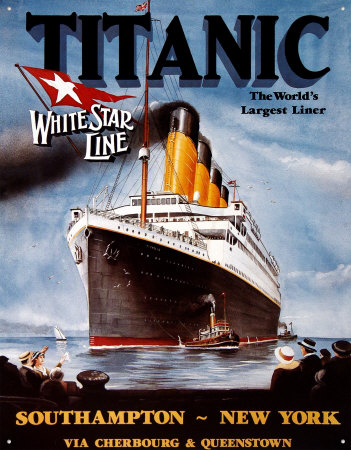
In the late hours of April 14th, 1912, the steamship RMS Titanic hit an iceberg. At 2:20am on the morning of the 15th, the ship sank into the depths of the Atlantic Ocean. It was the ship’s first and final voyage. Titanic was the largest and most luxurious ocean liner in the world. Some of the wealthiest and most famous people of the day were passengers. The ship was said to be “unsinkable;” over 1,500 souls went down with her that night. The disaster made headlines all around the world. One hundred years later, we’re still talking about it.

A Night to Remember by Walter Lord, 2005, Henry Holt and Co., originally published in 1955 (Nonfiction/ 20th Century History/ Maritime Disasters). 


The strict divisions between first class and third, the record-breaking size of the ocean liner, the old-fashioned heroism of “women and children first,” the ease by which the entire disaster could have been avoided, the captain going down with the ship and the band playing ‘til the very end—these details have made the sinking of the Titanic an event that is impossible to forget. In 1955, Walter Lord published the first fully researched account of the events of that fateful night. Lord supplies a wealth of information about the crew, the passengers, the construction of the ship, and all its distinct luxuries. He carefully traces the timeline that ends in tragedy. He focuses on the rigid class system that kept the steerage passengers locked below decks when the ship struck the iceberg, and on the outdated emergency standards that kept the number of lifeboats to a minimum and resulted in the deaths of more than half the people on board. Lord’s attention to detail is extraordinary—no passenger’s experience is too small to explore and record and shed light on the disaster. Nearly sixty years after its original publication, A Night to Remember is still the definitive account of the Titanic.

Building the Titanic: An Epic Tale of the Creation of History’s Most Famous Ocean Liner by Rod Green, 2005, Reader’s Digest Books (Nonfiction/ 20th Century History/ Shipbuilding). 


882 feet long, 175 feet high, weighing 46,428 tons—Titanic was the largest moving man-made object of the day. Staterooms with private promenades, squash courts, a Turkish bath, a Parisian café—Titanic was the most luxurious ship ever built. In that respect, the White Star Line accomplished its goal of building the largest and most impressive sea-going vessel to date. Of course, the ship sinking on its maiden voyage with a loss of 1,500 people was not part of the plan. Building the Titanic is the story of the creation of the great ship. Author Rod Green explores the motives of the ship’s owners (profits and status), the lives of the men who worked in the shipyards (there were 254 recorded accidents during the building of the Titanic; eight men died), and every detail of its construction from the delivery of 45,000 table napkins to the production of a new massive dry dock to hold the ship while it was being built. Rare photographs taken by passengers during the ill-fated voyage and detailed construction plans complete this portrait of Titanic and prove that the ship was mightily impressive indeed, and well deserving of the attention she received even from her very beginning.

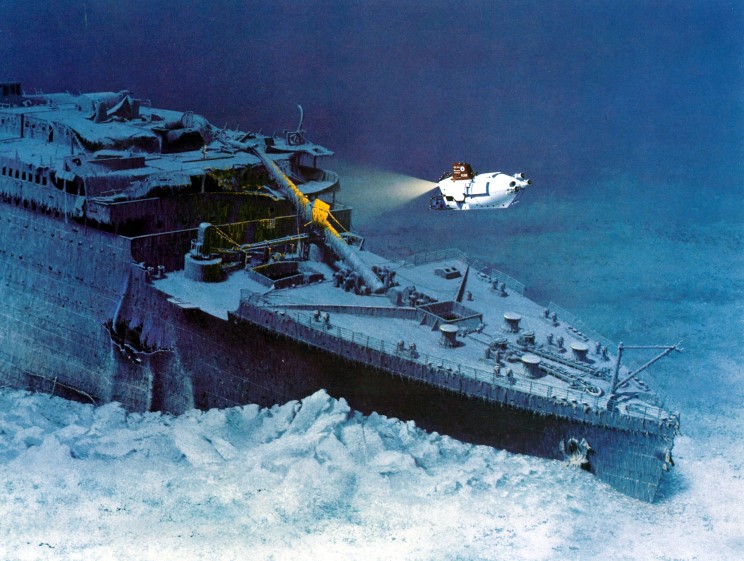
The Discovery of the Titanic by Robert D. Ballard, 1995, Orion Books, originally published 1987 (Nonfiction/ Deep Sea Exploration/ Science Writing). 


Public fascination with Titanic reached a new peak in 1985, when Dr. Robert Ballard and his American-French expedition finally found the wreck 13,000 feet below the surface of the North Atlantic. The ship lies in two pieces, bow and stern, with a scattered debris field that contains haunting signs of life and death—plates, combs, mirrors, boots—all carefully documented by Ballard’s underwater submersibles. By juxtaposing images of Titanic in all her glory with images from Titanic’s watery grave, Ballard shows how vulnerable the ship really was—and still is. In 2004 Ballard visited the wreckage again and published Return to the Titanic with all-new high-quality images and an impassioned plea for preservation of the site. A final book, 2008’s Titanic: The Last Great Images, is an attempt to document the wreck before it is gone forever, picked away by the ravages of time and even more so by scavengers who seek to get rich from Titanic’s ruin and aren’t so bothered if their submersible scrapes a railing or removes an artifact. Ballard’s case for conservation is a strong one; the long search for Titanic’s resting place is a riveting tale of perseverance and scientific ingenuity; the ghostly images of the sunken ship are mesmerizing.

The Watch That Ends the Night: Voices from the Titanic by Allen Wolf, 2011, Candlewick Press (Young Adult Fiction/ Historical Fiction/ Novels in Verse). 


Everyone knows how the story ends—with a lost ship and a few boatloads of survivors in the frigid waters of the Atlantic Ocean. But the stories of the people on the Titanic continue to fascinate and resonate. Author Allen Wolf tells two dozen of those stories in The Watch That Ends the Night, a novel-in-verse featuring the voices of millionaire John Jacob Astor, wireless operator Harold Bride, immigrant Olaus Abelseth, third-class refugee Jamila, the woman who became known as “Unsinkable Molly Brown,” the ship’s baker, the violinist, an on-board rat, and many others—including the iceberg itself. Wolf mixes fact and fiction for a work that is epic in scope, from the musings of doomed Captain Smith to the babblings of near-infant Lolo Navratil. Cementing the story is the occasional report from undertaker John Snow, who helps to harvest the bodies from the sea days after the disaster. Though mournful at times, The Watch That Ends the Night has its fair share of brave deeds and meaningful connections. With over thirty pages of biographies and resources, this is an impressive work that adds a crucial human touch to the facts and statistics that make up the Titanic’s remarkable history.

Fateful by Claudia Gray, 2011, HarperTeen Books (Young Adult Fiction/ Historical Fiction/ Fantasy). 


Fateful is a romance about werewolves on the Titanic. That’s right: werewolves on the Titanic. Preposterous? Of course. Fun? Absolutely. Tess Davies is a maid for the snobbish Lisle family, and she’s finally had enough. She’s taking this opportunity to break free: when Titanic reaches New York, Tess will strike out on her own. But a seemingly chance encounter with two men—one sinister, one handsome—has Tess looking over her shoulder as she boards the mighty ship. Sure enough, the two strangers are on board and on the prowl. Mikhail is a dangerous werewolf representing the Brotherhood, a powerful paranormal faction. Alec is also a (very wealthy and attractive first class) werewolf, but he’s clinging to his sense of humanity and desperate to do no harm. Mikhail is after Alec’s fortune but there’s something else on Titanic—something that belongs to the Lisle family—and Mikhail’s not going to let some gutsy little maidservant stand in his way. As Tess is drawn deeper in the werewolves’ affairs, the ship has its own fateful encounter with an iceberg that will foil the best-laid plans of wolf and maid. Melodramatic, with a steamy romance and plenty of action, Fateful is an entirely worthwhile guilty pleasure.

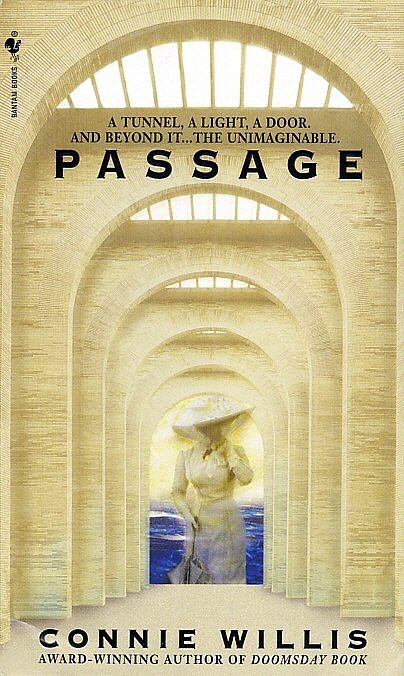
Passage by Connie Willis, 2001, Bantam Books (Science Fiction). 


Connie Willis is an acclaimed science fiction writer who happens to love history. Her Hugo- and Nebula-winning novel Doomsday Book sends a graduate student back in time to the Dark Ages; her comic gem To Say Nothing of the Dog mixes the Victorian Era with World War II. In Passage, Dr. Joanna Lander is a psychologist researching near-death experiences (or NDEs). She’s developed a drug that can stimulate the experience and is working with neurologist Richard Wright on a theory that NDEs are actually a survival mechanism. But when Joanna goes under herself in a stimulated NDE, what she finds is completely unexpected—it’s the Titanic, and neither Joanna nor Richard have any idea what it means. But Willis drops plenty of hints, all the while distracting her protagonists with chance meetings, half-forgotten conversations, and characters as varied as a smart little girl with a severe heart condition and a swarmy fellow doctor who wants to use their research to promote his own career. As Joanna explores her strange experience farther and farther, the tension and the mystery build to a fever pitch—and then there’s the intense plot twist just before the ending. Suspenseful and powerful, reading Passage is an unforgettable experience.

Down with the Old Canoe: A Cultural History of the Titanic Disaster by Steven Biel, 2003, W.W. Norton and Co. (Nonfiction/ Social History/ Cultural History). 


Why are we so fascinated by the Titanic? Is it the hubris of its era, the excessive luxury coupled with the subpar safety measures? Is it all the “what ifs” that could have prevented the disaster, from the ignored ice warnings to the nearby ship that could have saved every soul on board had it ventured to find out what was going on? Is it the striking class differences that meant Sir Cosmo and Lady Duff Gordon set sail in a lifeboat built for forty with only two other passengers and twelve crewmen to row them, while hundreds of third class passengers were kept below decks until the last minute? Author Stephen Biel explores the cultural history of the Titanic, from its effect on the suffrage movement (the old standby of “women and children first” meant that men were made into easy heroes who stood for strength and power while the women survivors were weaklings who needed protection) to the commercialization of the disaster in the form of books (including his own), movies, and exhibitions. He touches on all of Titanic’s roles throughout history:  status symbol, news sensation, metaphor, commodity, and entertainment. Regardless of how much time goes by, Titanic will always give us something to talk about.

The Night Lives On by Walter Lord, 1987, Avon Books (Nonfiction/ 20th Century History Shipwrecks).


Walter Lord remained devoted to the story of the Titanic after writing his groundbreaking account of the disaster A Night to Remember in 1955. When the wreckage was discovered in 1985, Lord couldn’t resist another rumination on the great ship’s lasting legacy. In The Night Lives On, Lord delves deeper into mysteries and myths that have accumulated over the decades. He sheds light on the rumor that a crewman shot into a crowd of passengers swarming around the last of the lifeboats. He ponders the pride and arrogance of the Edwardian age that is so frustrating to modern minds in the light of all the “what ifs” that could have changed the course of Titanic’s history. He pours over the records for eyewitness accounts of the ship splitting in two and the band playing ‘til the end. He contrasts the reactions of the ships Carpathia and Californian—the former rushed to Titanic’s aid but was over fifty miles away; the later passively puzzled over strange lights and rockets in the night from a distance of just fifteen miles or so. As it asks new questions, rights wrongs, and sets the record straight, The Night Lives On is another detailed, engrossing account of all things Titanic.

Monday, January 16, 2012

The New Zombies


For the last few years, it’s been sparkly, sullen vampires who’ve ruled page and screen. But slowly, steadily creeping up on the bloodsuckers, is a new version of an old favorite: the zombie. Films like Shaun of the Dead and Zombieland, plus Max Brooks’ and Seth Graham-Smith’s tongue-in-cheek books The Zombie Survival Guide and Pride and Prejudice and Zombies, lead the charge with a sarcastic, wholly unique 21st century brand of humor. Other novelists have contributed a new intensity and complexity that comment on modern society and politics—or make some very intriguing changes to the traditional zombie genre. Zombie books are hitting the bestseller lists hard, and readers cannot wait to devour them.

The Walking Dead, Vol. 1: Days Gone Bye by Robert Kirkman and Tony Moore, 2004, Image Comics (Horror/ Graphic Novel). 


When small-town sheriff Rick Grimes wakes up from a gunshot-induced coma, the concerned faces of his family and friends do not surround him. Instead, the dead have become the undead, moaning and groaning and eating brains. For all intents and purposes, life as Rick knows it is over. There are few explanations here, and the story is better for it—Rick and the reader are flung headfirst into a ruined world and forced to battle hoards of reeking zombies for a very slim chance at survival. As Rick desperately searches for his missing wife and son in this, the first volume of the graphic novel series that inspired AMC’s hit TV show of the same name, authors Kirkman and Moore craft a compelling, character-driven story supported by black-and-white artwork that is finely detailed (and very often violent, zombies not being for the faint of heart). It’s human relationships that are at the heart of The Walking Dead, and the twists and turns that this new life throws at Rick and the other survivors are consistently thrilling and surprisingly thoughtful. The Walking Dead, Vol. 15: We Find Ourselves came out in December 2011—just in time for a very gory Christmas. 

The Walking Dead by Robert Kirkman and Tony Moore 
Vol. 1: Days Gone Bye 
Vol. 2: Miles Behind Us 
Vol. 3: Safety Behind Bars 
Vol. 4: The Heart’s Desire 
Vol. 5: The Best Defense 
Vol. 6: This Sorrowful Life 
Vol. 7: The Calm Before 
Vol. 8: Made to Suffer 
Vol. 9: Here We Remain 
Vol. 10: What We Become 
Vol. 11: Fear the Hunters 
Vol. 12: Life Among Them 
Vol. 13: Too Far Gone 
Vol. 14: No Way Out 
Vol. 15: We Find Ourselves

Zombies vs. Unicorns edited by Holly Black and Justine Larbalestier, 2010, Margaret K. McElderry Books (Short Story Collections/ Young Adult Fantasy). 


This wildly inventive short story collection pits the undead against an unlikely foe: unicorns. Yep, unicorns with their pointy horns and ability to sniff out virgins go head-to-head with the moaning, groaning zombie. Though the unicorns are entertaining (Meg Cabot’s unicorns literally fart rainbows in “Princess Prettypants” and the mythical beasts prove surprisingly unnerving in stories like Margo Lanagan’s “Thousand Flowers” and Diana Peterfreund’s “The Care and Feeding of Your Baby Killer Unicorn”), it is zombies—in this blogger’s opinion, at least—that get the last laugh. Carrie Ryan continues to build on the worldwide zombie apocalypse she began in The Forest of Hands and Teeth with her story, “Bougainvillea.” Libba Bray’s “Prom Night” and Scott Westerfeld’s “Inoculata” both feature teens in a world that’s short on living adults but overflowing with undead ones. And tales like Alaya Dawn Johnson’s haunting “Love Will Tear Us Apart” and Maureen Johnson’s satirical “Children of the Revolution” stand the zombie tradition on its head. Editors Holly Black (Team Unicorn) and Justine Larbalestier (Team Zombie) debate the finer points of rotting flesh-eater vs. magical horse in witty asides between stories (the controversy began one day during the comments section of Justine's blog). Much more than just a clever gimmick, Zombies vs. Unicorns is full of strange, suspenseful, captivating stories. 

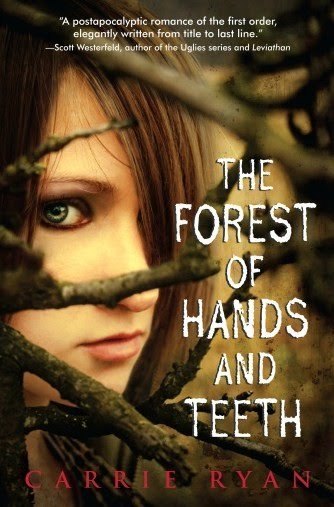
The Forest of Hands and Teeth by Carrie Ryan, 2009, Delacorte Press (Young Adult Fantasy/ Horror). 


In Mary’s world, there are two kind of people: her fellow villagers who dwell under the protection of the religious Sisterhood, and the hoards of the Unconsecrated undead who claw at the village’s fences. Despite the zombies—many of who bear the faces of former loved ones—Mary’s life is simple. The Sisterhood is preparing her for a preordained marriage and Mary will go live with her new husband. She’s in love with another young man, but the Sisterhood’s rules are what keep the village safe. But Mary’s love triangle takes a new turn when the zombies breach the fence and overrun the village. Now Mary and a few others—including her fiancé and the boy she loves—are on their own. A few gated paths wind through the forest, but no one knows where they lead. And the Unconsecrated are always nearby, lurking just on the other side of that deceptively secure chain-link fence. The combination of horror and an old-fashioned way of life is unique, and the suspense runs high. Author Carrie Ryan crafts a detailed new world, with causes and consequences that propel the story forward into two sequels that together create an intense new zombie mythology. 

The Forest of Hands and Teeth Trilogy by Carrie Ryan 
1. The Forest of Hands and Teeth (2009) 
2. The Dead-Tossed Waves (2010) 
3. The Dark and Hollow Places (2011)

Boneshaker by Cherie Priest, 2009, Tor Books (Fantasy/ Science Fiction/ Steampunk/ Horror). 


1863. The Alaskan Gold Rush is in full swing, and inventor Leviticus Blue is commissioned to build an immense steam-powered ice-drilling machine. But then Dr. Blue’s Incredible Bone-Shaking Drill Engine comes bursting out of his Seattle basement and destroys the city. Worse, the machine opens a vein of toxic subterranean gas (dubbed “the Blight”) that turns everyone who breathes it into zombies. Sixteen years later, Seattle is an abandoned wreck surrounded by a wall that keeps the Blight’s rotting victims contained. Outside the wall, Blue’s widow Briar Wilkes lives with her son Zeke. When Briar won’t answer Zeke’s questions about his father, the boy sneaks into the city. Briar goes after him, and soon they meet a rag-tag crew of survivors who have eked out a life for themselves. Some of these survivors help mother and son, and some hinder (including mad scientist Dr. Minnericht, who bears an eerie resemblance to the infamous Levi Blue), but all of them add to the action-packed adventure of Boneshaker. Author Cherie Priest paints a vivid portrait of an alternate Seattle, gives readers a delightful pair of heroes with wiseass Zeke and tough-as-nails Briar, and throws in lots of good and gory zombie action.

Dearly, Departed by Lia Habel, 2011, Del Ray/ Ballantine Books (Young Adult Science Fiction/ Steampunk/ Fantasy). 


Romance with a zombie? That’s hard to swallow! In the year 2195, a new civilization modeled after the prim-and-proper Victorian Era rises from the ashes of natural disasters and war. Nora Dearly is a New Victorian who should be focused on social calls and marriage rather than on politics and history. But then Nora is kidnapped by a band of zombies—zombies who don’t want to eat her up. The so-called Lazarus Virus reanimates the infected, but a lucky few manage to keep their bodies whole and their minds clear. Bram Griswold is a solider in this unique zombie army, and it’s up to him to convince Nora that they’re actually allies. Soon, Nora is loosening her corset to make room for a holster and gun, growing close to the handsome and helpful Bram, and blowing open a massive conspiracy involving her recently-deceased scientist father, the anti-Victorian counter-culture known as the Punks, and a mysterious undead army that is considerably less friendly and more hungry than Bram’s group. This is not your traditional “eat-your-brains” zombie story—it’s an imaginative adventure with dashes of dark humor and steamy romance. And like any good young adult sci-fi novel, there’s a sequel (Dearly, Beloved) already in the works.

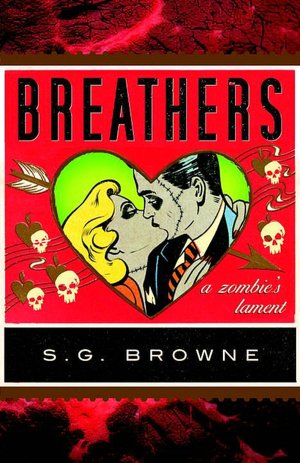
Breathers: A Zombie’s Lament by S.G. Browne, 2009, Broadway Books (Fantasy/ Dark Humor). 


Andy Warner died in a car crash. After his preserving treatment at the funeral home but before being buried, Andy woke up as a zombie. This is not incredibly unusual; it just happens sometimes. But zombies are not exactly welcomed back into polite society. Instead they’re considered less-than-human and policed by Animal Control. Andy’s too dazed to mind at first (he can’t even talk because his lips are stitched together) but he finds time to attend Undead Anonymous meetings. There he meets a sexy suicide named Rita and undead stoner Jerry. When fellow zombie Ray introduces the trio to the joys of the afterlife, Andy finds himself refusing to sit in the back of the bus and picketing for zombie civil rights. With pretty Rita at his side, Andy might get used to life-after-death—unless the human “breathers” have anything to say about it. Feeling sympathy for a zombie is new for most readers, but that’s what makes Breathers such a unique read—it’s gruesome, endearing, and darkly comic all at the same time. Author S.G. Browne describes his debut novel as a zom-rom-com, a zombie romantic comedy. With a genre-bending label like that, what more can you ask for?

Zone One by Colson Whitehead, 2011, Doubleday Books (Science Fiction). 


The zombie apocalypse has come and (mostly) gone. Mark Spitz survived, and so did lots of other people. Okay, maybe not “lots,” but enough for the reformed government to set up a few refugee camps and attempt to rebuild. Manhattan has been cleared of all but the “stragglers”—zombies that, for whatever reason, are stuck repeating some mundane former behavior instead of chasing after the living. Part of a three-person sweeper crew, Mark Spitz tags and bags the leftover undead and tries to cope with his—and everyone else’s—PASD (Post-Apocalyptic Stress Disorder). As his team frees the city of its dead, he reflects on life before “Last Night,” other survivors he hunkered down with, and his new life among the slogans, sponsors, and theme songs of the new era (“Stop! Can You Hear the Eagle Roar?” [theme from Reconstruction]). The future is a tentative thing, and Mark Spitz is both lulled by its promise and wary of it—and with good reason, because it’s only when you let your guard down that the zombies get close enough to bite. Satirical and darkly clever, Zone One is a fresh, intelligent examination of the zombie genre, a probing examination of what it means to be a survivor, and a searing look at what it means to be human.

Tuesday, November 23, 2010

Going Underground


There’s something irresistible about underground. Tunnels become mazes with adventures around every bend. Caves are home to strange, wild creatures. Archeological tombs hold the treasures of the ages. Even a basement or cellar can contain mysteries and surprises that can thrill us to the bone or set our hair on end. There’s no knowing what lurks in the deep dark underground, but finding out is sure to be an adventure.

Neverwhere by Neil Gaiman, 2003, Harper Perennial Books, originally published 1996 (Fantasy)


Richard Mayhew lives in London. He has a job, an apartment, and a fiancé. He has a regular everyday sort of life. All that is about to change. Late to dinner, Richard stops to help a dirty young woman bleeding on the sidewalk. The waiflike girl is named Door and there’s something very odd about her, but Richard brings her home and cleans her up. When Door leaves, it seems the adventure is over. But then Richard begins to change. His friends don’t recognize him, his fiancé barely notices him, and strangers can’t even see he’s there. Knowing Door has the answers, Richard plunges into London Below, a weird and wild world inhabited by those who “fell between the cracks”—people who live in the sewers and subway tunnels, people who talk to rats, people who are magic. Soon Richard is one of Door’s companions on a dangerous quest through this strange land. If Richard wants to get back to his blissfully humdrum life, he’s got to prove his worth against all manner of assassins, monsters, and mayhem. Author Neil Gaiman is at his best here as he skillfully weaves myths and legends together with the familiar to create a magical world that is entirely new. Witty and wickedly inventive, Neverwhere is fantasy at its finest.

Tunnels, Book 1 by Roderick Gordon and Brian Williams, 2008, Chicken House/ Scholastic Press (Fantasy/ Adventure/ Teen Fiction)


Londoner Will Burrows has always been a loner. His pale skin and white hair make him an outcast at school. His family life is complicated by a television-obsessed mother and a kid sister who’s taken over the management of the household. Will does have a connection with his dad—a shared love for archeological excavation. Still, father and son keep secrets from each other. When, at separate dig sites, they each uncover impressive underground structures that don’t show up on any of London’s schematics, Will and his dad know they’re onto something big. But then Mr. Burrows disappears. Will enlists the help of his only friend, Chester, and keeps digging. What the boys finally find is astonishing—an immense Victorian-style city carved into the living rock. This is “the Colony,” a secret civilization hidden beneath the earth. Will seems to have an odd connection with this subterranean society, and while Chester is locked in jail, Will is taken in by a Colonist family. He is fascinated by the cavernous Colony and its citizens, but Will never forgets Chester—or his missing father. Tunnels only sets up the adventure; final gripping chapters and a cliff-hanger ending ensure that more danger, excitement, and mystery wait in the even-deeper reaches of this extraordinary fantasy world.

Tunnels Series by Roderick Gordon and Brian Williams
1. Tunnels
2. Deeper
3. Freefall

Gregor the Overlander: The Underland Chronicles, Book 1 by Suzanne Collins, 2003, Scholastic Press (Fantasy/ Children’s Fiction)


Gregor’s mother works hard to make ends meet. His father vanished three years ago, and Gregor is responsible for babysitting his little sister. It’s a pretty dreary life for an eleven-year-old kid. But then baby sister Boots disappears down a vent in the laundry room one afternoon and Gregor dives in after her. They fall into the Underland, a fantastic world deep underground that’s populated by pale-skinned humans and giant talking animals. The subterranean dwellers suspect that Gregor is the subject of a prophecy that promises an “Overlander” warrior will lead them to victory against an army of rat invaders. Gregor has no desire to embrace his destiny—until he learns about another Overlander held captive by the rats. Gregor thinks of his father and accepts the adventure that lies ahead. He’s accompanied by quite the motley crew—Underland royalty, flying bats, a creepy rat, a big old spider, and a couple of giant cockroaches who take quite a fancy to precocious little Boots. Gregor’s reluctance to stay in the Underland does not extend to readers, who will be thrilled with the amount of detail that author Suzanne Collins lavishes on the world she imagines below ours—a wealth of magical creatures living a mythology of their own in a fantastic series of adventures.

The Underland Chronicles by Suzanne Collins
1. Gregor the Overlander
2. Gregor and the Prophecy of Bane
3. Gregor and the Curse of the Warmbloods
4. Gregor and the Marks of Secret
5. Gregor and the Code of Claw

The City of Ember: The First Book of Ember by Jeanne DuPrau, 2003, Random House Books (Fantasy/ Children’s Fiction)


The city of Ember is the only light in a world of darkness. But now, more than two-hundred years after apocalyptic events destroyed the rest of the world, Ember is beginning to fail. Supplies are running low and power outages that plaque the city are becoming more frequent. Still, life goes on. On Assignment Day, the city’s twelve-year-olds leave school and accept their lifelong work assignments. For curious-as-a-cat Lina Mayfleet, this means becoming a Messenger, delivering notes and gaining access to every area of Ember. For stoic handyman Doon Harrow, this means keeping the centuries-old generator patched together in the Pipeworks far below the city. But Lina and Doon soon stumble across long-buried secrets. The city’s founding fathers never meant for their people to dwell in darkness forever. The instructions for escape have been lost by corrupt city officials, and now, with resources fading fast and the citizens’ anxiety rising high, it’s up to Lina and Doon to find the pieces of the puzzle and save their city—even if it means venturing into the pitch-dark void that stretches beyond the dimming streetlights. Author Jeanne DuPrau invents mechanics, politics, and mysteries for the city of Ember and readers will breathlessly go along for the ride as Lina and Doon bring surprising new truths to light.

The Books of Ember by Jeanne DuPrau
1. The City of Ember
2. The People of Sparks
3. The Prophet of Yonwood
4. The Diamond of Darkhold

The Great Stink by Clare Clark, 2005, Harcourt Books (Historical Fiction/ Mystery)


William May is a veteran of the terrors of the Crimean War. It is the 1850s, but modern readers will have no difficulty recognizing the signs of post-traumatic stress disorder—poor William is fragile, damaged, and unable to relate to his former life. He finds some measure of solace underground as a surveyor for a massive engineering project to revamp London’s outdated, unstable, and very stinky sewer system. Also patrolling the sewers is Long Arm Tom, a “tosher” who searches for valuables and catches rats for dogfight bait. Then William witnesses a brutal murder in the tunnels and, due to his slipping hold on reality, is fingered as the culprit and locked away. While William languishes in prison, it’s up to Long Arm Tom to prowl the dark underground in search of the truth. Though the ending may come a trifle too neatly for some readers, most will be swept away by author Clare Clark’s attention to historical detail. Victorian London is richly evoked in all its triumphs and tragedies, from the engineering feats that created London’s sewers to the horrors of the Crimean War to the harsh differences between the lives of the city’s social classes. The Great Stink is a fine mystery and an even finer portrait of a unique historical time and place.

The Water Room: A Bryant and May Mystery by Christopher Fowler, 2005, Bantam Books (Mystery)


The Peculiar Crimes Unit is a controversial branch of the London Police Department that takes on cases that are just a bit too “off” for the regular police to cope with. Arthur Bryant and John May, the grumpy old men of criminal investigation, have been with the PCU since its inception. May is down-to-earth; Bryant is a cantankerous loner whose acquaintances tend to be mystics, psychics, and Wiccans. Still, they get things done. But with budgets stretched thin, the PCU is looking like less of a necessity. And Bryant and May aren’t helping matters by investigating cases brought to them by friends—May pokes around in the affairs of a disgraced academic and Bryant looks into the death of a little old lady. But the old lady was found drowned in her bone-dry basement. And May’s down-on-his-luck scholar is being paid big money to explore London’s ancient underground river system. With dogged determination, curmudgeonly charm, and good old-fashioned detecting, the duo finds a compelling mystery with a solution that lies deep underground. The Water Room is author Christopher Fowler’s second PCU novel and he is in fine form. There’s plenty of mystery, intrigue, and dark humor, but the real heart of the story is the spirited relationship between the indomitable Bryant and May.

Bryant and May Mysteries by Christopher Fowler
1. Full Dark House
2. The Water Room
3. Seventy-Seven Clocks
4. Ten Second Staircase
5. White Corridor
6. The Victoria Vanishes
7. Bryant and May on the Loose

The Seventh Sinner: A Jacqueline Kirby Mystery, Book 1 by Elizabeth Peters, 2005, Avon Books, originally published 1972 (Mystery)


Pretty young Jean Suttman is thrilled to death to be studying archeology in Rome. It’s a city seeped in ancient history and artifacts. She’s found a group of friends who are fellow scholars and artists. And she’s just met visiting librarian Jacqueline Kirby, who, despite her middle-aged no-nonsense appearance, is an unconquerable spitfire with powers of observation that are only matched by her sharp tongue. So when Jean stumbles across the dead body of a universally disliked fellow scholar during a tour of the ancient underground Temple of Mithra, no one is better equipped to solve the mystery than Jacqueline Kirby. There are, however, plenty of suspects—because Jean keeps meeting with unfortunate accidents, and only her seven dearest friends had the means and opportunity to cause so much trouble. Besides creating a nifty little mystery, author Elizabeth Peters crafts a delightful cast of sinister, sweet, and highly suspicious characters. But it is Jacqueline Kirby, librarian extraordinaire, who takes the cake—and this is merely her first appearance in a very delightful series of mysteries.

Jacqueline Kirby Mysteries by Elizabeth Peters
1. The Seventh Sinner
2. The Murder of Richard III
3. Die for Love
4. Naked Once More 

Pitch Black: Don’t Be Skerd by Youme Landowne and Anthony Horton, 2008, Cinco Puntos Press (Graphic Novel/ Nonfiction/ Biography) 


Pitch Black is a graphic novel collaboration between artist Youme Landowne and Anthony Horton, a homeless young man living in the subway tunnels of New York City. The two struck up a conversation one day while Landowne was waiting for a train, and after an exchange of art and stories, the unlikely duo decided to document Horton’s unique biography. Given up for adoption as a baby and then passed from foster home to foster home, Horton’s childhood was grim and violent. A harsh life on the city streets followed, every day a battle for survival. Then one day Horton flees from pursuing cops into a subway tunnel. Underground, Horton finally finds a place of refuge. Though a life in the dark and damp, surrounded by rats and garbage, may not sound ideal, Horton finally has the mentors and friends that he lacked growing up. He shares his story with Landowne—and with the reader—with an unflinching eye. The stark, black-and-white artwork shows life on the streets in all its gritty reality. But despite it all, readers will come away with a sense of hope and inspiration and a new respect for those who—whether by choice or by necessity—live their lives differently.