Showing posts with label literary fiction. Show all posts

Monday, January 16, 2012

The New Zombies


For the last few years, it’s been sparkly, sullen vampires who’ve ruled page and screen. But slowly, steadily creeping up on the bloodsuckers, is a new version of an old favorite: the zombie. Films like Shaun of the Dead and Zombieland, plus Max Brooks’ and Seth Graham-Smith’s tongue-in-cheek books The Zombie Survival Guide and Pride and Prejudice and Zombies, lead the charge with a sarcastic, wholly unique 21st century brand of humor. Other novelists have contributed a new intensity and complexity that comment on modern society and politics—or make some very intriguing changes to the traditional zombie genre. Zombie books are hitting the bestseller lists hard, and readers cannot wait to devour them.

The Walking Dead, Vol. 1: Days Gone Bye by Robert Kirkman and Tony Moore, 2004, Image Comics (Horror/ Graphic Novel). 


When small-town sheriff Rick Grimes wakes up from a gunshot-induced coma, the concerned faces of his family and friends do not surround him. Instead, the dead have become the undead, moaning and groaning and eating brains. For all intents and purposes, life as Rick knows it is over. There are few explanations here, and the story is better for it—Rick and the reader are flung headfirst into a ruined world and forced to battle hoards of reeking zombies for a very slim chance at survival. As Rick desperately searches for his missing wife and son in this, the first volume of the graphic novel series that inspired AMC’s hit TV show of the same name, authors Kirkman and Moore craft a compelling, character-driven story supported by black-and-white artwork that is finely detailed (and very often violent, zombies not being for the faint of heart). It’s human relationships that are at the heart of The Walking Dead, and the twists and turns that this new life throws at Rick and the other survivors are consistently thrilling and surprisingly thoughtful. The Walking Dead, Vol. 15: We Find Ourselves came out in December 2011—just in time for a very gory Christmas. 

The Walking Dead by Robert Kirkman and Tony Moore 
Vol. 1: Days Gone Bye 
Vol. 2: Miles Behind Us 
Vol. 3: Safety Behind Bars 
Vol. 4: The Heart’s Desire 
Vol. 5: The Best Defense 
Vol. 6: This Sorrowful Life 
Vol. 7: The Calm Before 
Vol. 8: Made to Suffer 
Vol. 9: Here We Remain 
Vol. 10: What We Become 
Vol. 11: Fear the Hunters 
Vol. 12: Life Among Them 
Vol. 13: Too Far Gone 
Vol. 14: No Way Out 
Vol. 15: We Find Ourselves

Zombies vs. Unicorns edited by Holly Black and Justine Larbalestier, 2010, Margaret K. McElderry Books (Short Story Collections/ Young Adult Fantasy). 
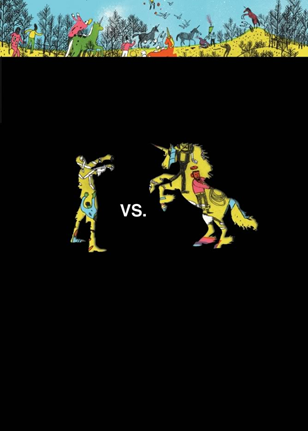


This wildly inventive short story collection pits the undead against an unlikely foe: unicorns. Yep, unicorns with their pointy horns and ability to sniff out virgins go head-to-head with the moaning, groaning zombie. Though the unicorns are entertaining (Meg Cabot’s unicorns literally fart rainbows in “Princess Prettypants” and the mythical beasts prove surprisingly unnerving in stories like Margo Lanagan’s “Thousand Flowers” and Diana Peterfreund’s “The Care and Feeding of Your Baby Killer Unicorn”), it is zombies—in this blogger’s opinion, at least—that get the last laugh. Carrie Ryan continues to build on the worldwide zombie apocalypse she began in The Forest of Hands and Teeth with her story, “Bougainvillea.” Libba Bray’s “Prom Night” and Scott Westerfeld’s “Inoculata” both feature teens in a world that’s short on living adults but overflowing with undead ones. And tales like Alaya Dawn Johnson’s haunting “Love Will Tear Us Apart” and Maureen Johnson’s satirical “Children of the Revolution” stand the zombie tradition on its head. Editors Holly Black (Team Unicorn) and Justine Larbalestier (Team Zombie) debate the finer points of rotting flesh-eater vs. magical horse in witty asides between stories (the controversy began one day during the comments section of Justine's blog). Much more than just a clever gimmick, Zombies vs. Unicorns is full of strange, suspenseful, captivating stories. 

The Forest of Hands and Teeth by Carrie Ryan, 2009, Delacorte Press (Young Adult Fantasy/ Horror). 
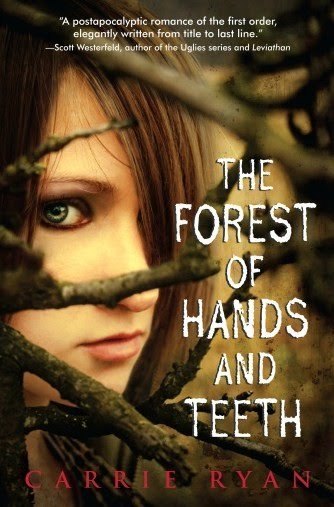


In Mary’s world, there are two kind of people: her fellow villagers who dwell under the protection of the religious Sisterhood, and the hoards of the Unconsecrated undead who claw at the village’s fences. Despite the zombies—many of who bear the faces of former loved ones—Mary’s life is simple. The Sisterhood is preparing her for a preordained marriage and Mary will go live with her new husband. She’s in love with another young man, but the Sisterhood’s rules are what keep the village safe. But Mary’s love triangle takes a new turn when the zombies breach the fence and overrun the village. Now Mary and a few others—including her fiancé and the boy she loves—are on their own. A few gated paths wind through the forest, but no one knows where they lead. And the Unconsecrated are always nearby, lurking just on the other side of that deceptively secure chain-link fence. The combination of horror and an old-fashioned way of life is unique, and the suspense runs high. Author Carrie Ryan crafts a detailed new world, with causes and consequences that propel the story forward into two sequels that together create an intense new zombie mythology. 

The Forest of Hands and Teeth Trilogy by Carrie Ryan 
1. The Forest of Hands and Teeth (2009) 
2. The Dead-Tossed Waves (2010) 
3. The Dark and Hollow Places (2011)

Boneshaker by Cherie Priest, 2009, Tor Books (Fantasy/ Science Fiction/ Steampunk/ Horror). 


1863. The Alaskan Gold Rush is in full swing, and inventor Leviticus Blue is commissioned to build an immense steam-powered ice-drilling machine. But then Dr. Blue’s Incredible Bone-Shaking Drill Engine comes bursting out of his Seattle basement and destroys the city. Worse, the machine opens a vein of toxic subterranean gas (dubbed “the Blight”) that turns everyone who breathes it into zombies. Sixteen years later, Seattle is an abandoned wreck surrounded by a wall that keeps the Blight’s rotting victims contained. Outside the wall, Blue’s widow Briar Wilkes lives with her son Zeke. When Briar won’t answer Zeke’s questions about his father, the boy sneaks into the city. Briar goes after him, and soon they meet a rag-tag crew of survivors who have eked out a life for themselves. Some of these survivors help mother and son, and some hinder (including mad scientist Dr. Minnericht, who bears an eerie resemblance to the infamous Levi Blue), but all of them add to the action-packed adventure of Boneshaker. Author Cherie Priest paints a vivid portrait of an alternate Seattle, gives readers a delightful pair of heroes with wiseass Zeke and tough-as-nails Briar, and throws in lots of good and gory zombie action.

Dearly, Departed by Lia Habel, 2011, Del Ray/ Ballantine Books (Young Adult Science Fiction/ Steampunk/ Fantasy). 


Romance with a zombie? That’s hard to swallow! In the year 2195, a new civilization modeled after the prim-and-proper Victorian Era rises from the ashes of natural disasters and war. Nora Dearly is a New Victorian who should be focused on social calls and marriage rather than on politics and history. But then Nora is kidnapped by a band of zombies—zombies who don’t want to eat her up. The so-called Lazarus Virus reanimates the infected, but a lucky few manage to keep their bodies whole and their minds clear. Bram Griswold is a solider in this unique zombie army, and it’s up to him to convince Nora that they’re actually allies. Soon, Nora is loosening her corset to make room for a holster and gun, growing close to the handsome and helpful Bram, and blowing open a massive conspiracy involving her recently-deceased scientist father, the anti-Victorian counter-culture known as the Punks, and a mysterious undead army that is considerably less friendly and more hungry than Bram’s group. This is not your traditional “eat-your-brains” zombie story—it’s an imaginative adventure with dashes of dark humor and steamy romance. And like any good young adult sci-fi novel, there’s a sequel (Dearly, Beloved) already in the works.

Breathers: A Zombie’s Lament by S.G. Browne, 2009, Broadway Books (Fantasy/ Dark Humor). 
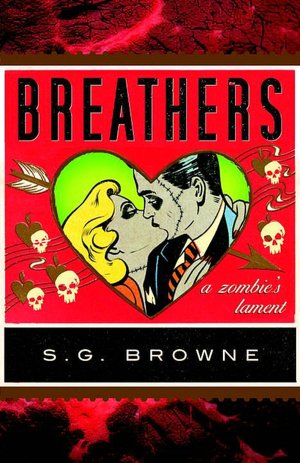


Andy Warner died in a car crash. After his preserving treatment at the funeral home but before being buried, Andy woke up as a zombie. This is not incredibly unusual; it just happens sometimes. But zombies are not exactly welcomed back into polite society. Instead they’re considered less-than-human and policed by Animal Control. Andy’s too dazed to mind at first (he can’t even talk because his lips are stitched together) but he finds time to attend Undead Anonymous meetings. There he meets a sexy suicide named Rita and undead stoner Jerry. When fellow zombie Ray introduces the trio to the joys of the afterlife, Andy finds himself refusing to sit in the back of the bus and picketing for zombie civil rights. With pretty Rita at his side, Andy might get used to life-after-death—unless the human “breathers” have anything to say about it. Feeling sympathy for a zombie is new for most readers, but that’s what makes Breathers such a unique read—it’s gruesome, endearing, and darkly comic all at the same time. Author S.G. Browne describes his debut novel as a zom-rom-com, a zombie romantic comedy. With a genre-bending label like that, what more can you ask for?

Zone One by Colson Whitehead, 2011, Doubleday Books (Science Fiction). 


The zombie apocalypse has come and (mostly) gone. Mark Spitz survived, and so did lots of other people. Okay, maybe not “lots,” but enough for the reformed government to set up a few refugee camps and attempt to rebuild. Manhattan has been cleared of all but the “stragglers”—zombies that, for whatever reason, are stuck repeating some mundane former behavior instead of chasing after the living. Part of a three-person sweeper crew, Mark Spitz tags and bags the leftover undead and tries to cope with his—and everyone else’s—PASD (Post-Apocalyptic Stress Disorder). As his team frees the city of its dead, he reflects on life before “Last Night,” other survivors he hunkered down with, and his new life among the slogans, sponsors, and theme songs of the new era (“Stop! Can You Hear the Eagle Roar?” [theme from Reconstruction]). The future is a tentative thing, and Mark Spitz is both lulled by its promise and wary of it—and with good reason, because it’s only when you let your guard down that the zombies get close enough to bite. Satirical and darkly clever, Zone One is a fresh, intelligent examination of the zombie genre, a probing examination of what it means to be a survivor, and a searing look at what it means to be human.

Friday, January 8, 2010

How to Read Two Books at Once


The only thing better than reading a book is reading two books. You don’t hold a book in each hand; you read a story-within-a-story, a novel-within-a-novel. It’s a fairly simple literary technique--a character in the book reads or writes or finds or remembers a book of his or her own and you, the reader, read them both--but the result is an intricate web of stories that weave in and out of each other, merging and dividing and running parallel to ultimately complement each other. And the reader gets two stories for the price of one, the best of both worlds, and some of the most creative and innovative novels on the bookshelf.


The Blind Assassin by Margaret Atwood, 2000, McClelland and Stewart (Literary Fiction/ Historical Fiction)


Winner of the prestigious Booker Prize, The Blind Assassin is one of recent literature’s most successful variations on the novel-within-the-novel. It’s the story of two privileged sisters who share a secluded, uneven upbringing in the years between World War I and World War II. Laura, the younger sister, dies when her car goes off a bridge. Iris, the elder, is the survivor—of Laura, of her parents, of her husband, and of her history, which she narrates to us in all its failed glory. Iris is an old woman when she looks back on her life; she’s writing her memoirs to record the truths of her life. One of those truths is her sister’s book, published posthumously and titled The Blind Assassin. We get Laura’s novel in small doses scattered among Iris’s memories. It’s the story of a young socialite and her passionate affair with a blue-collar man—and there’s a bonus story-within-a-story here too, as the nameless man spins a science-fiction tale of violence and romance for his equally nameless lover. Every storyline within author Margaret Atwood’s pages is gripping, but it is Iris--long-since disillusioned by the cruel and subtle realities of life--who really has our attention. Atwood writes Iris with a sharp intelligence and a sympathetic eye, but it is through all the combined and nested stories that we fully understand how often we purposely overlook what’s in plain sight, and how poignantly we regret it when we see the truth at last.


The Golden Notebook by Doris Lessing, 2008, Harper Perennial Modern Classics, originally published 1962 (Literary Fiction)


Anna Wulf is a writer. In a black notebook she writes about her experiences in African years ago; in a red notebook she records her thoughts about politics, particularly her leftist and Communist leanings. A yellow notebook is an autobiographical novel. Anna’s diary is a blue notebook. The reader reads all the notebooks, as well as a novel-within-the-novel called Free Women, which tells Anna’s story from an omniscient narrator’s point of view. All these stories are intricate and complex, which reflects the book’s post-World War II England setting. Anna and the women of her generation experienced unprecedented freedoms during the war, and the population is waiting to see how that independence will play out and where it will ultimately lead. As Anna ruminates on motherhood, romance, and friendship (particularly her relationship with her best friend, Molly), her fragmented writing styles merge with her complicated lifestyle. With the weight of the postmodern world on her shoulders, Anna ties the threads of her many lives together in one final notebook, a golden notebook that will make sense of it all. When The Golden Notebook was first published in 1962, author Doris Lessing was hailed as a new feminist voice. But in the forty-plus years since its publication, it is the story's intimate prose and strong narrative voice that have rung true for readers. 


The History of Love by Nicole Krauss, 2005, W.W. Norton and Co. (Literary Fiction)


Leo Gursky is an old man waiting for the last big event of his life: his death. He’s so alone in the world that he goes out and makes a minor spectacle of himself—dropping his change, spilling his popcorn—just to make sure someone has noticed him. Alma Singer is a fourteen-year-old girl trying to find a cure for the permanent sadness her mother’s been wrapped in ever since the death of her father seven years ago. Alma thinks the answer might lie in the book her mother is translating, an obscure story called The History of Love. The narration alternates between Leo and Alma and the reader also gets glimpses of the moving, elegantly written History of Love and its mysterious author. As the threads of the storyline weave together in the most intimate ways, the novel becomes unputdownable. Leo and Alma are an unlikely pair—Leo pines for his long-lost love; Alma’s little brother thinks he’s the Messiah; Leo escaped to America from Nazi-occupied Poland; Alma’s hobby is identifying edible wild plants—but they are both survivors of great personal loss. Author Nicole Krauss writes about her characters with tenderness and real feeling, and it doesn’t take long before we’re deeply invested in their lives. So invested, in fact, that we’ll be thinking about the beautiful interlocking stories of The History of Love long after we’ve turned the last page.


Everything is Illuminated by Jonathon Safran Foer, 2002, Houghton Mifflin Harcourt (Literary Fiction/ Historical Fiction)


Everything is Illuminated begins with the comically fractured English stylings of one Alex Perchov, a cocky young Ukrainian man who manages to think he’s God’s gift to women even while his cranky grandfather hollers at him and his grandfather’s faux-seeing eye dog slobbers nearby. But Alex is irresistible as he narrates the story of how he translated for “the hero,” an American student named Jonathon Safran Foer (yep, just like the author) who searched for the Ukrainian woman who may (or may not) have saved his Jewish grandfather during World War II. Alex sends his musings on their travels back to Jonathon and receives chapters of a novel that Jonathon is writing, a novel about the history of a small Eastern European village that begins in 1791 and is as chock-full of quirky characters and haunting histories as the real story of finding (or not finding) the Ukrainian woman. For the villagers of the novel-within-the-novel, the horrors of World War II are waiting in the future; for Alex and Jonathon, those same horrors are ready to rear their heads from the ugly past at every turn. Despite the overshadowing presence of war and tragedy, Everything is Illuminated is at heart a kitschy, endearing work that blends fables and magical realism into the kind of truly original story that we all long to read.


(Note: Jonathon Safran Foer is married to Nicole Krauss, author of the aforementioned History of Love. There are distinct similarities between their works—Jewish characters seeking for clues in the World War II-scarred past, for example, plus the whole novel-within-the-novel thing—but the books vary greatly in style and tone. Still, it certainly is intriguing to imagine this highly gifted couple living and writing together in New York City.)


Lord Byron’s Novel: The Evening Land by John Crowley, 2005, Harper Perennial (Literary Fiction/ Historical Fiction)


It was a dark and stormy night. Sitting around the fire in the rainy gloom of 1816, Mary Wollstonecraft Godwin, her poet-boyfriend Percy Shelley, and their host told ghost stories to scare the bejeezus out of each other. Mary later became Mary Shelley and her ghost story became the legendary masterpiece Frankenstein. Shelley himself, we know, quickly gave up his ghost story to encourage his new wife to publish hers. Their host on that fateful night was none other than poet extraordinaire Lord Byron. He wrote a few hundred words about the mysterious death of an old man, and left it at that—or did he? Thus we reach the premise of John Crowley’s Lord Byron’s Novel: The Evening Land. We get to read this long-lost novel, painstakingly imagined by Crowley, as a mad, gothic story about the sensational life of one Ali Sane. It is accompanied by thoughtful footnotes from Byron’s daughter Ada, who, besides saving her estranged father’s manuscript from her scorned mother, was a brilliant mathematician in her own right. And finally, we read emails to and from Alexandra Novak. Alexandra is researching Ada’s life for a website about women scientists, and she stumbles across a series of complex numerical columns that Ada wrote in the mid-19th century. To decode this mystery, Alexandra must turn to her own estranged father, who is also an expert Byron scholar. This circular plot pairs the romantic style of Lord Byron with modern communications and advanced math—no easy feat. But Crowley almost perfectly mimics Byron, and he breathes real life into the characters of Ada and Alexandra as they attempt to reconnect and recreate a vision of their lives that they never fully had. Rewriting an actual lost novel is one of the more intricate ways to incorporate a story within a story, but Crowley is well up to the challenge.


If On a Winter’s Night a Traveler by Italo Calvino, 1993, Everyman’s Library, originally published 1979 (Literary Fiction)


This book opens by telling both you and the character of The Reader what the experience of reading If On a Winter’s Night a Traveler by Italo Calvino is like. After a few pages, however, The Reader realizes that his copy of this book has a printer’s error. He goes back to the bookstore to get a new copy, meets Another Reader who has the same problem and flirts with her, and is told that all the Calvino books are hopeless misprinted and what he’s been reading is actually a book by Polish writer. The Reader goes home with what he hopes is finally the right volume, reads for a few pages, and then discovers that no, this book is the wrong book too. Back to the bookstore, back to another tantalizing interaction with Another Reader, and back home again with a new book that’s supposed to be the book he’s been trying to read all along—but isn’t. This happens ten times (talk about novels within novels!) and we, the readers (not The Readers), are very content to go along for the ride. It may sound confusing, but the real author Italo Calvino (who died in 1985) has long been revered as a master of avant-garde and experimental fiction. It’s not every writer who can begin ten separate novels that differ in tone and style and genre and still make them entertaining; it’s not every writer who can marry the solitary (and at times frustrating) act of reading with a story about a blooming romance that’s sparked by that very same solitary (and at times frustrating) act of reading. But Calvino does it—with wit, with charm, and with superior skill.

Friday, December 18, 2009

The Classics Never Die


The classics. They’ve been around forever and they’re certainly not going anywhere. They’ve stood the test of time and readers have suffered through them in English classes from grade school to grad school. Of course, there’s another way to read—or re-read—the classics. From time immemorial, authors having been borrowing plots from each other. Modern authors have an excellent source for inspiration in literature’s canon, and it’s long been a popular trend to dust off an old classic and rewrite it with a fresh perspective for a modern audience. Whether it’s a sequel, a prequel, another character’s point of view, or a spin-off into a different genre, the classics are thriving dozens, hundreds, or even thousands of years after their originals authors first penned them. The classics don’t die. They just get retold, reinvented, and rejuvenated in all sorts of inventive and creative variations.


The Penelopiad: The Myth of Penelope and Odysseus by Margaret Atwood, 2005, Canongate Press (Literary Fiction)


Greek mythology. We’ve all been there and done that, from memorizing the Greek Pantheon to studying The Iliad and The Odyssey. And so surely we can’t help but have noticed the raw deal that those ancient Greek women get—daughters sacrificed so their fathers can get a favorable wind to sail off to war, mothers’ warnings dismissed when their young sons head out to die as heroes, wives left home alone while their husbands go adventuring for fame and the fortune of the gods. Odysseus has one of the most famous wives in Greek history: Penelope, who is abandoned for twenty years while Odysseus fights (and wins) the Trojan War and then gets lost at sea to tangle with the one-eyed giant Cyclops and sexy sea-nymphs like Circe and the Sirens. Penelope is left with a small son and a household to manage; as the years passed and Odysseus failed to return, the son becomes increasingly rebellious and the household is overrun by men looking to marry her and inherit Odysseus’ substantial fortune. She manages to hold the suitors off and wait for her long-lost husband, but even he tests her thoroughly to determine her faithfulness once he finally returns. Today Penelope is renowned for her extreme patience--which, to be frank, is pretty boring. All that changes with author Margaret Atwood’s The Penelopiad, which sticks to the same old story but gives us Penelope’s unique perspective. We’re not too surprised to find that Penelope is intelligent and compassionate, but she also turns out to be equally the match of her notoriously wily husband. In the spirit of ancient Greek theatre, Atwood lets Penelope’s twelve maids, who Odysseus ruthlessly kills when he returns, act as the chorus to Penelope’s story; the result is a poignant, insightful twist on one of the oldest classics of all time, and it serves to answer an important question: Just what was Penelope up to all that time?


The Casebook of Victor Frankenstein by Peter Ackroyd, 2008, Chatto and Windus Books (Historical Fiction)


Mary Shelley wrote Frankenstein more or less on a dare. Mary and her soon-to-be-husband, poet Percy Bysshe Shelley, were staying at Lord Byron’s house. Late at night around the fire, they got to talking about supernatural tales and decided to write a few spooky stories of their own. Young Mary’s short story (she was only eighteen years old) became the masterpiece known today as Frankenstein, the woeful tale of a slightly mad scientist who reanimates dead matter and brings life to a hybrid selection of body parts in the form of an unnamed, unloved, and misunderstood “monster.” In author Peter Ackroyd’s version of events, real life and fiction merge when Percy Bysshe Shelley and Victor Frankenstein are classmates at Oxford. Shelley is a romantic and free-spirited poet; Frankenstein is a moody med student obsessed with “the spark of life.” Frankenstein’s experiments with electrocuting corpses get carried away, and just like in the original, the good doctor is soon horrified when his grotesque creation is actually brought to life. The poor monster is understandably bitter about being so quickly reviled, dismissed, and abandoned, and the creature is not one to let matters lie. For the rest of his life, Frankenstein is shadowed by the man he made, who puts a new spin on many of the events in Frankenstein’s life and in the lives of those around him, including Shelley and his smart young love interest Mary. Ackroyd is a noted author of historical fiction and it’s his level of period research and detail that makes The Casebook of Victor Frankenstein such an appealing and compelling read, as well as the mixing of a well-known work of fiction with the real historical figures who had a hand in its creation. Atmospheric and with just the right touch of things supernatural, horrific, scientific, and historical, this is another classic re-created that’s really got a mind of its own.


Drood by Dan Simmons, 2009, Little, Brown and Co. (Historical Fiction/ Thriller/ Mystery)


When real historical literary figures merge with the works they’re writing, retelling the classics gets very interesting. In Drood, Charles Dickens is the main character, though his real-life friend (“frenemy” is perhaps more accurate) Wilkie Collins narrates the story. The starting point is a tragic and near-fatal train crash in 1865 that Dickens survived but never entirely recovered from. Author Dan Simmons uses this factual event to introduce a mysterious character who Dickens encounters amid the gore and wreckage of the train--a gaunt specter calling himself Drood who emits a decidedly creepy aura and has a sinister agenda of his own. Dickens becomes obsessed with tracking Drood and enlists Collins to assist him in nighttime voyages though London’s ancient and decrepit underground caverns and crypts. Collins, as portrayed in Drood, is bitterly jealous and opium-addicted; Dickens is an egomaniac of the highest order who’s keeping heavy secrets from friends and family, including the motive behind what will be his final, uncompleted book, The Mystery of Edwin Drood. Things get stranger, spookier, and more bizarre as the final years of Dickens’ life draw to a close for a wholly atmospheric blend of history, historical fiction, and supernatural horror that’s as dramatic (and melodramatic) as the novels by Dickens and Collins that inspired it. Be sure to check out Dickens’ novels (especially the real The Mystery of Edwin Drood), and don’t let Wilkie Collins, who remains largely in the shadow of his better-known contemporary, be forgotten again—his novels The Moonstone and The Woman in White are masterpieces in their own right.


Gemma Bovary by Posy Simmonds, 2005, Pantheon (Fiction/ Graphic Novel)


Gustave Flaubert’s Madame Bovary is a classic tale of one woman’s utter ennui with her lot in life. In the 1857 original, Emma, a country daughter with a taste for the finer things, marries stolid Charles Bovary, quickly becomes bored with her dreary existence as a housewife, and embarks on numerous adulterous affairs to liven things up. Emma’s rebellions against the prescribed roles of the day struck an early blow for feminism, but she also suffers greatly for her transgressions. It’s a complicated work of literature, and it’s rendered more colorful but no less complex by artist/author Posy Simmonds’ graphic novel adaptation, Gemma Bovary. The plot is similar—Gemma marries a bore and has affairs to while away the tedium—but the story is told by a neighbor, an intellectual baker named Jaubert, who spends his time obsessively observing Gemma on her road to ruin. In fact, from the first page we know that Gemma is dead. The question becomes, who helped her get that way? Gemma Bovary is a true blend of forms—there are comic book-style panels and dialogue balloons typical of the graphic novel format, but Simmonds includes typed text like a traditional novel as well. Her illustrations are elegantly cartoonish and like Flaubert’s criticism of the bourgeois class of his day, Simmonds paints an all-too-real vision of today’s wealthy but shallow yuppie lifestyle. Gemma Bovary is a delightfully in-depth modern look at the classic truisms that hold true even today.


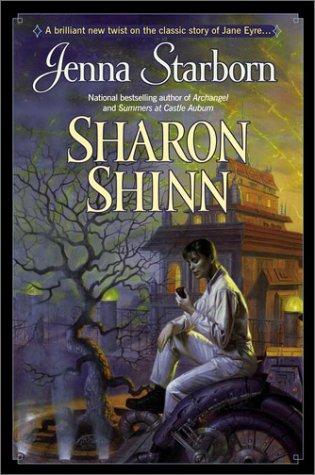
Jenna Starborn by Sharon Shinn, 2002, Ace Books (Science Fiction)


Jenna Starborn is no less than Jane Eyre—in space. Author Sharon Shinn is an award-winning science fiction writer who transforms Charlotte Brönte’s classic into a futuristic story with all the same mystery, romance, and suspense. The Gothic tale translates surprisingly well, and the space-age setting almost makes it possible to read Jane Eyre again for the first time. And yet, readers are immersed in a completely new world. Jane becomes Jenna, Mr. Rochester becomes Mr. Ravensbrook, and Thornfield Manor becomes a mining post on a remote planet protected by an energy field. Jenna is a product of science, a baby generated by request for a woman who doesn’t want her anymore when a real, biological son is born. Jenna grows up neglected and unloved, knowing that she will never be more than a half-citizen because of her artificial birth status. But Jenna is determined to find an equal place in her society, a dream that’s given some credence when she finds work as a force field engineer on a faraway planet and befriends her enigmatic employer, Mr. Ravensbrook. Fans of the original and new readers alike will be impressed at the creative futuristic twists and turns that mark Jenna’s relationship with Mr. Ravensbrook and the revealing secrets of Mr. Ravensbrook’s past. Shinn re-imagines Jane Eyre exceptionally well and still gives Jenna a unique voice and a story that is entirely her own.


March by Geraldine Brooks, 2004, Viking Books (Historical Fiction)


Little Women by Louisa May Alcott is an episodic, allegorical novel about the life lessons learned by a quartet of sisters—Meg, Jo, Beth, and Amy March—living in New England in the mid-1800s. Their father is away fighting in the Civil War; the girls draw strength from their mother, Marmee. Little Women is pleasant and wholesome, domestic and sweet. March--which author Geraldine Brooks images from father March’s point of view--is not. Mr. March is idealistic man whose naïve trust in the goodness of his fellow men has left him and his family broke. When he joins the Union Army as a chaplain, he’s an ineffectual leader. A seeming indiscretion with a nurse lands him at a plantation managing newly freed slaves. Mr. March’s letters home are cheerful, but to us readers he shows the brutality of war, the cruelty of racism, and the weakness of men. He reveals his past history, including his friendships with scholars like Emerson and Thoreau and his courtship with Marmee, but when he falls ill the narrations switches and readers get Mrs. March’s varying side of the story. Brooks based the character of Mr. March on that of Louisa May Alcott’s own father; the research into the lives and times of the characters rings clear. Brooks paints a portrait of competing loyalties between husband and wife, duty and desire, right and wrong, North and South that is both poignant and true. March turns the light-hearted charm of Little Women on its head and delivers an introspective work that can stand solidly on its own.


Rebecca’s Tale by Sally Beauman, 2001, Morrow Books (Historical Fiction/ Mystery)


“Last night I dreamt I went to Manderley again.” This is the famous opening sentence of Rebecca by Daphne du Maurier, a now-classic novel of mystery, romance and suspense. At the behest of du Maurier’s estate, author Sally Beauman pens a companion novel to deepen the mystery, complicate the romance, and up the ante on the suspense. In the original story, our plain Jane young narrator (who is never given a name) makes a match that shocks even herself—she marries impressively wealthy aristocrat Maxim de Winter. The meek new Mrs. De Winter is overshadowed and overwhelmed by the stately mansion of Manderley, the sneering and domineering housekeeper Mrs. Danvers, and by the lasting aura of Maxim’s first wife Rebecca, society’s darling and a stunning beauty who lived fast and died young under decidedly mysterious circumstances. The tension builds into a great novel of suspense, but lose ends are left untied—until now. Rebecca’s Tale is set in 1951, two decades after the original, and features a new cast of characters who fall under Rebecca’s ghostly spell to become obsessed with solving once and for all the mystery of her demise. We get four different perspectives on the case from four narrators—Colonel Arthur Julyan, an old family friend of the de Winters; Terence Gray, a historian who has his own reasons for digging up the secrets of Rebecca’s life and death; Ellie, the smartly practical daughter of Colonel Julyan; and Rebecca de Winter herself, who chimes in through newly-discovered journals that have been anonymously sent to the secluded Julyan home. Rebecca’s Tale is more than a sequel that offers an explanation of what really happened to Rebecca; it’s a fresh, entertaining mystery than incorporates new plots, characters, and themes while sticking true to all the suspenseful gothic stylings of the beloved original.


The Beekeeper’s Apprentice, or, The Segregation of the Queen: A Novel of Suspense Featuring Mary Russell and Sherlock Holmes by Laurie R. King, 2007, Picador Press, originally 1994 (Historical Fiction/ Mystery)


Sherlock Holmes is the quintessential detective of our time. Wickedly intelligent, almost supernaturally observant, full of contempt for anyone else’s theories, a cocaine addict, and a beekeeper to boot, Holmes is drama enough without adding a gawky fifteen-year-old orphan girl who’s every bit as sharp as the great detective himself. Holmes’ creator, Sir Arthur Conan Doyle, put his famous character through the wringer with cases like A Study in Scarlet, The Hound of the Baskervilles, and A Scandal in Bohemia. Today we still fondly remember such Holmsian lore as his “Elementary, dear Watson” quote and his address at 221-B Baker Street. Author Laurie R. King resurrects Holmes from peaceful retirement when our heroine, fifteen-year-old Mary Russell, nearly steps on him one day as she strolls through the fields with her nose in a book. The unlikely duo takes an immediate liking to each other, finding in the other a kindred spirit with whom to match wits and intelligence. Russell becomes Holmes’ apprentice in the art of sleuthing and is a superb student; as the years pass and they solve minor crimes together, a deep friendship and close understanding grows between them. Their unique partnership is threatened, however, by a strange case during Russell’s college years at Oxford after World War I. A master criminal is playing a deadly game with Holmes and Russell’s very lives. How the master and his novice crack the case is only slightly less intriguing than the evolving relationship between the two. This is all accompanied by a fine literary style, with Mary Russell as an intimately honest narrator, and a detailed sense of historical time and place. The first in a series that features Sherlock Holmes and Mary Russell, The Beekeeper’s Apprentice does modern wonders with a favorite classic.


Wicked: The Life and Times of the Wicked Witch of the West by Gregory Maguire, 2009, Harper Paperbacks, originally 1995 (Literary Fiction)


The Wizard of Oz is a modern fairy tale. Young Dorothy (and her little dog too) run away from home, get caught up in a storm, and are blown far away to a magical land of walking scarecrows, talking lions, curtained wizards, wicked witches, yellow brick roads, and emerald cities. Most readers will know the 1939 Hollywood movie starring Judy Garland best, but L. Frank Baum wrote The Wonderful Wizard of Oz and its thirteen sequels way back when in the early 1900s. But it is author Gregory Maguire’s Wicked that really blows the lid off this classic. He focuses on the future Wicked Witch of the West, who begins life as a small green girl named Elphaba. Elphie’s Munchkinlander parents are less than thrilled with this strange offspring, and more so when another daughter (normal-colored but armless) is born a couple years later. Still, the sisters survive their difficult childhood and attend university, where Elphie’s roommate is ditzy Glinda (better known as the Good Witch of the North). Elphaba is never wicked or evil; in fact she campaigns against the politically corrupt Wizard of Oz and fights for economic re-growth instead. Elphaba is ultimately an intelligent and out-spoken young woman, but fate and luck are just not on her side. Readers will sympathize with this other Wicked Witch of the West and relish the clever social satire and biting cynicism inherent in this alternate vision of fanciful Oz. Just as The Wonderful Wizard of Oz blew off the page and became the beloved Hollywood movie, Wicked has transcended its original form to become a popular Broadway musical. Maguire has proved something of a visionary with his reimaging of fairy tales and classics—he has most definitely cornered the market with other inventive perspectives like Confessions of an Ugly Stepsister, Mirror Mirror, and two other entries in his Wicked Years series about the land of Oz, Son of a Witch and A Lion Among Men.


Lost in Austen: Create Your Own Jane Austen Adventure by Emma Campbell Webster, 2007, Riverhead Trade Books (Romance/ Adventure)


Your name: Elizabeth Bennett. Your mission: Marry for love and money. Your means: Nothing more than your wit and charm, of course, and a handy book called Lost in Austen. In the grand tradition of both Jane Austen and those old Choose-Your-Own-Adventure books from your youth, author Emma Campbell Webster brings us a romantic adventure that combines the two. You begin firmly rooted in Pride and Prejudice; a few twists and turns can land you in the city of Bath à la Persuasion, win you a stay in the mansions of Northanger Abbey or Mansfield Park, and bring you into contact with rogues like Sense and Sensibility’s Mr. Willoughby or dreamboats like Emma’s Mr. Knightley. Mr. Darcy is the ultimate catch, of course, and the goal is harder than you think—you win and lose points based on your decisions that add or subtract to your various charms and therefore your eligibility as a suitable match. Whether you end up happily ever after with Captain Wentworth or get sent north in disgrace with Mr. Wickham, Lost in Austen is fantastic fun, and certainly one of the most creative ways to channel the magnificent Jane Austen, who is surely spinning in her grave at the inventiveness of this latest reincarnation of her ever-popular work.