Showing posts with label horror. Show all posts

Monday, January 16, 2012

The New Zombies


For the last few years, it’s been sparkly, sullen vampires who’ve ruled page and screen. But slowly, steadily creeping up on the bloodsuckers, is a new version of an old favorite: the zombie. Films like Shaun of the Dead and Zombieland, plus Max Brooks’ and Seth Graham-Smith’s tongue-in-cheek books The Zombie Survival Guide and Pride and Prejudice and Zombies, lead the charge with a sarcastic, wholly unique 21st century brand of humor. Other novelists have contributed a new intensity and complexity that comment on modern society and politics—or make some very intriguing changes to the traditional zombie genre. Zombie books are hitting the bestseller lists hard, and readers cannot wait to devour them.

The Walking Dead, Vol. 1: Days Gone Bye by Robert Kirkman and Tony Moore, 2004, Image Comics (Horror/ Graphic Novel). 


When small-town sheriff Rick Grimes wakes up from a gunshot-induced coma, the concerned faces of his family and friends do not surround him. Instead, the dead have become the undead, moaning and groaning and eating brains. For all intents and purposes, life as Rick knows it is over. There are few explanations here, and the story is better for it—Rick and the reader are flung headfirst into a ruined world and forced to battle hoards of reeking zombies for a very slim chance at survival. As Rick desperately searches for his missing wife and son in this, the first volume of the graphic novel series that inspired AMC’s hit TV show of the same name, authors Kirkman and Moore craft a compelling, character-driven story supported by black-and-white artwork that is finely detailed (and very often violent, zombies not being for the faint of heart). It’s human relationships that are at the heart of The Walking Dead, and the twists and turns that this new life throws at Rick and the other survivors are consistently thrilling and surprisingly thoughtful. The Walking Dead, Vol. 15: We Find Ourselves came out in December 2011—just in time for a very gory Christmas. 

The Walking Dead by Robert Kirkman and Tony Moore 
Vol. 1: Days Gone Bye 
Vol. 2: Miles Behind Us 
Vol. 3: Safety Behind Bars 
Vol. 4: The Heart’s Desire 
Vol. 5: The Best Defense 
Vol. 6: This Sorrowful Life 
Vol. 7: The Calm Before 
Vol. 8: Made to Suffer 
Vol. 9: Here We Remain 
Vol. 10: What We Become 
Vol. 11: Fear the Hunters 
Vol. 12: Life Among Them 
Vol. 13: Too Far Gone 
Vol. 14: No Way Out 
Vol. 15: We Find Ourselves

Zombies vs. Unicorns edited by Holly Black and Justine Larbalestier, 2010, Margaret K. McElderry Books (Short Story Collections/ Young Adult Fantasy). 
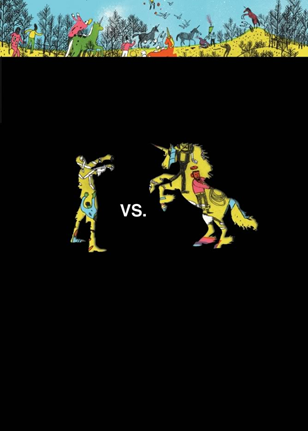


This wildly inventive short story collection pits the undead against an unlikely foe: unicorns. Yep, unicorns with their pointy horns and ability to sniff out virgins go head-to-head with the moaning, groaning zombie. Though the unicorns are entertaining (Meg Cabot’s unicorns literally fart rainbows in “Princess Prettypants” and the mythical beasts prove surprisingly unnerving in stories like Margo Lanagan’s “Thousand Flowers” and Diana Peterfreund’s “The Care and Feeding of Your Baby Killer Unicorn”), it is zombies—in this blogger’s opinion, at least—that get the last laugh. Carrie Ryan continues to build on the worldwide zombie apocalypse she began in The Forest of Hands and Teeth with her story, “Bougainvillea.” Libba Bray’s “Prom Night” and Scott Westerfeld’s “Inoculata” both feature teens in a world that’s short on living adults but overflowing with undead ones. And tales like Alaya Dawn Johnson’s haunting “Love Will Tear Us Apart” and Maureen Johnson’s satirical “Children of the Revolution” stand the zombie tradition on its head. Editors Holly Black (Team Unicorn) and Justine Larbalestier (Team Zombie) debate the finer points of rotting flesh-eater vs. magical horse in witty asides between stories (the controversy began one day during the comments section of Justine's blog). Much more than just a clever gimmick, Zombies vs. Unicorns is full of strange, suspenseful, captivating stories. 

The Forest of Hands and Teeth by Carrie Ryan, 2009, Delacorte Press (Young Adult Fantasy/ Horror). 
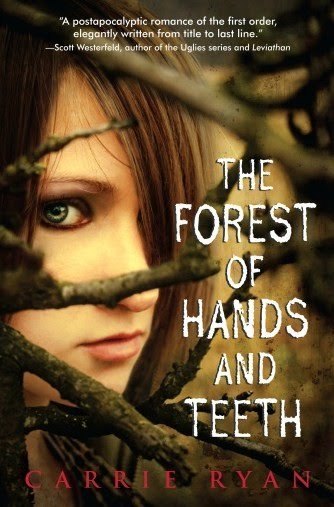


In Mary’s world, there are two kind of people: her fellow villagers who dwell under the protection of the religious Sisterhood, and the hoards of the Unconsecrated undead who claw at the village’s fences. Despite the zombies—many of who bear the faces of former loved ones—Mary’s life is simple. The Sisterhood is preparing her for a preordained marriage and Mary will go live with her new husband. She’s in love with another young man, but the Sisterhood’s rules are what keep the village safe. But Mary’s love triangle takes a new turn when the zombies breach the fence and overrun the village. Now Mary and a few others—including her fiancĂ© and the boy she loves—are on their own. A few gated paths wind through the forest, but no one knows where they lead. And the Unconsecrated are always nearby, lurking just on the other side of that deceptively secure chain-link fence. The combination of horror and an old-fashioned way of life is unique, and the suspense runs high. Author Carrie Ryan crafts a detailed new world, with causes and consequences that propel the story forward into two sequels that together create an intense new zombie mythology. 

The Forest of Hands and Teeth Trilogy by Carrie Ryan 
1. The Forest of Hands and Teeth (2009) 
2. The Dead-Tossed Waves (2010) 
3. The Dark and Hollow Places (2011)

Boneshaker by Cherie Priest, 2009, Tor Books (Fantasy/ Science Fiction/ Steampunk/ Horror). 


1863. The Alaskan Gold Rush is in full swing, and inventor Leviticus Blue is commissioned to build an immense steam-powered ice-drilling machine. But then Dr. Blue’s Incredible Bone-Shaking Drill Engine comes bursting out of his Seattle basement and destroys the city. Worse, the machine opens a vein of toxic subterranean gas (dubbed “the Blight”) that turns everyone who breathes it into zombies. Sixteen years later, Seattle is an abandoned wreck surrounded by a wall that keeps the Blight’s rotting victims contained. Outside the wall, Blue’s widow Briar Wilkes lives with her son Zeke. When Briar won’t answer Zeke’s questions about his father, the boy sneaks into the city. Briar goes after him, and soon they meet a rag-tag crew of survivors who have eked out a life for themselves. Some of these survivors help mother and son, and some hinder (including mad scientist Dr. Minnericht, who bears an eerie resemblance to the infamous Levi Blue), but all of them add to the action-packed adventure of Boneshaker. Author Cherie Priest paints a vivid portrait of an alternate Seattle, gives readers a delightful pair of heroes with wiseass Zeke and tough-as-nails Briar, and throws in lots of good and gory zombie action.

Dearly, Departed by Lia Habel, 2011, Del Ray/ Ballantine Books (Young Adult Science Fiction/ Steampunk/ Fantasy). 


Romance with a zombie? That’s hard to swallow! In the year 2195, a new civilization modeled after the prim-and-proper Victorian Era rises from the ashes of natural disasters and war. Nora Dearly is a New Victorian who should be focused on social calls and marriage rather than on politics and history. But then Nora is kidnapped by a band of zombies—zombies who don’t want to eat her up. The so-called Lazarus Virus reanimates the infected, but a lucky few manage to keep their bodies whole and their minds clear. Bram Griswold is a solider in this unique zombie army, and it’s up to him to convince Nora that they’re actually allies. Soon, Nora is loosening her corset to make room for a holster and gun, growing close to the handsome and helpful Bram, and blowing open a massive conspiracy involving her recently-deceased scientist father, the anti-Victorian counter-culture known as the Punks, and a mysterious undead army that is considerably less friendly and more hungry than Bram’s group. This is not your traditional “eat-your-brains” zombie story—it’s an imaginative adventure with dashes of dark humor and steamy romance. And like any good young adult sci-fi novel, there’s a sequel (Dearly, Beloved) already in the works.

Breathers: A Zombie’s Lament by S.G. Browne, 2009, Broadway Books (Fantasy/ Dark Humor). 
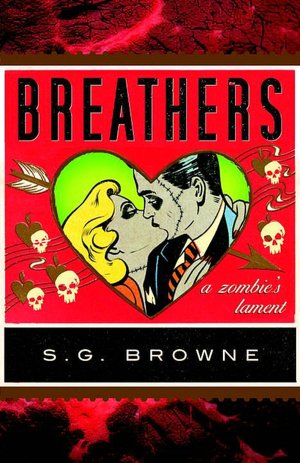


Andy Warner died in a car crash. After his preserving treatment at the funeral home but before being buried, Andy woke up as a zombie. This is not incredibly unusual; it just happens sometimes. But zombies are not exactly welcomed back into polite society. Instead they’re considered less-than-human and policed by Animal Control. Andy’s too dazed to mind at first (he can’t even talk because his lips are stitched together) but he finds time to attend Undead Anonymous meetings. There he meets a sexy suicide named Rita and undead stoner Jerry. When fellow zombie Ray introduces the trio to the joys of the afterlife, Andy finds himself refusing to sit in the back of the bus and picketing for zombie civil rights. With pretty Rita at his side, Andy might get used to life-after-death—unless the human “breathers” have anything to say about it. Feeling sympathy for a zombie is new for most readers, but that’s what makes Breathers such a unique read—it’s gruesome, endearing, and darkly comic all at the same time. Author S.G. Browne describes his debut novel as a zom-rom-com, a zombie romantic comedy. With a genre-bending label like that, what more can you ask for?

Zone One by Colson Whitehead, 2011, Doubleday Books (Science Fiction). 


The zombie apocalypse has come and (mostly) gone. Mark Spitz survived, and so did lots of other people. Okay, maybe not “lots,” but enough for the reformed government to set up a few refugee camps and attempt to rebuild. Manhattan has been cleared of all but the “stragglers”—zombies that, for whatever reason, are stuck repeating some mundane former behavior instead of chasing after the living. Part of a three-person sweeper crew, Mark Spitz tags and bags the leftover undead and tries to cope with his—and everyone else’s—PASD (Post-Apocalyptic Stress Disorder). As his team frees the city of its dead, he reflects on life before “Last Night,” other survivors he hunkered down with, and his new life among the slogans, sponsors, and theme songs of the new era (“Stop! Can You Hear the Eagle Roar?” [theme from Reconstruction]). The future is a tentative thing, and Mark Spitz is both lulled by its promise and wary of it—and with good reason, because it’s only when you let your guard down that the zombies get close enough to bite. Satirical and darkly clever, Zone One is a fresh, intelligent examination of the zombie genre, a probing examination of what it means to be a survivor, and a searing look at what it means to be human.

Thursday, October 20, 2011

Choose-Your-Own-Adventure Grows Up


Remember reading those old “Choose-Your-Own-Adventure” stories when you were a kid? With opening sentences like “You are a deep sea explorer searching for the famed lost city of Atlantis” or “You stand on the deck of the RMS Titanic, the brand new White Star ocean liner,” you knew immediately that there was adventure in store. And then there’s the added thrill of getting to decide what happens next: “If you choose to return to the island, go to page 12. If you decide to follow Jenny into the abyss, go to page 38.” The adventures were straightforward, the choices were good or bad—ah, how simple life was. But now that you’re an adult, choosing your own storybook adventure is more complex, sassier, sexier, gorier, and helluva lot more interesting.


Pretty Little Mistakes: A Do-Over Novel by Heather McElhatton, 2007, Harper Books (Interactive Books/ Fiction).


Ah, high school graduation, that time when “the real world” seems to contain every and any possibility. This hopeful moment is where Pretty Little Mistakes begins. A few key life choices can result in your shacking up with a handsome Italian, blown to bits by a pipe bomb when you’re working as a doctor in Africa, running away to join the circus, or pecked to deaths by ducks when you become a meth addict after flunking out of college. The choices here will lead you all over the world and into a variety of professionals ranging from sex-phone operator to scholar. You’ll get married, impregnated, and divorced (not always in that order). You’ll be a rousing success and a miserable failure. The possibilities are endless. And if you don’t like where life leads you, you can always go back and start over. After all, everyone deserves a do-over.


You Are a Miserable Excuse for a Hero! by Bob Powers, 2008, St. Martin’s Griffin Press (Interactive Books/ Humorous Fiction).


You’re a loser. You’re a thirtysomething wannabe actor, working as waiter, and the girl you went out with last night has been kidnapped. Her kidnappers call you in the morning, waking you up and demanding fifty thousand dollars for her safe return. You don’t have fifty thousand dollars. You don’t even know if you like this girl all that much. But you could be a hero…or you could get drunk and go back to sleep. There are happy endings here, where you got to grad school and raise a family and make a life for yourself surrounded by loved ones. There are also really sucky endings, with torture and murder and unwanted pregnancy. But most of all, there’s plenty of sarcasm, dark humor, and utter nonsense. It’s everything your average childhood “Choose-Your-Own-Adventure” story is not, and that’s what makes You Are a Miserable Excuse for a Hero! so addictively entertaining.


Lost in Austen: Create Your Own Jane Austen Adventure by Emma Campbell Webster, 2007, Riverhead Books (Interactive Books/ Historical Fiction).


If you love Jane Austen, if you’ve read all her novels, watched the BBC Pride and Prejudice until you know it by heart, if you long to go to Lyme to see the spot where Louisa Musgrove fell, then Lost in Austen is the book for you. As Elizabeth Bennett, you have intelligence and wit and some portion of beauty, but not a lick of money. You wish to marry for love; your meddling mother wants you to marry for money. As you make choices that may lead to dashing Mr. Darcy or to drippy Mr. Collins (and every other Austen hero from steadfast Captain Wentworth to caddish Willoughby) you gain or lose points for Accomplishments, Connections, and Fortune that will attract or repel possible suitors. There’s a delightfully wicked sense of humor at play as well, with plenty of sass and tongue-in-cheek criticism. Austen fans will happily get lost over and over again.


Can You Survive the Zombie Apocalypse? by Max Brallier, 2011, Gallery Books (Interactive Books/ Horror).


How many times have you found yourself hollering at the idiot characters in horror movies as they insist on finding the source of that creepy noise when they should be running for their lives? Well, here’s your chance to set things right. You’re a young businessman in the city when all hell breaks loose and zombies take over Manhattan. You’re first choice: get to your apartment, catch the next taxi, or take the subway out of town. These three paths lead to such life-and-death decisions like: Ax or shotgun? Run or stand your ground? Save the girl or save your ass? Sometimes you end up just another zombie, stumbling around and moaning for brains. Sometimes you’re the big hero, guns blazing as you lead crowds of grateful schoolchildren to safety. It’s action-packed, gory as all get out, and every bit as much fun as the best zombie horror flicks on the big screen.


The Raging Tide, or The Black Doll’s Imbroglio by Edward Gorey, 1987, Beaufort Books (Interactive Books/ Picture Books/ Humorous Fiction).


Edward Gorey is well-known for his grown-up picture books and his macabre sense of humor. In The Gashlycrumb Tinies, an entire alphabet of small children meets their makers in all manner of devilishly entertaining ways. In The Doubtful Guest, an surprise visitor makes himself quite content in the midst of a household that’s too polite to tell him to go away. And in The Raging Tide, Skrump, Naeelah, Figbash, and Hooglyboo engage in nonsense, guided by your very own expertise. If you think it is clever when Hooglyboo crams Figbash into a vase, turn to page 11. If all this seems “too terrible to contemplate,” turn to page 29. You may also, on another page, choose to visit the Dogear Wryde Topiary Gardens (page 26) or tour the Villa Amnesia (page 23). Nonsense indeed, but in the grand tradition of Edward Gorey, it’s nonsense that you can’t get enough of.


Meanwhile: Pick Any Path—3,856 Story Possibilities by Jason Shiga, 2010, Amulet Books (Interactive Books/ Graphic Novels/ Children’s Science Fiction).


On the first page of this intricate, creative comic book, you’re a little cartoon boy in an ice cream shop deciding between chocolate and vanilla. If you choose chocolate, you follow a brown tube-like line that leads up and around to a tab on a different page. The vanilla line leads you straight off one page and onto another. You continue to follow these lines up, down, right, left, backwards, and forwards as you jump from page to page and wind your way through panels that feature a mad scientist, parallel universes, quantum mechanics, and a giant squid. Sometimes, you save the world. Sometimes, you destroy all life on the planet. Either way, you learn about math and science and—believe it or not—have a whale of a time doing it. Ostensibly for children, Meanwhile will captivate readers of every age with its mind-bending tricks, wily ways, and unexpected endings.

Friday, March 5, 2010

Good Old Fashioned Ghost Stories


Bumps in the night. Noises on the air. Shivers up and down your spine. Reading under the covers all night long, unable to shut the book—or turn the light off. Whether it’s a dark and stormy night or a bright and sunny summer day, a really good ghost story has the power to thrill and chill and remain stuck in your mind to jump up and spook you again and again. But the best ghost stories, the really scary, creepy, spine-tingling stories are the ones written dozens, even hundreds of years ago. From the monsters you know—Ichabod Crane and the Headless Horseman—to the monsters you don’t—the vampiress Carmilla, the vile Cthulu—these are the original good old-fashioned ghost stories.

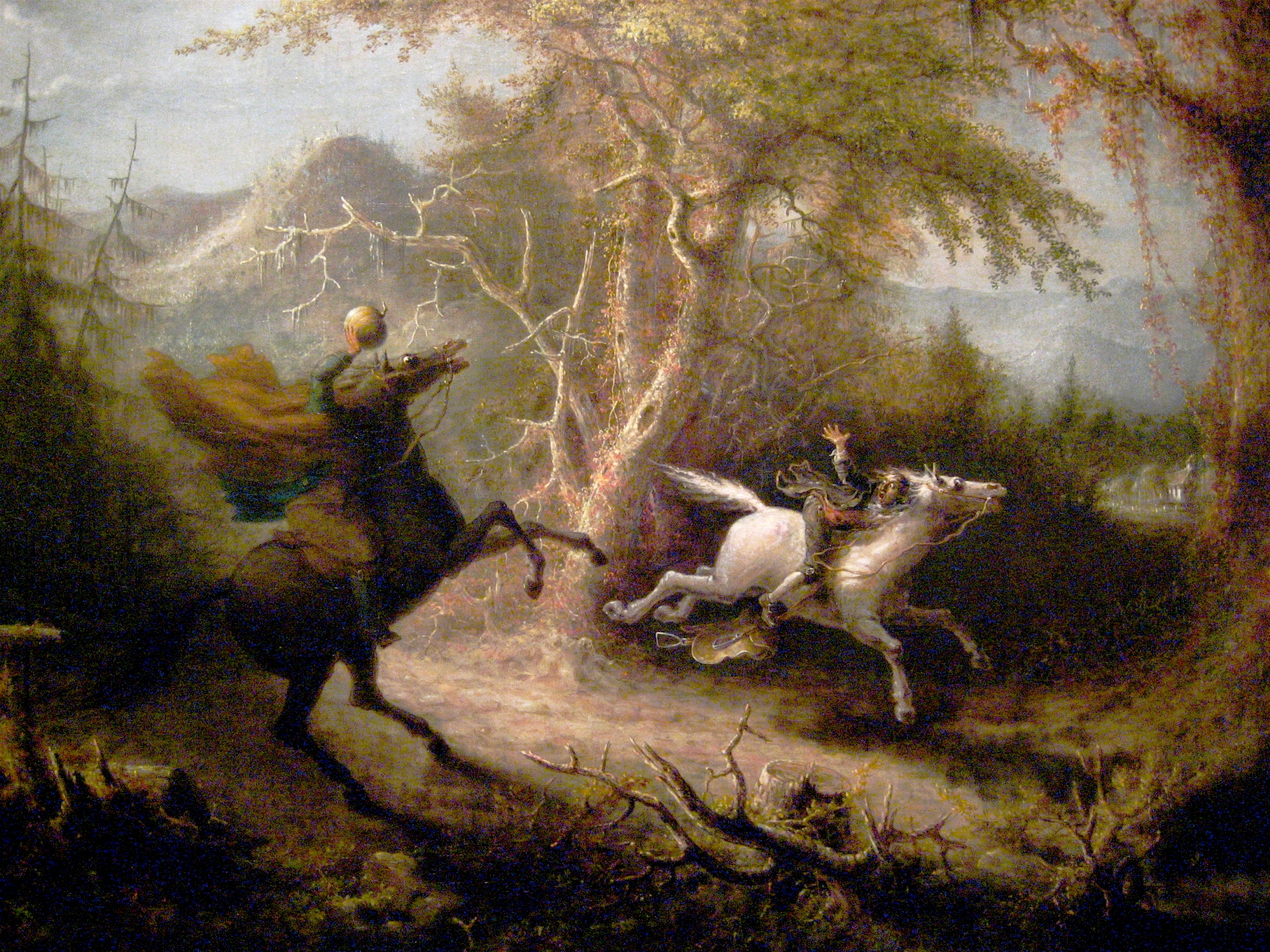
The Legend of Sleepy Hollow and Other Stories or, The Sketch Book of Geoffrey Crayon, Gent. by Washington Irving, 2001, Modern Library Classics, originally published 1820 (Fiction Classics/ Horror) 


When smarmy schoolteacher Ichabod Crane comes to town, he immediately smirks and smiles his way into all the society that the little glen of Sleepy Hollow has to offer. Ichabod, gangly and gawky, is smitten with Katrina, the lovely only daughter of wealthy Mr. Baltus Van Tassel. His competition for the hand of the fair young lady is the hunky town jock “Brom Bones” Van Brunt. Ichabod, or so he thinks, has nothing to fear—his book smarts are more than a match for Brom’s rowdy looks. But for all his supposed confidence, Ichabod is exceptionally open to suggestion, and at a fancy party at the Van Tassel’s stately home, he hears the story of the Headless Headman. A hapless victim of “some nameless battle” of the American Revolution who got his head lobbed off by a cannonball, the Horseman spends the nights pounding up and down the roads in search of his long-lost cranium. When Ichabod leaves the party, he’s suddenly met by a ferocious fear—in the form of the good old Headless Horseman, who pursues poor Ichabod in what has become perhaps the most famous chase scene in American literary history. Originally published in 1820 as part of author Washington Irving’s (1783-1859) collection The Sketch Book of Geoffrey Crayon, Gent., “The Legend of Sleepy Hollow” and its fellow tales marked the birth of the short story as a genre in the Unites States. “The Legend of Sleepy Hollow” was, and still is, the heart of the collection. And since the tale is delightfully funny and wickedly spooky, Ichabod and his headless friend have become the stuff of American legend as well.

The Fall of the House of Usher and Other Writings by Edgar Allan Poe, 2003, Penguin Classics, originally published 1839 (Fiction Classics/ Short Stories/ Horror)


Roderick Usher is ill. He’s restless, uneasy, hyper-sensitive to light, sound, smells, and taste. Our unnamed narrator journeys to the House of Usher to cheer his friend Roderick, but neither narrator nor reader will find much comfort there. The manor house is bleak and gloomy beyond compare and its residents—Roderick and his twin sister Madeline—seem perpetually bathed in sorrow and despair. Roderick, in fact, believes the house, with its ancient stonework and strangely-arranged gardens, to be a sentient force unto itself. And when Madeline dies and Roderick insists on interring her body in the house’s vault before her burial, and an odd anxiety comes over Roderick and his guest in the days that follow, and Roderick’s paintings and books appear to come to life, it seems the House of Usher may indeed have something final to say before its doomed fall. Edgar Allan Poe (1809-1849) is one of literature’s greatest and spookiest storytellers—the enduring popularity of his narrative poem “The Raven” and his short story “The Tell-Tale Heart” certainly prove that. “The Fall of the House of Usher” is his other big hit, a classic little tale of a classic haunted house that, in Poe’s hands, becomes something much more—something innately unsettling and irresistible all at once. In fact, reading all three of Poe’s bests in row, from the mocking raven’s call to the mysterious thump-thump under the floorboards to the eerie House of Usher, is undoubtedly the best way to work yourself into a truly glorious literary scare.

Carmilla by Sheridan Le Fanu, 2000, Wildside Press, originally published in 1872 (Fiction Classics/ Horror) 


Forget about Bill Compton, Edward Cullen, the vampire LeStat, or Count Dracula—you haven’t really met a vampire until you’ve met Carmilla. Twenty-five years before Bram Stoker sat down and penned his tale of horror in Transylvania, fellow Irish ghost story lover Sheridan Le Fanu (1814-1873) crafted the tale of innocent young Laura and her strange, beautiful, deadly visitor. Pretty Laura lives in an old castle with her kind father and a couple of agreeable governesses; it’s a pleasant but sheltered existence. Laura had one terrifying incident in her infancy, when she dreamed a beautiful woman appeared in her room and laid down beside her—but then little Laura felt a sharp prick at her neck, and woke up screaming. But the years have passed and Laura is now a lovely young woman. When a dramatic carriage accident hurls an injured young lady practically onto the doorstep, Laura and her father are only too glad to extend their hospitality. Their guest is Carmilla, a sweet young thing whose face is exactly that of the woman who appeared in Laura’s dream so long ago. Carmilla sleeps late, eats little, reveals nothing of her past life, and lounges around in a most beautiful attitude. But Carmilla also adores Laura—adores her, in fact, well past the point of obsession. Laura is not very wise in the ways of the world so it takes her much longer to catch on than it does for the savvy reader, who is nonetheless quickly caught up in Le Fanu’s dreamy little tale of passion and terror combined. Carmilla was a direct influence on Dracula and on vampire mythology in general—we would have no sensual, seductive, alluring vamps if we had not had Carmilla first. That fact alone makes it an interesting read for any fan of horror or vampire fiction, but Carmilla is also a haunting ghost story that more than stands on its two feet—or fangs, for that matter. Take a bite; you won’t soon regret or forget Carmilla.

The Turn of the Screw by Henry James, 2001, Modern Library Classics, originally published in 1898 (Fiction Classics/ Horror)


A young gentlewoman begins her career as a governess when a singularly dashing bachelor hires her to care for his little niece and nephew. All trust and responsibility is given over to the governess and she heads off to Bly, the country manor where the children are tucked away under the protection of the housekeeper Mrs. Grose. Little Flora and her brother Miles are so adorable and angelic as to be called exquisite; the governess is instantly enamored of their childish charms. But before she can become a slave to their every delightful little whim, the governess sees—something. A pale face pressed against the window, a dark figure on the other side of the lake. When, frightened and disturbed, she describes these mysterious watchers to Mrs. Grose, they are identified as Peter Quint and Miss Jessel—and the horror immediately grows, because not only are Quint and Miss Jessel bad, immoral people, but they are dead. Convinced that the children’s young souls have been corrupted by the evil influence of the obsessive spirits, our nerve-wracked governess must fight to save some remnant of goodness in the preternaturally perfect little darlings—even while the ghostly fiends strive to posses them. Published in 1898, The Turn of the Screw practically marked the invention of the psychological thriller. Author Henry James (1843-1916) weaves a masterful web of intense and atmospheric suspense and offers no convenient solutions to the mystery at Bly. A unique structure—an unnamed narrator is listening to a manuscript read by a fellow houseguest; the manuscript is told in first-person by the hapless governess—completes the casting of the spell; wrapped in these layers of storytelling, a reader can never be sure what—if anything—is real and what—if anything—is imagined. One thing is certain, however: The Turn of the Screw will keep you biting your nails, jumping at every noise, and absolutely glued to the page.

The Best of H.P Lovecraft: Bloodcurdling Tales Horror and the Macabre by H.P. Lovecraft, 1987, Del Ray Books, originally published between 1927 and 1937 (Fiction Classics/ Short Stories/ Horror)


H.P. Lovecraft (1890-1937) was a decidedly weird individual. Sickly, anxious, bookish, descended from an American founding family, Lovecraft was a mid-20th century gentleman with a really twisted imagination. And boy oh boy, do readers love him today. The sixteen tales collected here include Lovecraft’s finest: “The Call of the Cthulu,” which introduced legions of devoted fans to a giant pulpy sea monster with tentacles and scales and wings that dozes in the depths until it emerges in an apocalyptic age of horror and panic; “The Dunwhich Horror,” otherwise known as Wilbur Whately, who begins life on strange terms and ends it by horrifying, terrifying, and just plain scaring the socks off the neighboring townsfolk; “The Shadow Over Innsmouth,” where dwells a sinister tribe of hybrid human-monsters who worship the demons of the deep; and “The Colour Out of Space,” which tells of a meteoric entity that brings insanity—and worse—to the residents of a small farm. Throughout his stories, Lovecraft creates a mythology all his own— the monsters Cthulu and Yog-Sothoth, the eerie towns of Arkham and Innsmouth, and demonic horrors galore that creep out of earth, space, and the very soul. Lovecraft wrote so convincingly of his fictional Necronomican, an ancient book of the occult, that publishers have printed versions of it to satisfy the reading public’s insatiable curiosity and insistence that it must be real. Modern-day fan-fiction is immensely popular (there’s even a Lovecraftian parody for children called Where the Deep Ones Are), which only proves how ahead of his time shy, nervous Lovecraft was. Almost seventy-five years after his death and almost one-hundred years since he first published, Lovecraft’s Bloodcurdling Tales of Horror and the Macabre are alive, well, and creeping out readers near and far.

The Ghost Stories of Edith Wharton by Link textEdith Wharton, 1997, Scribner Books, originally published in 1937 (Fiction Classics/ Short Stories/ Horror) 


Edith Wharton (1862-1937) is the author of The Age of Innocence, Ethan Frome, The House of Mirth, and other great classics of Western literature. Edith Wharton wrote novels that are renowned for their insight into the innermost secrets of the stiff-upper-lip upper classes; her acute observations and critiques of the social classes still get her talked about in high school English classes. Edith Wharton was also scared of ghosts. She admits that “till I was twenty-seven or -eight, I could not sleep in the room with a book containing a ghost story.” What better way to get to over your fear of the unknown than by creating your very own collection of scary stories? The Ghost Stories of Edith Wharton contains some of the author’s most elegant and insightful tales. “Pomegranate Seed,” for example, tells the story of Charlotte Ashby, a newlywed whose blissful marriage is disturbed by mysterious letters that arrive for her husband, Kenneth. In “The Lady’s Maid’s Bell,” a young servant is both drawn to her polite young mistress and spooked by the lady’s gloomy house, foul husband, and rumors of the lady’s previous—and now deceased—maid. “Kerfol” is the name of an ancient property that, when our intrepid narrator goes to visit, is haunted by silent ghostly dogs that belonged to the estate’s first mistress, a woman who was accused of her abusive husband’s murder years and years ago. These stories, and the others in the collection, feature crisp writing and plenty of suspense; they are, to put it simply, the sort of delightfully spooky tales that make chills run up and down your spine. To paraphrase Edith Wharton (who was paraphrasing someone else)—we may not believe in ghosts, but we’re definitely afraid of them.

The Haunting of Hill House by Shirley Jackson, 2006, Penguin Classics, originally published in 1959 (Fiction Classics/ Horror)


Dr. Montague has been searching for a haunted house his entire life. At Hill House, in a small New England town, he finds one. Eager to explore the scientific possibilities of cohabitation with phantasmagoria, the good doctor invites three guests to share the place. Luke Sanderson is the black sheep of the family that owns Hill House. Theodora is a carefree, optimistic bright young thing. Eleanor Vance has spent her entire life caring for her ill, unhappy mother or under the thumb of her controlling sister. Accepting Dr. Montague’s invitation is Eleanor’s first act of freedom—and it might very well be her last. Because there’s no doubt that there’s something very wrong with Hill House. To call the place gloomy is a severe understatement; a history of tragedy and god-knows-what-else has made the house unlivable for years. But the new houseguests put on a brave face; they are witty and clever; they amuse each other and play nice. And still—doors refuse to stay open, chilling drafts sweep across the halls, things go bump in the night. Eleanor, always a shy loner, becomes more and more of an outsider even in the midst of the cozy little group. All too soon, it becomes almost impossible to tell where the emotional torment of poor Eleanor ends and the vengeful spirit of Hill House itself begins. But Eleanor is fragile, and Hill House has all manner of horrors at its beck and call. How—and if—the foursome will emerge from this all-too-genuine haunted house remains to be seen. In the vein of Henry James’ The Turn of the Screw, The Haunting of Hill House is a top-notch example of the psychological, supernatural thriller. Author Shirley Jackson (1916-1965) was a remarkably intelligent writer who knew exactly how to build layers of suspense that would captivate her readers. Working with so much more than just the bare bones of characters and plot, Jackson infuses her ghost story with a sense of foreboding that is too tempting to resist. For a true-blue ghost story, all you have to do is get good and lost in the very strange, very scary, very haunted Hill House.

Friday, September 11, 2009

Never Mind the Swine Flu: Books About the Plague and Other Diseases


When you cough and sneeze and the hypochondrium sets in, the best cure is to read about a disease you definitely don’t have (or do you?), be it the Black Death or smallpox or cholera or the always-threatening zombie plague. These books go into all the clinical details about symptoms, contagions, and cures (or lack thereof) so you’ll know exactly what you’re up against and how much Tami-Flu you’ll need. You’ll also sniffle (do you have a cold or are you just sad?) as heroes and heroines help and hinder each other on the road to good health. You might not be convinced that it’s just allergies when you’re done reading these books, but you’ll definitely appreciate your health.

The Speckled Monster: A Historical Tale of Battling Smallpox by Jennifer Lee Carell, 2003, Dutton Books (Nonfiction/ European History/ American History/ 18th Century)


Our parents and grandparents might still bear the scars of their smallpox vaccination, but today’s children are free from the threat of that deadly disease. The Speckled Monster is the story of how two individuals emerged from the epidemic-ravaged eighteenth century and began the fight that made smallpox a disease of the past. Lady Mary Wortley Montagu was a clever and wealthy London aristocrat who managed to beat the disease—a feat that was the exception rather than the rule. In Boston, hard-working Dr. Zabdiel Boylston was also a smallpox survivor. Separated by an ocean and a significant class divide, Lady Mary and Dr. Boylston began working, in their own ways, on introducing the African concept of inoculation. A patient was purposefully infected with a small bit of live smallpox material, and that patient would get a mild case of the disease and be forever immune to the deadlier forms of smallpox. We know it works today, but people of the eighteenth century thought the idea ridiculous and mad--which only made Lady Mary and Dr. Boylston try harder. Written almost like a novel, with dialogue and conversation taken from diaries and letters, The Speckled Monster presents the portraits of two everyday revolutionaries who flouted medical convention put their trust in the power of prevention. There’s a lot of science and fact, but by grounding the story in the real lives and words of these unique individuals, The Speckled Monster becomes both a relevant history and a dramatic story.

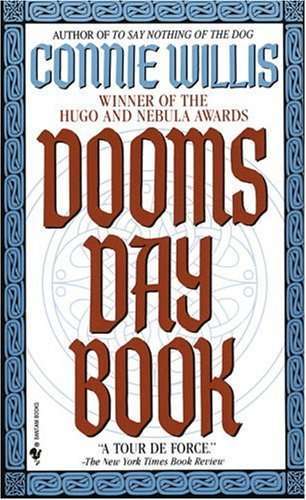
The Doomsday Book by Connie Willis, 1992, Bantam Books (Science Fiction/ Historical Fiction) 


Kivrin is a student of history and time travel at Oxford in 2048. With the help of her devoted professor, she’s about to go back in time to the Middle Ages of the fourteenth century for the ultimate historical research. Kivrin has been prepped in every aspect of time travel, but nothing can prepare her for a virus that hits home in the twenty-first century, trapping her in the past and causing an error in where--and when--she ends up. She finds herself smack-dab in the middle of a Black Plague outbreak. With everyone at home too sick to find her, Kivrin can’t help but become deeply involved in the lives of the people in this small disease-ridden village. The Doomsday Book alters between two storylines, one in the past and one in the future, both taken equally unaware—despite the supposed advancement of the future—by this new and deadly threat. And both communities respond with suspicion and fear, and ultimately with compassion as neighbor cares for neighbor regardless of the century of their birth. Award-winning author Connie Willis writes strong characters, her vision of the future is detailed and realistic, and her historical research is impeccable. The tension between the past and future is palpable, the story is harrowing and fraught with suspense, and the reader will be irresistibly drawn into this remarkable tale than spans the centuries.

The Illustrious Dead: The Terrifying Story of How Typhus Killed Napoleon’s Mightiest Army by Stephen Talty, 2009, Crown Publishers (Nonfiction/ European History/ 19th Century)


In 1811, Napoleon Bonaparte was the undisputed emperor of forty-five million people. His French Empire spread from the Atlantic Ocean to the Russian borders, from northern Germany to southern Spain. He was a master of the art of conquest. True, Spanish rebels fought against his rule and Great Britain was still free, but Napoleon was still the most powerful leader of the day. Until, that is, he decided to send his enormous, state-of-the-art army into Russia. Utter and total defeat was in the cards for Napoleon for the first time, but not from the Russian army. No, Napoleon’s soldiers carried their deaths with them from the start—in a tiny microbe clinging to their gear called typhus. In The Illustrious Dead author Stephen Talty traces the fall of one of the greatest armies the world has ever seen and shows how one little pathogen altered the course of history. From the tsar’s palace in Moscow to the bedsides of stricken soldiers, and with the giant personality of Napoleon Bonaparte hanging over it all, this is a fascinating book rich in historical and scientific detail.

Year of Wonders: A Novel of the Plague by Geraldine Brooks, 2001, Penguin Books (Historical Fiction)


In 1665, Anna Frith is an eighteen-year-old mother and widow in a rural English village. Anna is befriended by the vicar and his wife, who teaches her how to read. The vicar convinces Anna to take in lodgers, but when a tailor from London boards at Anna’s house, he brings with him more than rent money. Hidden in one of his bundles of fabric is an infected flea. The flea bites a rat, the rat bites a villager, and the Black Plague is suddenly sweeping through the remote town. The village voluntarily shuts itself off from the rest of the world to contain the horrible disease (a fact based on the true-life story of the real village of Eyam). For the rest of the year, we live with young Anna as she experiences first-hand the devastating effects of disease, death, and despair. Year of Wonders is an elegant tale for all its heartbreak and Anna’s story is a triumph over human tragedy in all its forms. Author Geraldine Brooks’ prose is lyrical even while she describes the worst that the plague brings out in people; her treatment of Anna’s intelligence and grace results in a compelling portrait. It’s not always an easy book to read, but it is a fine example of historical fiction and the lessons learned from the past.

The Ghost Map: The Story of London’s Deadliest Epidemic—and How it Changed the Way We Think About Disease, Cities, Science, and the Modern World by Steven Johnson, 2006, Penguin Books (Nonfiction/ British History/ 19th Century)


When cholera struck a London neighborhood in1854, it became the deadliest epidemic the city had ever seen. Victorian London has a reputation even today as an era of progress and wealth, and it was indeed a city on the verge of immense cultural and industrial growth. But science and medicine still had a long way to go—no one knew about germs or how contagions were spread or how to effectively treat many of the diseases that killed people every day. And the study of cholera was especially bogged down by old-fashioned beliefs. Doctors of the day were convinced that the disease was spread by foul odors in the air. London was indeed a stinky city, but the notion was way off base. When a single physician, Dr. John Snow, presented the theory that cholera was in fact spread by contaminated water, he was dismissed by the bureaucracy that was supposedly responsible for public health. But he was right, and The Ghost Map is the story of how he proved it and paved the way for much of the understanding about the spread of diseases that we take for granted today. Author Steven Johnson uses Snow’s experiences to shed light on the evolution of civilizations and the organization of cities, but his story is firmly centered on the real people who lived and died in the epidemic, including devoted minister Henry Whitehead who walked the streets of his Soho neighborhood to keep track of who, when, and where the disease struck. Cholera is a small threat these days, but The Ghost Map reminds us that the foundations of our sleek modern cities were laid down hundreds of years ago, and that the threats of the past are never too far from the present. An engrossing and lively book, The Ghost Map is certain to entertain—and educate.

World War Z: An Oral History of the Zombie War by Max Brooks, 2006, Crown Books (Fiction/ Fantasy/ Horror) 


Ten years ago, the zombie plague swept the globe. Now, our narrator has taken it upon himself to document the stories of those lucky enough to survive. And, oh the horror. From early breakouts in China to full-scale military tactics in America, different characters tell their stories in their own voices to our intrepid author Max Brooks (son of Mel and author of the all-too-comedic Zombie Survival Guide). There’s an undercurrent of social and political criticism that’s hard to resist, and let’s face it—nothing is as heart-stopping and attention-grabbing as hoards of the undead moaning and lurching over the ruins of Tokyo and New York, across the freezing plains of Iceland and Canada, and into the worlds’ oceans to sink into the waves and pop up on beaches far away, sopping wet but hungry for human flesh. Despite the outrageous premise, the pain and outrage that the survivors express is real and tangible and much less like a mockumentary than you’d expect. In fact, World War Z is written with such realism that you’ll begin to think it’s all too real. Don’t worry—it’s highly unlikely that your sniffling cold will transform you into a member of the walking dead. But you can never be too careful, so take care of yourself, watch your back, and keep a copy of World War Z in your pocket at all times.