Tuesday, February 15, 2011

I Now Pronounce You Husband and Sleuth


Every great Sherlock has a Watson, a partner who tags along, occasionally finding a clue or two, but existing mainly so the genius detective can show off his astounding deductions and observations. That sort of relationship gets old pretty quick, so mystery writers spice things up by teaming husbands and wives together to solve crime. These duos often star in series; they meet in the first book, fall in love and tie the knot, and then spend the next dozen or so mysteries working together—collaborating, cooperating, and occasionally bickering like the old married couples they’ve become. Being the third wheel to these cunning couples is every bit as much fun as catching the crook.

The Beekeeper’s Apprentice, or, The Segregation of the Queen: A Novel of Suspense Featuring Mary Russell and Sherlock Holmes, Book 1 by Laurie R. King, 2007, Picador Press, originally 1994 (Mystery/ Historical Fiction)


Sherlock Holmes is the original, ultimate bachelor-detective, complete with the genuine Dr. Watson to fawn over his masterly leaps of insight. But author Laurie R. King re-imagines Holmes in his later years as a beekeeper in the English countryside—until one day he trips over a gangly young girl with her nose in a book. The girl is orphan Mary Russell, and Sherlock has just met his match in wit and intelligence. First master and apprentice in the art of detection, then equal partners in investigation, Holmes’ and Russell’s relationship slowly grows into something more important and much more intimate. Their first real challenge comes during Russell’s college years at Oxford after World War I. A master criminal, as devious as the infamous Moriarty, is playing a deadly game with the pair’s very lives. This is all accompanied by King’s fine literary style, with Russell as an intimately honest narrator revealing a detailed sense of historical time and place. The other books in the series continue to develop both the Holmes mythology and the Mary Russell casebook with insightful adventures that draw on literature and history—and just a bit of romance.

1. The Beekeeper’s Apprentice
2. A Monstrous Regiment of Women
3. A Letter of Mary
4. The Moor
5. O Jerusalem
6. Justice Hall
7. The Game
8. Locked Rooms
9. The Language of Bees
10. The God of the Hive

The Secret Adversary: A Tommy and Tuppence Mystery by Agatha Christie, 2004, Signet Books, originally published 1922 (Mystery)


Thomas Beresford and Prudence “Tuppence” Cowley are typical bright young things of the 1920s—unemployed, broke, and bored. So, having tea one day, complaining about the lack of adventure (and jobs), Tommy and Tuppence get an idea. They’ll form the “Young Adventures, Ltd.” and advertise that they’re willing to do…well, anything. A Mr. Whittingham has overheard the duo at the teahouse, and he contacts them to offer the young lady a job. On a whim, Tuppence gives her name as “Jane Finn,” an odd moniker that Tommy heard somewhere. Whittingham fires Tuppence, accuses her of blackmail…and gives her a bit of cash. Tommy and Tuppence are inspired. Apparently, they “know” something! Actual blackmail is risky, but soon they’re head-over-heels in political intrigue, missing heroines, and top-secret documents. Life? Boring? Not when the Young Adventurerers are around. Much of the fun comes from the bumbling teamwork of Tummy and Tuppence, who, of course, come to realize there’s more to their relationship than friendship. Agatha Christie is the Queen of Crime, and this delightful duo of is a refreshing respite from her usual detectives (know-it-all Poirot and little-old-lady Miss Marple). Tommy and Tuppence return for four more thrilling adventures.

Tommy and Tuppence Mysteries by Agatha Christie
1. The Secret Adversary
2. Partners in Crime
3. N or M?
4. By the Pricking of My Thumbs
5. Postern of Fate

Crocodile on the Sandbank: Amelia Peabody Mysteries, Book 1 by Elizabeth Peters, 1988, Mysterious Press, originally published 1975 (Mystery/ Historical Fiction)


The first thing Amelia Peabody does when she gets her independence after the death of her father is run off to Egypt. Not your typical Victorian spinster, Amelia is destined for adventure. So when she collects an elegant damsel in distress, the handsome archeologist Emerson brothers, and a walking, talking (well, moaning) two-thousand-year-old mummy along the way, it should come as no surprise that the iron-willed, umbrella-wielding Englishwoman knows how to deal with supposed curses and fainting ladies. But in the hot-tempered personality of dashing Radcliffe Emerson, Amelia appears to have met her match. It is hardly spoiling the story to reveal that the comically tempestuous relationship between Amelia and Emerson is the force that drives not just Crocodile on the Sandbank, but the other eighteen books in the series. The real appeal lies not so much in the mysteries (though crime does indeed abound among the ruins of the ancient pharaohs) but in author Elizabeth Peters’ dynamic cast of characters and impeccable re-creation of the sights and sounds of Victorian-era Egypt—not to mention the myriad ways in which Amelia and Emerson outdo, outwit, and rescue each other again and again.

Amelia Peabody Mysteries by Elizabeth Peters
1. Crocodile on the Sandbank
2. Curse of the Pharaohs
3. The Mummy Case
4. Lion in the Valley
5. The Deeds of the Disturber
6. The Last Camel Died at Noon
7. The Snake, the Crocodile, and the Dog
8. The Hippopotamus Pool
9. Seeing a Large Cat
10. The Ape Who Guards the Balance
11. The Falcon at the Portal
12. He Shall Thunder in the Sky
13. Lord of the Silent
14. The Golden One
15. Children of the Storm
16. Guardian of the Horizon
17. The Serpent on the Crown
18. Tomb of the Golden Bird
19. A River in the Sky

Pride and Prescience, or, A Truth Universally Acknowledged: A Mr. and Mrs. Darcy Mystery, Book 1 by Carrie Bebris, 2008, Forge Books (Mystery/ Historical Fiction)


Few literary couples are as beloved as Elizabeth Bennett and Mr. Darcy from Jane Austen’s classic Pride and Prejudice. Author Carrie Bebris resurrects this witty, dashing pair and sets them up as amateur sleuths. Their first case comes quick on the heels of their wedding, a double-ceremony with Elizabeth’s sister Jane and Darcy’s BFF Mr. Bingley. Bingley’s sister Caroline (who spent years trying to catch Darcy before Elizabeth beat her to it) chooses this romantic occasion to announce her own engagement to a wealthy American plantation owner. Mr. and Mrs. Darcy must postpone their own honeymoon until this new wedding can take place, but they are delayed even longer when the newest bride Caroline begins to, well, go a bit mad. A visit to Bingley’s manor is complicated by a houseguest who collects mystical artifacts, a bitter family feud—and a murder. Though Darcy and Elizabeth have long been loved for their willful and contrary natures, their two heads are better than one when there’s a houseful of suspects on the loose. Awash in comic dialogue, Regency era details, and even a Gothic flare here and there, Pride and Prescience is an atmospheric, highly enjoyable read.

1. Pride and Prescience, or, A Truth Universally Acknowledged
2. Suspense and Sensibility, or, First Impressions Revisited
3. North by Northanger, or, The Shades of Pemberley
4. The Matters at Mansfield, or, The Crawford Affair
5. The Intrigue at Highbury, or, Emma’s Match

The Cater Street Hangman: A Thomas and Charlotte Pitt Mystery, Book 1 by Ann Perry, 2008, Ballantine Books, originally published 1979 (Mystery/ Historical Fiction)


The Ellisons are a well-to-do Victorian family in a proper London neighborhood. Papa Ellison has a stiff upper lip and Mama is the all the right stuff Victorian ladies are made of; daughters Sarah, Emily, and especially Charlotte have a bit more spunk. But these are soon minor issues—women are being brutally strangled right outside the front door. Enter Inspector Thomas Pitt, an upstart who is far too scruffy, demanding, and familiar (especially with Charlotte) to tolerate, even if he is in charge of the case. But it cannot be denied (especially by Charlotte) that Pitt is intelligent, insightful, and even sensitive. Romance has little time to flourish here, for the Cater Street Hangman is at large and the lives of the neighborhood’s fine young ladies—including the Ellison sisters—are very much in danger. Author Ann Perry pens a serious, atmospheric group of mysteries that are rooted in historical details of Victorian London, foggy nights and narrow alleys included. Perry’s characters (especially Pitt and Charlotte) challenge notions of class and gender which inspires the drama, action, and suspense that makes this mystery series one of the longest running and best loved of its kind.

1. The Cater Street Hangman
2. Callander Square
3. Paragon Walk
4. Resurrection Row
5. Rutland Place
6. Bluegate Fields
7. Death in the Devil's Acre
8. Cardington Crescent
9. Silence in Hanover Close
10. Bethlehem Road
11. Highgate Rise
12. Belgrave Square
13. Farriers’ Lane
14. The Hyde Park Headsman
15. Traitor’s Gate
16. Pentecost Alley
17. Ashworth Hall
18. Brunswick Hall
19. Bedford Square
20. Half Moon Street
21. The Whitechapel Conspiracy
22. Southhampton Row
23. Seven Dials
24. Long Spoon Lane
25. Buckingham Palace Garden
26. Treason at Lisson Grove
The Thin Man by Dashiell Hammet, 1992, Vintage Classics, originally published 1932 (Mystery/ Fiction Classics)


Nick Charles, his lovely young wife Nora, and their dog Asta are spending Christmas in a glitzy Manhattan hotel—days in bed, nights in speakeasies, room service at all hours. Nick used to be a detective, but people find it hard to ignore those words “used to.” So when a sweet young thing spots Nick, remembers him working a case for her father, and asks him to find that very same father (the thin man of the title, now missing), Nick takes it all in stride. But then the thin man’s mistress is murdered. Soon cops, lawyers, and the thin man’s eccentric family are invading the Charles’ hotel room, forcing Nick and Nora to quit their lounging and solve the case. Nick would rather drink martinis, but Nora’s game (Asta too) and soon the couple is getting down to the sordid truth. Wealthy and glamorous, sarcastic and wisecracking, Nick and Nora should be annoying—but they are utterly captivating because they completely adore each other. The Thin Man movies of the 1930s and 40s (starring William Powell and Myrna Loy) have withstood the test of time with as much charm and wit as Hammett’s original crime caper.

Tuesday, February 1, 2011

Roses and Red, Graphic Novels are Blue: Graphic Novel Love Stories


Everyone loves a love story. The romance, the heartbreak, the lovers overcoming the odds to be together, and a gloriously happy ever after. The only thing better than a love story, in fact, is a love story told in rich, romantic colors and dramatic blacks and whites. Graphic novels retell classic romances and begin fresh with boy meets girl. When it comes to professing true love, a picture is worth a thousand words.

Blankets: An Illustrated Novel by Craig Thompson, 2003, Top Shelf Productions (Graphic Novel/ Memoir)


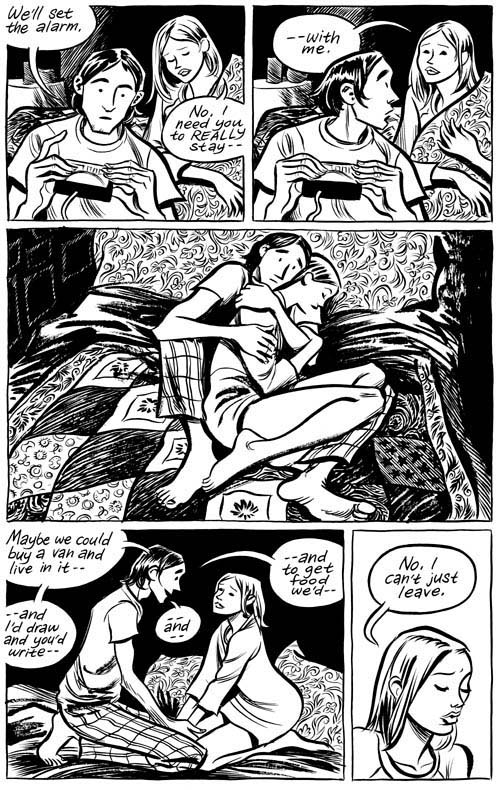
Craig’s parents are conservative Christians who believe that their son’s penchant for art will lead them down the road to hell. Brought up to fear God and to feel guilt over the smallest and most common of boyish sins, Craig is the designated high school outcast. Lucky fellow, he gets to maintain that role at church camp too. But then he meets Raina, beautiful, spiritual, kind, and complicated. The two strike up a relationship, a romance for the ages that has clearly haunted the artist Craig Thompson well into his adult life. Thompson relives his first love in poignant and painful detail accompanied by crisp, clear black-and-white drawings that are wonderfully expressive and dramatic, but never overly sentimental. The clash between what you’re brought up to believe and what you come to believe on your own through your own experiences, is dealt with sensitively, realistically, and with the kind of emotion that every reader can relate to.

Scott Pilgrim, Vol. 1: Scott Pilgrim’s Precious Little Life by Bryan Lee O’Malley, 2004, Oni Press (Graphic Novel/ Adventure/ Fantasy)


Scott Pilgrim: Twenty-three years old. Canadian. Drummer in a sucky band. Dating a high school girl (but they don’t even hold hands). Status: Awesome. Scott Pilgrim’s life is pretty damn great—not an expectation in sight. But then a beautiful Amazon.com delivery girl starts rollerblading through Scott’s dreams, and he’s head-over-heels in sweet, awkward, slacker love—especially when the dream girl turns out to be a real girl, Ramona Flowers, who kind of likes Scott too. The catch? Okay, Scott has to break up with the high school girl. And the band finally has a gig. But more important are Ramona’s seven evil ex-boyfriends, whom Scott must fight—and defeat—if he wants to date Ramona. First up is Matthew Patel, attacking at the club where Scott’s band is playing, and it’s a kung-fu showdown of epic proportions. With lots of action, sarcastic hipster humor, and a manga-influenced comic style, the Scott Pilgrim graphic novels are witty, charming, and unabashedly silly.

Scott Pilgrim by Bryan Lee O’Malley
Vol. 1: Scott Pilgrim’s Precious Little Life
Vol. 2: Scott Pilgrim vs. the World
Vol. 3: Scott Pilgrim and the Infinite Sadness
Vol. 4: Scott Pilgrim Gets It Together
Vol. 5: Scott Pilgrim vs. the Universe
Vol. 6: Scott Pilgrim’s Finest Hour

The Professor’s Daughter by Joann Sfar and Emmanuel Guibert, 2007, First Second Books (Graphic Novel/ Historical Fantasy)


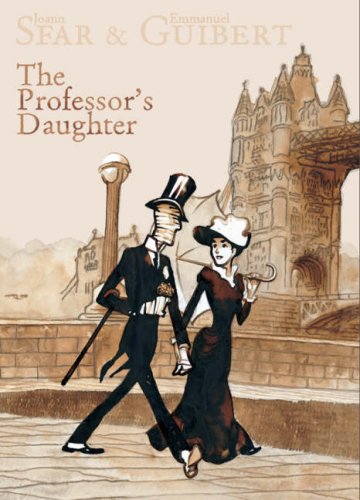
Lillian (pert and pretty) and Imhotep (dashing and dapper) are in love, and the duo makes quite a splash as they gad about Victorian-era London. Of course, many obstacles stand in their way—Lillian is the daughter of an eminent archeology professor, and Imhotep is a bandage-wrapped mummy from Ancient Egypt. Lillian’s father is unlikely to approve the match (“You are the property of the British Museum. You are dead. Stay out of this!” the Professor cries when he discovers his daughter in Imhotep’s arms). More mummified parental figures, the British police force, and Queen Victoria herself get tangled up in this whimsical comedy. As the sprightly forms of Lillian and Imhotep dart across the pages, readers become enchanted by the pair’s hijinks and adventures. Author and artist Joann Sfar and Emmanuel Guibert are in fine form here—cheeky humor and expressive illustrations combine for a delightfully romantic romp.

Thessaly: Witch for Hire by Bill Willingham and Shawn McManus, 2005, DC Comics (Graphic Novel/ Teen Fantasy)


Thessaly is a witch. A smart, sassy, bookish witch living quietly (or trying to, anyway) in Positano, Italy. But her would-be idyllic existence keeps getting interrupted by various monsters. Thessaly has to yank her nose out of her books and destroy those monsters. It’s exhausting, and it gets really annoying when Thess learns that a lovesick ghost named Fetch (whom Thess first met back in Neil Gaiman’s Sandman universe) is responsible for sending all those nasty demons her way. Fetch wants to shack up with Thess and run a monster-slaying business together. And Fetch has got some especially ferocious, dangerous, world-ending beasts all lined up for their first case. Thess, to say the least, is not enchanted. But the reader will be—the witty banter between witch and ghost is catchy and the artwork is cartoonish without being cutesy. Top it off with lots of ass-kicking action and tons of ooey-gooey evil creatures, and you’ve got yourself one quirky little romantic comedy.

Twilight: The Graphic Novel, Vol. 1 by Stephenie Meyer, adapted by Young Kim, 2010, Yen Press (Graphic Novel Adaptation/ Teen Fantasy/ Paranormal Romance)


Bella Swan moves to gloomy Forks, Washington. At school she meets the mysterious, alluring, irresistible Edward Cullen—and of course he has a deep, dark secret (he’s a moody, dreamy, blood-thirsty vampire). Covering roughly the first half of author Stephenie Meyer’s hit teen novel Twilight, this graphic novel adaptation ups the ante on the glamor, the drama, the suspense, and the interspecies paranormal romance. Artist Young Kim’s illustrations are sleek, strong black-and-white drawings with glimmers of red and brown when the blood flows or the fangs bite. Bella and Edward are depicted in anime-style beauty, all big eyes and pouty lips—ideal for gazing across the page at each other, sighing with longing as they yearn to be together. Whether you’re Team Edward or Team Jacob, whether you read the book ten times or saw the movie twenty times, the graphic novel still holds twists and surprises to delight and thrill. Ah, there’s nothing like a good vampire romance.

Pride and Prejudice and Zombies: The Graphic Novel by Jane Austen and Seth Grahame-Smith, adapted by Tony Lee, 2010, Del Rey/ Ballantine Books (Graphic Novel Adaptation/ Horror/ Humor/ Classics)


The illustrations were the one of the key features of Seth Grahame-Smith’s 2009 smash-hit mash-up combining Jane Austen’s masterpiece Pride and Prejudice with his own scenes of “ultraviolent zombie mayhem.” Pride and Prejudice and Zombies was a remarkably clever and downright funny little book; the next step on the road to success, obviously, is a graphic novel adaptation. In elegant black-and-white drawings, Elizabeth Bennett and her sisters attend country dances, decapitate the undead, flirt with distinguished gentleman, and master both the deadly and the feminine arts. Elizabeth spars with Mr. Darcy; Mr. Darcy spars with zombies; the reader is rewarded with lots of guts and gore. And those guts and gore are illustrated in as much loving detail as the 18th century-period frocks and top hats. Elizabeth is clever and lovely, Mr. Darcy is dark and dashing, and the zombies are practically eating their way through panels and pages. All in all, the graphic Pride and Prejudice and Zombies is every bit as much fun as its premise would lead you to believe.

Tuesday, January 18, 2011

Early Detectives and First Forensics


Crime scene investigation has come a long way. Modern technology means that a microscopic bit of trace evidence is enough to catch a criminal. But way back when, before ballistics, before fingerprints, even before mug shots, detective work was an entirely different matter. Early forensic techniques were untried controversial theories, not proof—not yet. Luckily, history can supply plenty of examples of murderers and the men and women who tracked them down. Whether authors are recreating fact or spinning historical fiction, solving crime has never been more fascinating.

The Mistress of the Art of Death by Ariana Franklin, 2007, Putnam Books (Historical Fiction/ Mystery) 


Dr. Adelia Aguilar is an oddity. She’s an independent woman, a highly-educated doctor, and the primary specialist in her field of study. Today, Adelia would simply be a coroner, examining bodies for evidence of how they met their end. But in her day and age—the year 1171, in Medieval Europe—Adelia is a “mistress of the art of death,” and most of her contemporaries would not hesitate to label her a witch and burn her at the stake. But Adelia is on a mission. Sent from Salerno, Italy, where women are allowed to study and practice medicine, to Cambridge, England, where women are expected to stay firmly in the home, Adelia and a few intelligent, enlightened companions are charged with solving the grisly murders of four children. Adelia’s examination of the bodies hints that the culprit may be among the pilgrims recently arrived at Cambridge. As Adelia narrows down the list of suspects, author Ariana Franklin introduces the readers to life in the Middle Ages—dirty, grim, ugly, but also populated by men and women not so different from you and me. The Mistress of the Art of Death is a sophisticated historical mystery.

The Alienist by Caleb Carr, 2006, Random House, originally published 1994 (Historical Fiction/ Mystery)


In 1896, psychology is as much in its infancy as forensic science. Dr. Laszlo Kreizler is an “alienist” in the parlance of the day, and he’s just been commissioned to lead an amateur team of sleuths and solve a series of gruesome murders that are plaguing Manhattan’s Lower East Side. A brutal killer is leaving the bodies of young male prostitutes strewn across the city, and so crime reporter John Moore, brothers Marcus and Lucius and their progressive forensic techniques, and first female detective Sarah Howard join Kreizler’s investigation. This motley crew works together seamlessly—looking into the lives of the victims, testing new forensics like fingerprinting, and building a profile of the criminal. The insights of Dr. Kreizler are brilliant, but will the team get a breakthrough before the killer strikes again? Chock-full of historical details about New York City at the end of the 19th century, from the delectable oysters at Delmonico’s to the immense class difference between rich and poor to the cameo appearances by top men of the time (like Teddy Roosevelt, J.P. Morgan, and Jacob Riis), The Alienist is both a gripping murder mystery and a distinct portrait of a historical time and place.

The Poisoner’s Handbook: Murder and the Birth of Forensic Medicine in Jazz Age New York by Deborah Blum, 2010, Penguin Books (Nonfiction/ 20th Century American History/ True Crime) 


Modern forensics begins in Prohibition-era New York City, when Charles Norris is appointed Manhattan’s chief medical examiner in 1918. Norris is the first medical examiner trained in medicine, and he is determined that every medical examiner who comes after him will be a doctor and a scientist. He’s got his work cut out for him—poison is the weapon of choice among murderers, and very few poisons are traceable. Luckily, the city has just hired toxicologist Alexander Gettler, a man with a passion for chemistry who will go to any lengths to track down arsenic, cyanide, mercury, and their noxious friends carbon monoxide, thallium, and chloroform. As Prohibition marches on, bootleggers produce cheap whiskeys laced with more chemicals than alcohol. Americans, expecting a night of undercover fun, are drinking poison and dying. Gettler has to work harder to find the evidence that poison leaves behind, and Norris has to convince the nation to take forensic science seriously. Along the way, author and scientific journalist Deborah Blum treats readers to the scandalous death-by-poison cases of the time. The Poisoner’s Handbook is chock-full of murder and mayhem, packed with real heroes and true villains, and overflowing with fascinating ways to die.

The Suspicions of Mr. Whicher: A Shocking Murder and the Undoing of a Great Victorian Detective by Kate Summerscale, 2008, Walker and Company (Nonfiction/ 19th Century British History/ True Crime)


One summer morning in 1860, the body of a little boy is found on the grounds of Road Hill House, a fine estate in the English countryside. This murder rocked Victorian England to its core. Everyone wanted to play detective. The art of detection was very new—detectives had existed in an official capacity for only a few years—but the public was fascinated by the new police work. Luminaries like Charles Dickens and Wilkie Collins immortalized the detective in their novels Bleak House (1853) and The Moonstone (1868). The inspiration for both books was Jack Whicher. It is this man who investigates the murder at Road Hill House, and it is this case that proves Whicher’s undoing. Because Whicher is up against more than just a murderer—he’s up against a Victorian society that is too shocked by his suspicions to accept his solution. The public’s awe of the new detective is fading fast, and there’s no guarantee that Whicher can prove his case in time. Author Kate Summerscale spins this tidbit of history with the drama and suspense usually reserved for a mystery novel. The Suspicions of Mr. Whicher is a captivating chapter in the modern development of the detective.

The Big Policeman: The Rise and Fall of America’s First, Most Ruthless, and Greatest Detective by J. North Conway, 2010, Lyons Press (Nonfiction/ 19th Century American History/ True Crime)


New York City has always been a tough town. But when you’re an Irish immigrant who escaped the notorious Five Points neighborhood to fight in the Civil War, join the city’s burgeoning police force, and rise to power through a combination of ruthless cunning and innovative detective work, things are tougher and more complicated than you could ever imagine. Such is the life story of Thomas Byrne, New York City’s premiere police chief during the 19th century. This biography by historical writer J. North Conway traces the career of the man who implemented now-standard crime-fighting techniques like mug shots and police line-ups and who got his best results when he “gave ’em the third degree,” a phrase he coined and which meant beating confessions out of suspects. Byrne solved the major crimes of his day—the case of “America’s Jack the Ripper,” the ballsy robbery of the impenetrable Manhattan Savings Bank, the theft and ransom of a millionaire’s dead body—but got caught up in the corrupt Tammany Hall-dominated politics of the day. Byrne was a complicated man with his own set of morals, and the story of his rise and inevitable fall is sensational, compelling history.

The Science of Sherlock Holmes: From Baskerville Hall to the Valley of Fear, the Real Forensics Behind the Great Detective’s Greatest Cases by E.J. Wagner, 2006, Wiley Books (Nonfiction/ 19th Century British History/ True Crime) 


How accurate were Sherlock Holmes’ methods, really? He’s a fictional character, after all, working in the dark ages of the Victorian era before the invention of electricity, antibiotics, or automobiles. But by solving cases on the basis of tire marks, tobacco ash, and—yes—thumbprints and bullet trajectories, Holmes proves himself an important forerunner in the ever-important field of forensic science. Author, crime historian, and Holmes fanatic E.J. Wagner makes a magical match when she uses the works of Arthur Conan Doyle to explore early crime scene investigation methods. From the “real” hound of the Baskervilles to Holmes’ use of fingerprinting to Conan Doyle’s real-life contemporaries like the Bow Street Runners and brilliant-but-bigheaded pathologist Sir Bernard Spilsbury, The Science of Sherlock Holmes guides us through the science’s early experiments and into the accepted practices. There are also old-fashioned legends and bizarre myths, vampires, Jack the Ripper, Lizzie Borden, and lots of blood and guts. By combining the popularity of two forever-trendy subjects—Sherlock Holmes and forensic science—Wagner succeeds in shedding light on both, pleasing fans of both, and educating and entertaining absolutely everyone.

Tuesday, December 21, 2010

Holiday Break: Spotlight on Public Libraries


Booklists for Bookworms will be taking a brief break from books during the holiday season.  Get your book fix by browsing the suggestions from readers and librarians alike on these public library readers' pages.


Resources for Readers, King County Public Library, Washington


Readers' Page, Multnomah County Public Library, Oregon


Bookspace, Hennepin County Public Library, Minnesota


 The What to Read Page, Cuyahoga County Public Library, Ohio


Reader's Cafe, Salt Lake County Public Library, Utah


Books, Movies, and Music, The Public Library of Cincinnati and Hamilton County, Ohio


The Readers' Corner, Morton Grove Public Library, Illinois 

Tuesday, December 7, 2010

Real People Make the Best Book Detectives


Imaging the private lives of historical figures is good fun. No matter how detailed the record of someone’s life is, there’s still room to pretend. Turning real-life royals, artists, and especially authors into book detectives seems to be a particularly favorite pastime of mystery writers. In addition to their busy fact-based lives and the demands of their time (which range from the 15th century to the 1930s), these characters now have a wealth of crimes and clues to sort through. If you can’t get enough of a favorite old-fashioned celeb, all you have to do is turn these pages and play Watson to their Sherlock.

Wicked Will: A Mystery of Young William Shakespeare by Bailey MacDonald, 2009, Aladdin Books (Historical Mystery/ Children’s Fiction) 


Thomas Pryne is a young actor traveling in a players’ troupe through jolly old 16th century England. Except that Tom is not what he appears—he is actually Viola, a girl in disguise under the protection of her actor-uncle. When they arrive in the little village of Stratford-upon-Avon, Viola’s secret is threatened by an all-too-observant, overly-inquisitive, and rather annoying boy—who just happens to be named Will Shakespeare. Will is quick to drag Viola into his schemes and adventures, but when the town curmudgeon is found murdered, Will quickly turns from mischief-making to investigating. Viola, though skeptical of Will’s skill, is more than willing to play along—because her dear uncle is accused of the crime, and the brash young playwright-to-be just might be their best chance at uncovering the truth. Author Bailey MacDonald sprinkles her clever mystery with snippets from familiar plays and stays true to the lively spirit of the real William Shakespeare (1564-1616). As irresistible as the boy Shakespeare super-sleuth is, MacDonald has no current plans for a sequel. She does, however, have plans for a young Benjamin Franklin, who stars in his own rousing mystery debut, The Secret of the Sealed Room.

Jane and the Unpleasantness at Scargrave Manor: Being the First Jane Austen Mystery by Stephanie Barron, 2008, Bantam Books, originally published 1996 (Historical Mystery)


Author Stephanie Barron sets her fictionalized Jane Austen in the seemingly mild-mannered world of 18th century polite society, with manor houses, horse-drawn carriages, and formal visits galore—and then gives her heroine lots of adventures and mysteries to solve. In the series opener, Jane has just caused a scandal by accepting a marriage proposal only to change her mind the next morning. Seeking refuge from wagging tongues, Jane goes to visit an old friend, Isobel Payne, who has just married the wealthy—and much older—Earl of Scargrave. When the Earl suddenly dies and anonymous notes accuse his young bride of murder, Jane determines to stay on and help her dear friend through this dark hour. There’s a tangle of suspects and motives to unravel—greedy nephews, airhead aunts, scoundrels, and ne’er-do-wells—not to mention a dashing Lord with a decided interest in Jane the detective. Janeites will recognize names and characters from the author’s life and novels and will surely get a kick out of seeing the prim-and-proper Miss Austen (1775-1817) turn snoop. It will come as no surprise that with her reputed wit and critical eye, Jane makes a formidable detective indeed.

Jane Austen Mysteries by Stephanie Barron
1. Jane and the Unpleasantness at Scargrave Manor
2. Jane and the Man of Cloth
3. Jane and the Wandering Eye
4. Jane and the Genius of the Place
5. Jane and the Stillroom Maid
6. Jane and the Prisoner of Wool House
7. Jane and the Ghosts of Netley
8. Jane and His Lordship’s Legacy
9. Jane and the Barque of Frailty
10. Jane and the Madness of Lord Byron

The Tale of Hill Top Farm: The Cottage Tales of Beatrix Potter, Book 1 by Susan Wittig Albert, 2004, Berkley Prime Crime (Historical Mystery)


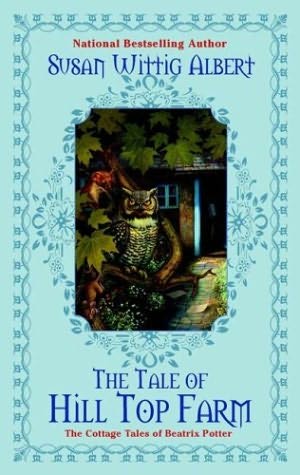
The village of Near Sawrey is like many English villages—seemingly sleepy, but ready to jump to life at the slightest hint of scandal. When a resident dies unexpectedly, the rumor mill kicks into high gear. Into this frenzy of speculation comes Miss Beatrix Potter. It’s 1905, and the author is beginning to make a name for herself with her tales of Peter Rabbit and Mrs. Tiggy-Winkle. But she’s chafing under the protection of her snobbish parents and mourning the death of her fiancĂ©. Seeking solace, Beatrix arrives in Near Sawrey (pet rabbits in tow) as the new owner of Hill Top Farm. Locals add her to their mix of gossip but Beatrix fits in quickly, especially when her quick eye and growing self confidence land her smack in the middle of a puzzle involving a trio of important missing items. It’s a cozy little mystery made even sweeter by the addition of village animals, who have as much to say as their human counterparts do. Author Susan Wittig Albert includes a biography that is sure to make readers as keen to explore the real life of Beatrix Potter (1866-1943) as they will be to solve mysteries with her.

The Cottage Tales of Beatrix Potter by Susan Wittig Albert
1. The Tale of Hill Top Farm
2. The Tale of Holly How
3. The Tale of Cuckoo Brow Wood
4. The Tale of Hawthorn House
5. The Tale of Briar Bank
6. The Tale of Applebeck Orchard
7. The Tale of Oat Cake Crag

An Expert in Murder: A New Mystery Featuring Josephine Tey, Book 1 by Nicola Upson, 2008, Harper Books (Historical Mystery)


Josephine Tey, acclaimed mystery writer on par with the likes of Dorothy L. Sayers and Agatha Christie, is on her way to London to celebrate the triumphant run of her play, Richard of Bordeaux. On the train she meets an avid fan, a young haberdasher named Elspeth whose enthusiasm and optimism make an impression on Josephine despite their brief acquaintance. So when Josephine learns that Elspeth was murdered shortly after they parted company, the shock hits hard. Detective Inspector Archie Penrose is a friend of Josephine’s, and the author of fictional mysteries is swiftly drawn deep into the dangers of a true crime that strikes far too close to home. Author Nicola Upson conveys the atmosphere of 1930s England to a tee. The mystery, too, is smart and genuine—Upson even went so far as to interview Richard of Bordeaux’s real-life players, though their names have been changed for the book. The real Josephine Tey (a pseudonym for Elizabeth MacKintosh, aka Gordon Daviot, 1896-1952) was one of the Queens of Crime back in the Golden Age of Detective Fiction, and mystery lovers unfamiliar with her novels will be flocking to the shelves for the likes of The Man in the Queue (1929) and The Daughter of Time (1951).

Josephine Tey Mysteries by Nicola Upson
1. An Expert in Murder
2. Angel with Two Faces

Groucho Marx, Master Detective, Book 1 by Ron Goulart, 1998, St. Martin’s Press (Historical Mystery/ Humor)


Hollywood, 1937. Groucho Marx (1890-1977), the cigar-smoking, wise-cracking, fake-mustache-wearing brother of Harpo, Chico, Gummo, and Zeppo, is about to star in a farcical radio show called Groucho Marx, Master Detective. It’s supposed to be an ironic title, but Groucho does in fact have quite the nose for mystery. When young starlet Peg McMorrow is reported to have killed herself, the comedian’s interest is immediately piqued. He didn’t know Peg well or for long, but he knew her well enough to rule out suicide. And sure enough, Peg’s death is being covered up quick—no news story, no police report, no funeral. Groucho enlists crime-beat-reporter-turned-script-writer Frank Denby to assist in his amateur investigation. Frank’s just fallen head-over-heels for a pretty young thing of his own, but like Groucho, his sense of right demands that justice prevail. Nothing, however, not murdered actresses nor gun-toting assassins nor corrupt policemen, can drown Groucho’s rapid-fire wit and comedic word play. Familiar with the Marx Brothers or not, author Ron Goulart’s cunning mystery series is sure to make readers chuckle and puzzle as they follow Groucho through the behind-the-scenes intrigues, passions, and crimes of glamorous old-world Hollywood.

Groucho Marx Mysteries by Ron Goulart
1. Groucho Marx, Master Detective
2. Groucho Marx, Private Eye
3. Elementary, My Dear Groucho
4. Groucho Marx and the Broadway Murders
5. Groucho Marx, Secret Agent
6. Groucho Marx, King of the Jungle