Showing posts with label graphic novels. Show all posts

Tuesday, February 1, 2011

Roses and Red, Graphic Novels are Blue: Graphic Novel Love Stories


Everyone loves a love story. The romance, the heartbreak, the lovers overcoming the odds to be together, and a gloriously happy ever after. The only thing better than a love story, in fact, is a love story told in rich, romantic colors and dramatic blacks and whites. Graphic novels retell classic romances and begin fresh with boy meets girl. When it comes to professing true love, a picture is worth a thousand words.

Blankets: An Illustrated Novel by Craig Thompson, 2003, Top Shelf Productions (Graphic Novel/ Memoir)


Craig’s parents are conservative Christians who believe that their son’s penchant for art will lead them down the road to hell. Brought up to fear God and to feel guilt over the smallest and most common of boyish sins, Craig is the designated high school outcast. Lucky fellow, he gets to maintain that role at church camp too. But then he meets Raina, beautiful, spiritual, kind, and complicated. The two strike up a relationship, a romance for the ages that has clearly haunted the artist Craig Thompson well into his adult life. Thompson relives his first love in poignant and painful detail accompanied by crisp, clear black-and-white drawings that are wonderfully expressive and dramatic, but never overly sentimental. The clash between what you’re brought up to believe and what you come to believe on your own through your own experiences, is dealt with sensitively, realistically, and with the kind of emotion that every reader can relate to.

Scott Pilgrim, Vol. 1: Scott Pilgrim’s Precious Little Life by Bryan Lee O’Malley, 2004, Oni Press (Graphic Novel/ Adventure/ Fantasy)


Scott Pilgrim: Twenty-three years old. Canadian. Drummer in a sucky band. Dating a high school girl (but they don’t even hold hands). Status: Awesome. Scott Pilgrim’s life is pretty damn great—not an expectation in sight. But then a beautiful Amazon.com delivery girl starts rollerblading through Scott’s dreams, and he’s head-over-heels in sweet, awkward, slacker love—especially when the dream girl turns out to be a real girl, Ramona Flowers, who kind of likes Scott too. The catch? Okay, Scott has to break up with the high school girl. And the band finally has a gig. But more important are Ramona’s seven evil ex-boyfriends, whom Scott must fight—and defeat—if he wants to date Ramona. First up is Matthew Patel, attacking at the club where Scott’s band is playing, and it’s a kung-fu showdown of epic proportions. With lots of action, sarcastic hipster humor, and a manga-influenced comic style, the Scott Pilgrim graphic novels are witty, charming, and unabashedly silly.

Scott Pilgrim by Bryan Lee O’Malley
Vol. 1: Scott Pilgrim’s Precious Little Life
Vol. 2: Scott Pilgrim vs. the World
Vol. 3: Scott Pilgrim and the Infinite Sadness
Vol. 4: Scott Pilgrim Gets It Together
Vol. 5: Scott Pilgrim vs. the Universe
Vol. 6: Scott Pilgrim’s Finest Hour

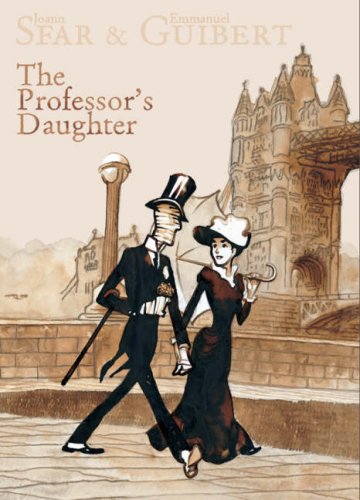
The Professor’s Daughter by Joann Sfar and Emmanuel Guibert, 2007, First Second Books (Graphic Novel/ Historical Fantasy)


Lillian (pert and pretty) and Imhotep (dashing and dapper) are in love, and the duo makes quite a splash as they gad about Victorian-era London. Of course, many obstacles stand in their way—Lillian is the daughter of an eminent archeology professor, and Imhotep is a bandage-wrapped mummy from Ancient Egypt. Lillian’s father is unlikely to approve the match (“You are the property of the British Museum. You are dead. Stay out of this!” the Professor cries when he discovers his daughter in Imhotep’s arms). More mummified parental figures, the British police force, and Queen Victoria herself get tangled up in this whimsical comedy. As the sprightly forms of Lillian and Imhotep dart across the pages, readers become enchanted by the pair’s hijinks and adventures. Author and artist Joann Sfar and Emmanuel Guibert are in fine form here—cheeky humor and expressive illustrations combine for a delightfully romantic romp.

Thessaly: Witch for Hire by Bill Willingham and Shawn McManus, 2005, DC Comics (Graphic Novel/ Teen Fantasy)


Thessaly is a witch. A smart, sassy, bookish witch living quietly (or trying to, anyway) in Positano, Italy. But her would-be idyllic existence keeps getting interrupted by various monsters. Thessaly has to yank her nose out of her books and destroy those monsters. It’s exhausting, and it gets really annoying when Thess learns that a lovesick ghost named Fetch (whom Thess first met back in Neil Gaiman’s Sandman universe) is responsible for sending all those nasty demons her way. Fetch wants to shack up with Thess and run a monster-slaying business together. And Fetch has got some especially ferocious, dangerous, world-ending beasts all lined up for their first case. Thess, to say the least, is not enchanted. But the reader will be—the witty banter between witch and ghost is catchy and the artwork is cartoonish without being cutesy. Top it off with lots of ass-kicking action and tons of ooey-gooey evil creatures, and you’ve got yourself one quirky little romantic comedy.

Twilight: The Graphic Novel, Vol. 1 by Stephenie Meyer, adapted by Young Kim, 2010, Yen Press (Graphic Novel Adaptation/ Teen Fantasy/ Paranormal Romance)


Bella Swan moves to gloomy Forks, Washington. At school she meets the mysterious, alluring, irresistible Edward Cullen—and of course he has a deep, dark secret (he’s a moody, dreamy, blood-thirsty vampire). Covering roughly the first half of author Stephenie Meyer’s hit teen novel Twilight, this graphic novel adaptation ups the ante on the glamor, the drama, the suspense, and the interspecies paranormal romance. Artist Young Kim’s illustrations are sleek, strong black-and-white drawings with glimmers of red and brown when the blood flows or the fangs bite. Bella and Edward are depicted in anime-style beauty, all big eyes and pouty lips—ideal for gazing across the page at each other, sighing with longing as they yearn to be together. Whether you’re Team Edward or Team Jacob, whether you read the book ten times or saw the movie twenty times, the graphic novel still holds twists and surprises to delight and thrill. Ah, there’s nothing like a good vampire romance.

Pride and Prejudice and Zombies: The Graphic Novel by Jane Austen and Seth Grahame-Smith, adapted by Tony Lee, 2010, Del Rey/ Ballantine Books (Graphic Novel Adaptation/ Horror/ Humor/ Classics)


The illustrations were the one of the key features of Seth Grahame-Smith’s 2009 smash-hit mash-up combining Jane Austen’s masterpiece Pride and Prejudice with his own scenes of “ultraviolent zombie mayhem.” Pride and Prejudice and Zombies was a remarkably clever and downright funny little book; the next step on the road to success, obviously, is a graphic novel adaptation. In elegant black-and-white drawings, Elizabeth Bennett and her sisters attend country dances, decapitate the undead, flirt with distinguished gentleman, and master both the deadly and the feminine arts. Elizabeth spars with Mr. Darcy; Mr. Darcy spars with zombies; the reader is rewarded with lots of guts and gore. And those guts and gore are illustrated in as much loving detail as the 18th century-period frocks and top hats. Elizabeth is clever and lovely, Mr. Darcy is dark and dashing, and the zombies are practically eating their way through panels and pages. All in all, the graphic Pride and Prejudice and Zombies is every bit as much fun as its premise would lead you to believe.

Tuesday, September 14, 2010

Be My Private Eye


Gumshoes, flatfoots, shamans, private eyes, P.I.s. Call them what you will, but there is no detective like the private investigator. These sleuths are not copper-on-the-beat policemen or armchair amateurs with the luxury to solve crimes in their spare time. The private eye is a tough-as-nails consummate professional, and you’ll be more than willing and able to pay for these expert crime-solving services.

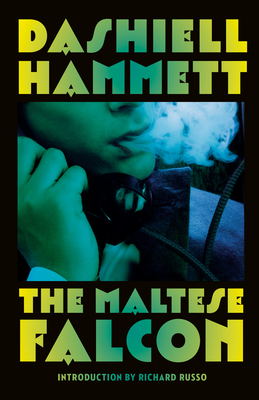
The Maltese Falcon by Dashiell Hammett, 1992, Vintage Books, originally published 1930 (Mystery)


Sam Spade is a sardonic, detached, keen-eyed private detective with his own unwavering code of honor. So when his partner Miles Archer is killed while tailing a man suspected of running off with a new client’s sister, Spade is immediately on the case—even though he’s been making time with Archer’s wife. But that was just a passing fancy. The new client, Brigid O’Shaughnessy, is the real deal: bright, beautiful, and a complete liar. She doesn’t even have a sister. What Brigid does have is an intriguing story about a valuable falcon statue and lots of low-down dirty gangsters hot on its trail. Embroiled in this plot, Spade keeps his wits and stays one step ahead of the bad guys—even though with all the crossing and double-crossing going on, he doesn’t always know who the bad guys are. Author Dashiell Hammett’s pulp fiction potboiler, with its sparse prose and compelling characters, has become a classic. Influencing even fellow mystery author Raymond Chandler (creator of the second best-known hardboiled detective Philip Marlowe), Sam Spade is the granddaddy of every hard-assed, wise-cracking, no-nonsense private eye on the street. Humphrey Bogart’s top-notch performance as Sam Spade in the 1941 film adaptation, a classic in its own right, has guaranteed that a certain black bird will be causing trouble for decades to come.

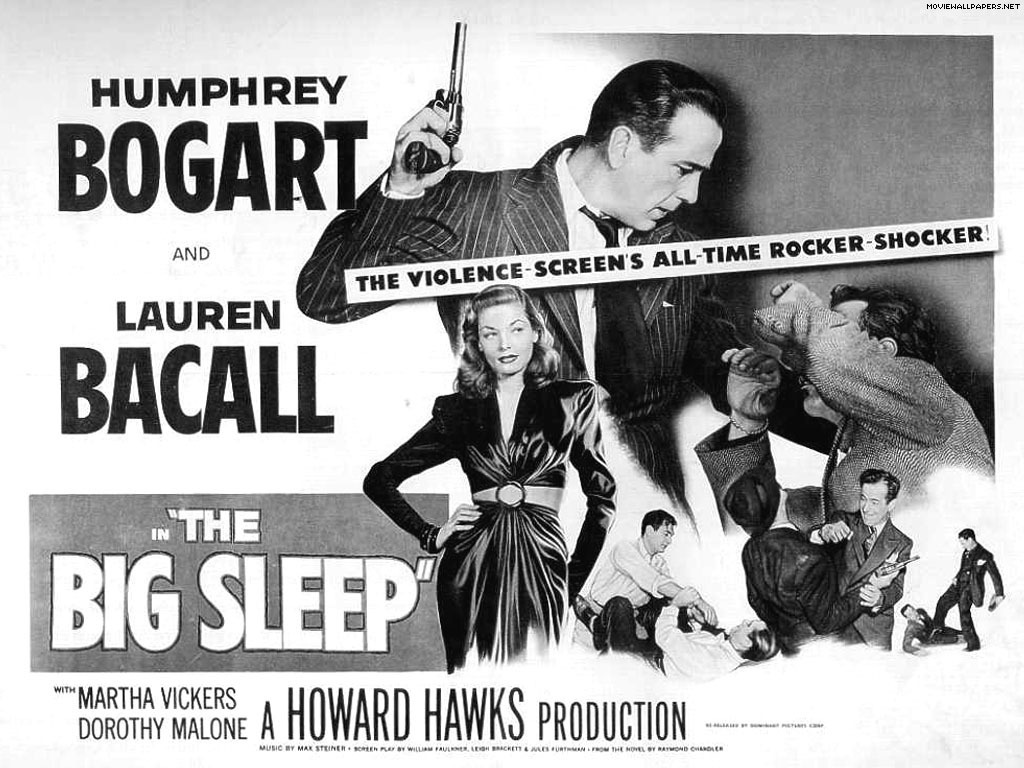
The Big Sleep by Raymond Chandler, 1992, Vintage Books, originally published 1939 (Mystery)


When private investigator Philip Marlowe is called to the massive mansion of paraplegic millionaire General Sternwood, he doesn’t expect to be plunged into a mess of blackmailers, gangsters, and drug dealers. But he takes it all in stride, because Marlowe is as hard-nosed (not to mention hard-drinking and chain-smoking) as they come. Sternwood’s wild-child daughter Carmen is a vivacious tease of a girl, and she’s being blackmailed. Marlowe is charged with putting a stop to the extortion and getting Carmen out of trouble, but the girl—and her drop-dead-gorgeous, tough-as-nails big sister Vivian—proves to be more than a handful. The sisters have agendas of their own and both know some shady characters. No one is telling the truth, the whole truth, and nothing but the truth. In fact, most of what comes out of their lips is about as far from the truth as you can get. Pornographers, gamblers, and murders all become part of the Byzantine plot as Marlowe scowls his way across the dark underbelly of 1940s Los Angeles. He may be surrounded by double-crossing bad guys and taunting femme fatales, but Marlowe is never outwitted, outpaced, or outmatched. Cynical and world-weary, Marlowe is an all-American anti-hero and the star of several of author Raymond Chandler’s trademark hardboiled noir thrillers. Lauren Bacall played Vivian to Humphrey Bogart’s Marlowe in the 1946 film adaptation, cementing The Big Sleep’s place in the detective lit canon.

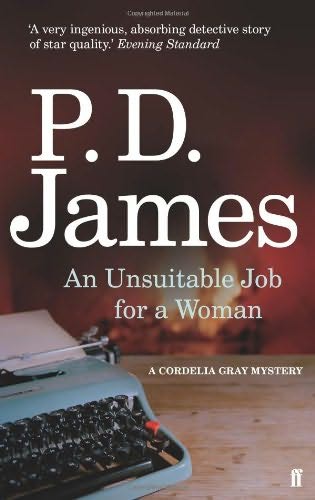
An Unsuitable Job for a Woman: A Cordelia Gray Mystery by P.D. James, 2001, Scribner Books, originally published 1972 (Mystery)


It took awhile for women to enter the private eye profession without serving as secretaries or seductresses. When they did, the ladies proved to be every bit as tough, efficient, and intuitive as their male predecessors. In 1972, author P.D. James introduced Cordelia Gray, a young woman who inherits a London detective agency. Of course, it’s an awfully run-down detective agency, and Cordelia only gets it when her she finds her mentor Bernie Pryde, a cancer-ridden ex-cop, dead in the office. Bernie committed suicide but left his beloved P.I. firm in the capable hands of his youthful assistant. Cordelia bites the bullet, defies convention, and makes the business her own. Luck is on her side when her first case is a high profile investigation into the supposed suicide of a prominent scientist’s son. The son is Mark Callender, an intelligent Cambridge student who suddenly left school, became a gardener for a wealthy family, lived in a cozy little cottage, and then hung himself. To Cordelia, questioning Mark’s uncooperative friends and investigating the puzzling crime scene, the pieces don’t fit. Digging deep into Callender family secrets, Cordelia uncovers a web of mysterious circumstances that someone doesn’t want brought to light. Now Cordelia herself is a target, but no good private investigator lets something as trivial as danger stand in the way. Cordelia, despite her youth and inexperience, is determined to be a damn good P.I. Author P.D. James (born in 1920 and publishing since 1962) is as experienced a mystery writer as they come. Tight plotting, attention to detail, and compelling characters mean that Cordelia Gray is a detective to be reckoned with—and she appears in one more mystery, 1983’s The Skull Beneath the Skin.

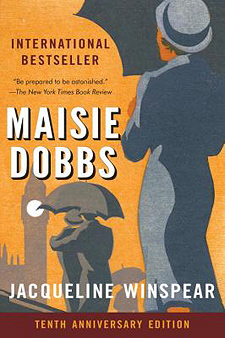
Maisie Dobbs by Jacqueline Winspear, 2003, Soho Press (Historical Fiction/ Mystery)


Written years after Cordelia Gray hit the P.I. scene but set decades earlier, Maisie Dobbs is another young woman with a keen eye who defies stereotype and hangs her shingle as a private detective. The year is 1929 and England is still recovering from the devastating effects of World War I. But Maisie Dobbs, ex-maidservant, student of master-detective Maurice Blanche, former front-line nurse, is turning a new page and opening her own private investigations agency in London. Her allies include her previous employer Lady Rowan (who discovered her maid reading philosophy in the library one night, correctly gauged this unusual servant’s intellect, and sent her straight off to University) and neighborhood handy-man Billy Beale (sharp, street-wise, an investigative-assistant in the making). Maisie herself is an acute observer of human nature, intuitive and sensitive and able to relate to people of all classes and backgrounds, but she’s also nursing her own war wounds. Still, she’s ready to put all that behind her when her first case comes along. It begins as a tedious investigation into the whereabouts of a seemingly unfaithful wife, but before long the trail leads to a secluded convalescent home for soldiers damaged in mind and body—from which very few men ever emerge alive. Now Maisie is face to face with the tragedies of the Great War that she’s tried so hard to forget, and with a complex mystery on her hands to boot. Author Jacqueline Winspear’s portrait of post-World War I England is pitch-perfect and her heroine is remarkably strong and well-drawn. Maisie Dobbs is a fine example of romance, mystery, and historical fiction all rolled into a suspenseful, moving story.

Maisie Dobbs Mysteries by Jacqueline Winspear
1. Maisie Dobbs
2. Birds of a Feather
3. Pardonable Lies
4. Messenger of Truth
5. An Incomplete Revenge
6. Among the Mad
7. The Mapping of Love and Death

The No. 1 Ladies’ Detective Agency by Alexander McCall Smith, 2009, Anchor Books, originally published 1998 (Mystery)


There are not many detective agencies in Botswana. There are even fewer ladies’ detective agencies in Botswana. In fact, there are none—until now. Using the funds from the sale of her beloved father’s cattle, middle-aged Mma Precious Ramotswe sets up the No. 1 Ladies’ Detective Agency in her small hometown of Gaborone. As the country’s only female private investigator, Mma Ramotswe is not entirely certain that her gamble will pay off. But sure enough, the clients come. Women want to know where their cheating husbands have strayed. Fathers want to know which boys their young daughters are dating. And there are more sinister crimes afoot too, as in the case of a missing little boy. But Mma Ramotswe handles them all in her own fashion. Armed with only a detecting manual, the example of mystery writer Agatha Christie, and her own more-than-competent intuition and understanding of her fellows, Mma Ramostwe tackles every case with humor and wisdom. Told in a series of vignettes that trace Mma Ramotswe’s history as well as her present casework, author Alexander McCall Smith paints a vivid portrait of Africa and the people who love to call it home. Cozy, gentle, and brimming over with true glimpses into the myriad workings of human nature, Mma Ramotswe and her little detective agency are a welcome addition to the otherwise hard-edged world of private eye fiction—and so popular that HBO has developed a No. 1 Ladies’ Detective Agency television show.

1. The No. 1 Ladies’ Detective Agency
2. Tears of the Giraffe
3. Morality for Beautiful Girls
4. The Kalahari Typing School for Men
5. The Full Cupboard of Life
6. In the Company of Cheerful Ladies
7. Blue Shoes and Happiness
8. The Good Husband of Zebra Drive
9. The Miracle at Speedy Motors
10. Tea Time for the Traditionally Built
11. The Double Comfort Safari Club

The Case of the Missing Servant: From the Files of Vish Puri, India’s “Most Private Investigator” by Tarquin Hall, 2009, Simon and Schuster (Mystery)


Vish Puri is India’s “Most Private” private investigator. With a team of delightfully nicknamed employees (the driver goes by “Handbrake;” the firm’s female agent is known as “Facecream”), a network of contacts in high (and low) places, and even a few sleek new modern technologies, the plump, middle-aged gentleman is Delhi’s master of respectability, confidentiality, and discretion. But despite being the proud recipient of the Super Sleuth Award from the World Federation of Detectives for solving the Case of the Missing Polo Elephant in 1999, most of Vish Puri’s clients are mamas and papas wanting their prospective sons-and-daughters-in-law investigated. So when a lawyer comes to Puri with a tale of a missing housemaid, false accusations, and bureaucratic corruption, the dapper detective jumps at the chance to get back to some real sleuthing. But Puri faces several complications, including a baffling request from a famous war hero, a doctor’s orders to diet (and a wife eager to comply), and an overly-inquisitive mother (“Mummy-ji”) who refuses to accept that elderly ladies are simply not cut out to be detectives. Despite the challenges, it will never be said that Vish Puri, Indian’s acclaimed “Most Private Investigator,” failed to solve the case. British author Tarquin Hall has made Delhi his second home, and he does credit to modern India’s fabulously chaotic atmosphere. Lively, clever, and with a charming cast of unforgettable characters, The Case of the Missing Servant (and its 2010 sequel, The Case of the Man Who Died Laughing) is a new mystery series well worth keeping an eye on.

The Spellman Files by Lisa Lutz, 2007, Simon and Schuster Books (Fiction/ Mystery)


It’s hard growing up with a pair of private investigators for parents, a mom and pop who wield a hard line of questioning whenever anyone steps out of line—which for Izzy, middle child in the overly-inquisitive Spellman clan, is pretty often Izzy was the family rebel, with years of teenage hjinks and all-night parties under her belt. But now, at age twenty-eight, Izzy is grounded by the nuts-and-bolts of detective work as a P.I. for Spellman Investigations, which operates out of the family home in San Francisco. Her youthful misadventures make her ideally suited to telling lies, keeping secrets, and spying. True, her parents are not above tailing her on dates, but Izzy is making it work—until she meets Daniel Castillo, dentist, ordinary guy, and love of her life. Trying to keep her familial obligations and her romantic life separate is next to impossible, so Izzy quits the family business. Of course, she can’t get away that easily. The Spellmans are not accustomed to keeping out of each other’s affairs. Her parents bargain for one last case (one old, cold, missing-persons case), but things get infinitely more complicated when her fourteen-year-old kid sister Rae goes missing too, forcing the Spellmans to work together if they want to keep their family intact. Narrated in a conversational tone by wry-humored Izzy (equal parts Dirty Harry, Bridget Jones, and Nancy Drew) and sprinkled throughout with her numerous lists of misdeeds, The Spellman Files is a laugh-out-loud lesson in suspense, mystery, romance, and quirky family dysfunction.

1. The Spellman Files
2. Curse of the Spellmans
3. Revenge of the Spellmans
4. The Spellmans Strike Again

Storm Front: The Dresden Files, Book 1 by Jim Butcher, 2000, Roc Books (Fantasy/ Mystery)


Harry Dresden’s detective agency is not your average P.I. firm, and Harry is not your average P.I. Harry Dresden is a wizard. He’s even in the phone book, but there’s not a helluva lot of money in this line of work—his basement apartment’s best asset is its dank sub-basement—so Harry consultants on some of the stranger cases that fall into the lap of the Chicago P.D. When the police request his presence at the scene of a double homicide, Harry jumps at the opportunity to get ahead on next month’s rent. But the murders are bizarre, grisly, and unquestionably the result of dark art. Investigating this crime means danger of more than just the usual seedy-city-underbelly type. Harry will need to dodge sultry vampires, ticked-off faeries, and the quick-to-judge (and even quicker to punish) White Council. To make matters worse, suspicion soon falls on Harry himself—he does, after all, know magic. And nothing makes it harder to clear you name than the actual villain—a mysterious, powerful practitioner of the blackest of black magic—hot on your heels. Anything that can go wrong will go wrong, but it’ll take more than that to knock Harry Dresden off a case. Supported by Harry’s detailed back story and evolving relationships with characters human and inhuman alike, author Jim Butcher creates a gritty fantasy world that is firmly rooted in the real locations and history of the city of Chicago. Led by the likes of this wise-cracking, dry-humored, heroic young wizard-detective, Storm Front is irresistible.

The Dresden Files by Jim Butcher
1. Storm Front
2. Fool Moon
3. Grave Peril
4. Summer Knight
5. Death Masks
6. Blood Rites
7. Dead Beat
8. Proven Guilty
9. White Night
10. Small Favor
11. Turn Coat
12. Changes

The Unknown by Mark Waid, art by Minck Oosterveer, 2010, BOOM! Studios (Mystery/ Fantasy/ Comic/ Graphic Novel)


Catherine Allingham is the smartest person in the world and the world’s most famous private investigator. She’s used her superb intellect to solve infamous crimes like the Black Dahlia murder and the code of the Zodiac Killer. When the police request her help, it’s a mere minute’s work to puzzle out the crime scene and present the solution to the head-scratching cops. But now, diagnosed with a terminal illness and given just six months to live, Cat is about to tackle the greatest unsolved mystery of all: death. After hiring on a whim an unusually observant ex-bouncer named James Doyle to serve as a bodyguard and an extra pair of eyes, Cat sets out to solve an X-Files-esque burglary from a high-tech science laboratory in Europe. The object stolen might very well hold the key to the secrets of the afterlife—secrets Cat needs very much to learn, since she’s begun to hallucinate a chalky-faced specter who dogs her every step. James, open-minded and good-natured, quickly becomes more than a sidekick to impulsive Cat and the two are well on their way to a true partnership by the time the action-packed plot kicks into high gear. Author Mark Waid has Cat and James argue metaphysics in between brawls with bad guys and artist Minck Oosterveer’s darkly elegant comic panels lend an air of moody suspense to the story. Some timeless conventions of the comic book genre are honored (Cat is busty; James is brawny; the villain is a towering, glowering, hulk with minions at his beck and call), but The Unknown is first and foremost an intelligent and sophisticated piece of art. A sequel, The Unknown: The Devil Made Flesh, is scheduled for publication in April 2011.

Friday, November 13, 2009

Draw Me Dysfunctional


Dysfunctional families, dysfunctional childhoods, dysfunctional lives: We’ve all got them. Some more than others, true, but everyone’s got a story. Whether it’s tales of surviving adolescence or illness, stories about parents or siblings, the trials and tribulations of love or war, autobiographies and memoirs have been staples of storytelling for hundreds of years. But times they changing. One of the more recent and innovative ways to share the twisted stories of our pasts is not just to write them, but to draw them as well. Memoirs told in the comic strip/ graphic style format are becoming more popular and more successful as savvy authors and readers explore unconventional ways to write and read books. And in the case of graphic novels, unconventional also means artistic, funny, and wildly creative, and full of color and life.


One! Hundred! Demons! by Lynda Barry, 2002, Sasquatch Books (Graphic Novel/ Memoir)


One day, cartoonist Lynda Barry came across an ancient exercise by a Buddhist monk that calls for a painter to practice technique by drawing one hundred little demons. So she tried it, and after she inked a bunch of critters with tails and horns, she began exorcising some her own personal demons. One! Hundred! Demons! is the result, a crafty little first-person graphic memoir (part true, part exagerated, resulting in what Barry creatively calls "autofictionalbiography") about living through the pains of everything from dating to dancing to the 2000 presidential election. Each of Barry’s “demons,” or chapters, is introduces by a full-spread page that’s a combination of squiggly drawings, multi-media collage, and old-fashioned personal photographs. Barry’s stories are often embarrassingly honest, but they’re also always relatable and never exploitive. There’s a real fondness for the mistakes and missteps of the past here, a sense of regret coupled with a nostalgia that’s impossible to resist. Barry’s artistic style is bold, colorful, almost childlike in its exuberance, and her characters--her chain-smoking mother, the hardscrabble kids in her neighborhood, her own red-haired freckle-faced childhood self--are show in all their wayward, awkward, goofy glory. And once you’ve finished cringing and chuckling your way through stories about head lice, first boyfriends, the unique smells of houses, and the ins and outs of street kickball, Lynda Barry shows you exactly how much fun you can have drawing a few demons of your own.


I Never Liked You by Chester Brown, 1994, Drawn and Quarterly Books (Graphic Novel/ Memoir)


In a Canadian suburb in the 1970s, Chester Brown is a typical teenager. “Typical” means that he’s involved in a series of detached, passive-aggressive relationships with his unraveling mother, his schoolmates (some who bully and some who flirt), and the girls next door. Chester is a skinny, artistic kid who, despite his too-cool front, is absolutely clueless. The kids in young Chester’s world try desperately to maneuver the confusing rituals of love and like. They’re awkward, wistful, manipulative, and mean-spirited. The things they do are at odds with the things they say; they want to be mature, savvy adults when they’re still petulant little kids at heart. The adult author Chester Brown depicts the moments of unease that epitomize teenhood with elegant little black-and-white line drawings, often a single panel on an otherwise blank page to really drive the home the emptiness and loneliness that is adolescence. The storyline is carefully paced; every incident is intense and focused and driving toward a strange, stirring conclusion. Chester Brown’s dysfunctional childhood is not one you’ll soon forget.


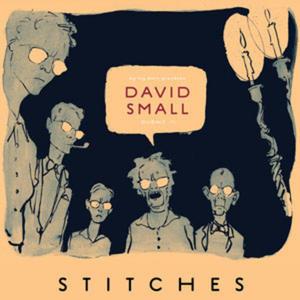
Stitches by David Small, 2009, W.W. Norton (Teen Fiction/ Graphic Novel/ Memoir)


It is suburban American in the 1950s and 60s, back when we didn’t know a whole lot about the effects of smoking or x-rays, so being subjected to both as a child might not seem to be such a big deal for young David Small, especially given the dysfunctional dynamics of his immediate family. His parents are, to put it mildly, distinctly uncommunicative. This becomes something of an issue when, at age fourteen, David wakes in the hospital after a supposedly-routine surgery to discover that a ragged scar of stitches across his throat has left him minus one vocal cord and little better than mute. “Can’t we talk about this?” takes on a whole new meaning when David learns that what he actually had was cancer, and that his parents didn’t think he needed to know about it. Now David is left to cope with these betrayals as his mother spirals downward, his father fades into the distance, and his older brother has no time for him. The adult David Small recounts these childhood traumas with stark, crisp images and, after the surgery, pages of wordless pictures that tell a raw, harrowing story filled with the kind of memories that we’ll all find eerily familiar, regardless of the amount of drama in our own pasts. There is hope here too, and recovery and healing both physical and emotional. Today David Small is best known as the award-winning illustrator of quirky, delightful children’s books like The Gardener, Imogene’s Antlers, and When Dinosaurs Came with EverythingStitches makes it pretty obvious that his own childhood was not nearly as picture perfect, but his journey from voiceless boy to critically-acclaimed artist is haunting, memorable, and un-put-downable.


Fun Home: A Family Tragicomic by Alison Bechdel, 2006, Houghton Mifflin Harcourt (Graphic Novel/ Memoir)


Alison Bechdel’s father was the proprietor of the local funeral home. That alone might produce some highly unusual childhood stories, but there’s more dysfunction to come. Bechdel’s family lived in an ornate Victorian mansion that her father obsessively and constinually restored, her father was a closeted gay man, and a court trial dealing with her father’s involvement with teen boys casts a shadow over Bechdel’s own coming-of-age as a woman and lesbian. That’s a lot of childhood and adolescent drama to overcome, but Bechdel handles her painfully ironic situation with dignity and humor—no easy task given the circumstances. Based in part on Bechdel’s long-running comic strip Dykes to Watch Out For and her own childhood journals and diaries, Fun Home is filled with literary references galore, moments of quiet desperation, and revealing experiences. The artwork is sophisticated with a depth that compliments the complexity of Bechdel’s relationship with her secretive father, and the episodic nature of the narrative works well with the comic strip style of the graphic novel format. Fun Home adds up to a memoir that is tragicomic indeed:  poignant, relevant, utterly engrossing.


Epileptic by David B., 2005, Pantheon Books (Graphic Novel/ Memoir)


David B. was born Pierre-François. He grew up in France in the 1960s and 70s with his mother, father, older brother Jean-Cristophe and little sister Florence. The siblings played in the alleys and streets with the neighborhood kids; life was normal. Then, one day when Pierre-François is nine years old, eleven-year-old Jean-Cristophe suffers a grand mal epileptic seizure in the street. The family is changed forever, and together they set out on an endless search for something—anything—that will cure Jean-Cristophe's epilepsy. The journey is not pretty. Not only are Jean-Cristophe’s seizures debilitating and awful to behold, but the possibilities of a genuine cure are slim. A horrific surgery is rejected for a stint with an extreme macrobiotic cult; spiritualists consult with the dead, who are supposed to deliver a miracle cure; doctors, philosophers, psychiatrists, intellectuals, and religious leaders are consulted as a last resort that can never really be the final attempt. The family is often treated with cruelty; time and time again they are filled with false hopes by quacks and charlatans who take advantage of their desperation. Ultimately nothing works, but the years of hoping and trying take their toll. Young Pierre-François protects himself from the chaos of his brother’s condition with homemade suits of armor, books about long-ago heroes of war, imaginary friends and ghosts, and epic drawings that depict scenes of ferocious and violent battles. Pierre-François’ artistic outlet becomes David B.’s masterpiece. The book is brilliantly drawn in heavy blacks and whites that go beyond mere representation to show thoughts, dreams, even metaphors. The characters are fully-fleshed out and true (subplots involve both sets of grandparents and their involvements in both World Wars) and the story is sophisticated and intense, making Epileptic a real work of art.


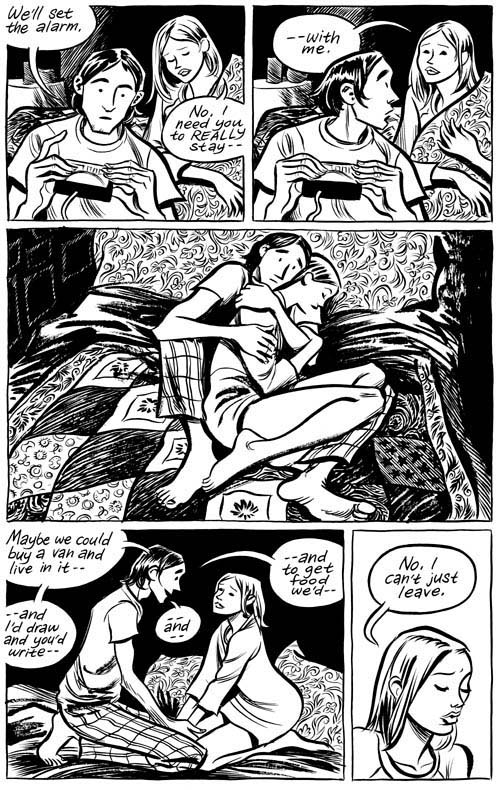
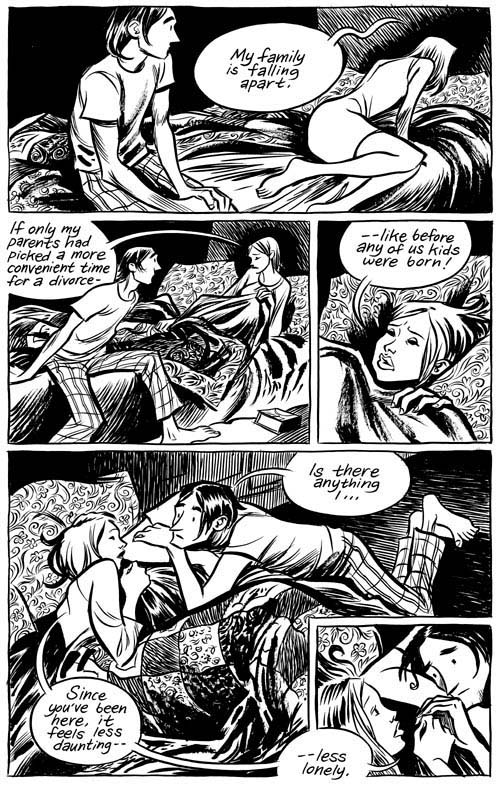
Blankets by Craig Thompson, 2003, Top Shelf Productions (Graphic Novel/ Memoir)


Young Craig and his kid brother share a bed in their attic bedroom. Sometimes their battle over who gets the biggest share of bed and blankets brings the wrath of their strict father down upon them. Fear of punishment is usually enough to end the sibling rivalry (though it’s always ignited again later; boys being boys and brothers being brothers), and the siblings are often united by their mutual love of drawing and the attacks by bullies that plague them both at school. Still, this is no charmed family portrait. Craig’s parents are conservative Christians who believe that their son’s penchant for art will lead him down the road to hell. The boys are brought up to fear God and to feel guilt over even the smallest and most common of boyish sins. Craig is the designated high school outcast and (lucky boy) he gets to maintain that role at summer church camp too—until he meets Raina, beautiful, spiritual, kind, and complicated. The two strike up a relationship, a romance for the ages that has clearly haunted the artist Craig Thompson well into his adult life. Thompson relives his first love in poignant and painful detail accompanied by crisp, clear black-and-white drawings that are wonderfully expressive and dramatic, but never overly sentimental. In Blankets, the clash between what you’re brought up to believe and what you come to believe on your own, through your own experiences, is dealt with sensitively, realistically, and with the kind of emotion that every reader can relate to.


Persepolis: The Story of a Childhood/ Persepolis 2: The Story of a Return by Marjane Satrapi, 2003/ 2004, Pantheon Books (Graphic Novel/ Memoir)


Marjane Satrapi had a happy childhood in Iran with loving parents, family, and friends. Then, at age ten, in 1979, Marjane’s life was forever changed by the Islamic Revolution. Her parents are intellectuals and Marjane is well-educated at a French school, but once religious rule is established, none of that matters. At first, little Marji finds it all sort of interesting. Wearing the veil is kind of fun; it makes a good ghost mask or superhero cape on the playground. But as rules and laws become harsher and with severe--even deadly--consequences, Marji’s childish innocence fades and her family realizes that little good and much danger can come from this new regime. As the years pass and the government becomes more and more oppressive, it becomes all too apparent that there is no room for even Marji’s typical teenage rebellions, and that her high spirits and sense of independence are not qualities that this Iran will cherish. The two volumes of Persepolis (published as a complete book in 2007 and adapted into an Academy Award-nominated animated film) cover Marjane’s childhood in Iran under fundamentalist rule and her teenage years in Europe, where she was sent at age fourteen to escape the danger that threatened educated young women. Seeing the Iran-Iraq war through a child’s eyes is startling; even in the midst of witnessing kidnappings on the street and hearing about torture victims, Marji has time to long for symbols of freedom like Nike shoes and Michael Jackson records. It’s a point of view that’s real and accurate and that brings the consequences of war home to the reader, as well as offering a readable historical account of a war that many Americans still know little about. The adult author Marjane draws her young self in deep blacks and whites that are ideal for depicting the horrors of war, but that are still done in a style that can be light and humorous when needed. Persepolis is expressive, endearing, striking, and stirring. Almost universally appealing, this work is certain to become one of the most important graphic novels written today.