Imaging the private lives of historical figures is good fun. No matter how detailed the record of someone’s life is, there’s still room to pretend. Turning real-life royals, artists, and especially authors into book detectives seems to be a particularly favorite pastime of mystery writers. In addition to their busy fact-based lives and the demands of their time (which range from the 15th century to the 1930s), these characters now have a wealth of crimes and clues to sort through. If you can’t get enough of a favorite old-fashioned celeb, all you have to do is turn these pages and play Watson to their Sherlock.
Wicked Will: A Mystery of Young William Shakespeare by Bailey MacDonald, 2009, Aladdin Books (Historical Mystery/ Children’s Fiction)
Thomas Pryne is a young actor traveling in a players’ troupe through jolly old 16th century England. Except that Tom is not what he appears—he is actually Viola, a girl in disguise under the protection of her actor-uncle. When they arrive in the little village of Stratford-upon-Avon, Viola’s secret is threatened by an all-too-observant, overly-inquisitive, and rather annoying boy—who just happens to be named Will Shakespeare. Will is quick to drag Viola into his schemes and adventures, but when the town curmudgeon is found murdered, Will quickly turns from mischief-making to investigating. Viola, though skeptical of Will’s skill, is more than willing to play along—because her dear uncle is accused of the crime, and the brash young playwright-to-be just might be their best chance at uncovering the truth. Author Bailey MacDonald sprinkles her clever mystery with snippets from familiar plays and stays true to the lively spirit of the real William Shakespeare (1564-1616). As irresistible as the boy Shakespeare super-sleuth is, MacDonald has no current plans for a sequel. She does, however, have plans for a young Benjamin Franklin, who stars in his own rousing mystery debut, The Secret of the Sealed Room.
Jane and the Unpleasantness at Scargrave Manor: Being the First Jane Austen Mystery by Stephanie Barron, 2008, Bantam Books, originally published 1996 (Historical Mystery)
Author Stephanie Barron sets her fictionalized Jane Austen in the seemingly mild-mannered world of 18th century polite society, with manor houses, horse-drawn carriages, and formal visits galore—and then gives her heroine lots of adventures and mysteries to solve. In the series opener, Jane has just caused a scandal by accepting a marriage proposal only to change her mind the next morning. Seeking refuge from wagging tongues, Jane goes to visit an old friend, Isobel Payne, who has just married the wealthy—and much older—Earl of Scargrave. When the Earl suddenly dies and anonymous notes accuse his young bride of murder, Jane determines to stay on and help her dear friend through this dark hour. There’s a tangle of suspects and motives to unravel—greedy nephews, airhead aunts, scoundrels, and ne’er-do-wells—not to mention a dashing Lord with a decided interest in Jane the detective. Janeites will recognize names and characters from the author’s life and novels and will surely get a kick out of seeing the prim-and-proper Miss Austen (1775-1817) turn snoop. It will come as no surprise that with her reputed wit and critical eye, Jane makes a formidable detective indeed.
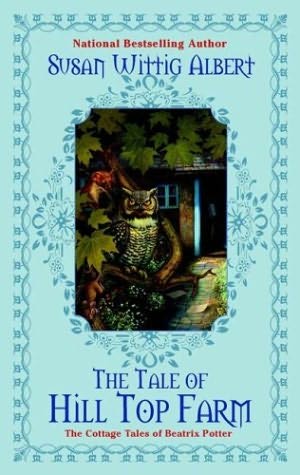
The Tale of Hill Top Farm: The Cottage Tales of Beatrix Potter, Book 1 by Susan Wittig Albert, 2004, Berkley Prime Crime (Historical Mystery)
The village of Near Sawrey is like many English villages—seemingly sleepy, but ready to jump to life at the slightest hint of scandal. When a resident dies unexpectedly, the rumor mill kicks into high gear. Into this frenzy of speculation comes Miss Beatrix Potter. It’s 1905, and the author is beginning to make a name for herself with her tales of Peter Rabbit and Mrs. Tiggy-Winkle. But she’s chafing under the protection of her snobbish parents and mourning the death of her fiancé. Seeking solace, Beatrix arrives in Near Sawrey (pet rabbits in tow) as the new owner of Hill Top Farm. Locals add her to their mix of gossip but Beatrix fits in quickly, especially when her quick eye and growing self confidence land her smack in the middle of a puzzle involving a trio of important missing items. It’s a cozy little mystery made even sweeter by the addition of village animals, who have as much to say as their human counterparts do. Author Susan Wittig Albert includes a biography that is sure to make readers as keen to explore the real life of Beatrix Potter (1866-1943) as they will be to solve mysteries with her.
An Expert in Murder: A New Mystery Featuring Josephine Tey, Book 1 by Nicola Upson, 2008, Harper Books (Historical Mystery)
Josephine Tey, acclaimed mystery writer on par with the likes of Dorothy L. Sayers and Agatha Christie, is on her way to London to celebrate the triumphant run of her play, Richard of Bordeaux. On the train she meets an avid fan, a young haberdasher named Elspeth whose enthusiasm and optimism make an impression on Josephine despite their brief acquaintance. So when Josephine learns that Elspeth was murdered shortly after they parted company, the shock hits hard. Detective Inspector Archie Penrose is a friend of Josephine’s, and the author of fictional mysteries is swiftly drawn deep into the dangers of a true crime that strikes far too close to home. Author Nicola Upson conveys the atmosphere of 1930s England to a tee. The mystery, too, is smart and genuine—Upson even went so far as to interview Richard of Bordeaux’s real-life players, though their names have been changed for the book. The real Josephine Tey (a pseudonym for Elizabeth MacKintosh, aka Gordon Daviot, 1896-1952) was one of the Queens of Crime back in the Golden Age of Detective Fiction, and mystery lovers unfamiliar with her novels will be flocking to the shelves for the likes of The Man in the Queue (1929) and The Daughter of Time (1951).
Josephine Tey Mysteries by Nicola Upson
1. An Expert in Murder
2. Angel with Two Faces
Groucho Marx, Master Detective, Book 1 by Ron Goulart, 1998, St. Martin’s Press (Historical Mystery/ Humor)
Hollywood, 1937. Groucho Marx (1890-1977), the cigar-smoking, wise-cracking, fake-mustache-wearing brother of Harpo, Chico, Gummo, and Zeppo, is about to star in a farcical radio show called Groucho Marx, Master Detective. It’s supposed to be an ironic title, but Groucho does in fact have quite the nose for mystery. When young starlet Peg McMorrow is reported to have killed herself, the comedian’s interest is immediately piqued. He didn’t know Peg well or for long, but he knew her well enough to rule out suicide. And sure enough, Peg’s death is being covered up quick—no news story, no police report, no funeral. Groucho enlists crime-beat-reporter-turned-script-writer Frank Denby to assist in his amateur investigation. Frank’s just fallen head-over-heels for a pretty young thing of his own, but like Groucho, his sense of right demands that justice prevail. Nothing, however, not murdered actresses nor gun-toting assassins nor corrupt policemen, can drown Groucho’s rapid-fire wit and comedic word play. Familiar with the Marx Brothers or not, author Ron Goulart’s cunning mystery series is sure to make readers chuckle and puzzle as they follow Groucho through the behind-the-scenes intrigues, passions, and crimes of glamorous old-world Hollywood.
Babies left on doorsteps, dangerous distant relatives, gloomy manor houses inhabited by left-behind children: These are just a few of the hallmarks of the good old-fashioned orphan story. Sometimes the children are half-orphans with just one parent; sometimes they might just as well be orphans for all the attention their self-absorbed parents give them. Whatever the case, a few exceptionally bright and brainy youngsters have to fend for themselves against all manner of evils perpetrated by the dimwitted adults in their lives. Despite the grim premise, these stories are quirky, clever, cute, and crafty. Their authors and illustrators revel in the outlandish wiles of their villains, embrace the absurd, employ a deliciously snarky tone, and generally have a ball letting their infant heroes save the day. Mischief-makers young and old will delight in these oddball tales of childish know-how.
A Series of Unfortunate Events: The Bad Beginning by Lemony Snicket, illustrated by Bret Halquist, 1999, HarperCollins (Children’s Fiction/ Humor)
Oh, despair for the poor little Baudelaire children! Inventive Violent (age 14), bookworm Klaus (age 12), and baby Sunny, who likes to bite, have absolutely no happiness in store for them—and we are assured of that fact from the beginning by a wry narrator who cautions that “If you like stories with happy endings, you would be better off reading some other book.” Orphaned when their beloved parents and home are consumed by a fire, the trio of Baudelaire siblings are installed in the gloomy home of distant relative Count Olaf. Count Olaf, of course, is a wicked villain with dastardly designs on the hefty Baudelaire fortune. Since every other adult in the book is completely clueless, Violent, Klaus, and Sunny must rely on their own pluck and resolve to get out of this sticky situation. But remember that the title of this series is, after all, A Series of Unfortunate Events. The adults get no wiser, the children no luckier, and at the end of The Bad Beginning the Baudelaires are no better off than they were before. The reader, however, has been in a fit of giggles since page one. Author Lemony Snicket tells his tale of woe in a gleefully tongue-in-cheek fashion. Satirizing the literary conventions of many an old-fashioned classic, Snicket takes the orphan story to wonderfully absurd new heights. His flair for the comically melodramatic continues in The Reptile Room, The Wide Window, and ten other cunning titles.
James and the Giant Peach by Roald Dahl, illustrated by Quentin Blake, 2007, Puffin Classics, originally published 1961 (Children’s Fiction/ Fantasy/ Adventure)
James Henry Trotter is an very unfortunate orphan. When his parents are gobbled up by an escaped rhinoceros, James is sent to live with (and slave for) Aunt Spiker and Aunt Sponge. He chops wood and serves tea to his hideous aunts until he’s seven years old; then, à la Jack and the Bean Stalk, a mysterious old man gives the boy a bag of tiny green-glowing crystals and promises that if James mixes them up and drinks them down, he will be rewarded with magic and adventures galore. But poor James has no luck—in his excitement he trips and spills his magic crystals under the old peach tree in the yard. The result is an amazing large peach that grows overnight. The Aunts make a bundle showing off their giant peach (and making James clean up after the crowds who pay to see it). One night James, miserable as ever, finds a strange tunnel dug into the peach. In he crawls to meet a crew of magically enormous insects—grinning Centipede, dapper Grasshopper, motherly Ladybug, and all the rest. They welcome the boy with open arms, snip the stem of the peach, and James finally gets the fantastic adventure he was promised. Author Roald Dahl’s trademark sense of humor is in finest form in James and the Giant Peach—sometimes dark, sometimes whimsical, and always fabulously fun. The illustrations are part of the story’s charm; the first edition in 1961 featured elegant pen-and-ink drawings by Nancy Burkert. Quentin Blake’s energetic style is practically synonymous with the works of Roald Dahl and artist Lane Smith re-illustrated the book in a freshly quirky style for the 1996 release of an animated film version.
The Willoughbys by Lois Lowry, 2008, Houghton Mifflin Books (Children’s Fiction/ Humor)
The Willoughbys are a pleasant, old-fashioned sort of family—except that Mr. and Mrs. Willoughby tend to forget that they have children, and get rather tetchy when reminded of the fact. So the Willoughby children—bossy Tim, sweet Jane, and twins Barnaby A and Barnaby B—decide that they really would be better off as orphans. That way, they would at least be assured an adventure or two. A baby left on the doorstep (and re-delivered to a neighboring doorstep) is the catalyst for a series of astounding coincidences, devious plans, and literary conventions turned upside down that make up author Lois Lowry’s sprightly tale. Other characters include a down-in-the-dumps candy bar tycoon (inventor of the delicious Lickety-Split), a no-nonsense nanny who scorns other no-nonsense nannies (like that “fly-by-night” Mary Poppins), and a lederhosen-clad lad who speaks very poor German (he just adds extra syllables “with a vaguely Germanic sound” to English words). The sly, winking tone that Lowry adopts on page one carries through to the utter end, meaning even her glossary of vocabulary words and bibliography of orphan literature are a rare and playful treat to read. Absurd humor with more than a dash of sparkling satire, The Willoughbys contains some of the most impish orphans out there.
Rare Beasts: Edgar and Ellen, Book 1 by Charles Ogden, illustrated by Rick Carton, 2003, Tricycle Press (Children’s Fiction)
Orphans turn downright nasty in Rare Beasts, a slim volume overflowing with the devious deeds of twelve-year-old twins Edgar and Ellen. Their parents are off on a lengthy (it’s been years) round-the-world vacation—and no wonder, because Edgar and Ellen are the terror of the town of Nod’s Limbs. The deceitful duo runs amuck in a tall, narrow old house. They have a gloomy groundskeeper called Heimertz and a pet, named Pet, who they occasionally torment. In fact, it’s the presence of Pet that gives the siblings the idea for their latest evil plan—steal the town’s beloved pets, deck them out in paint and glitter, and sell them for a fortune as rare and exotic beasts. With money in their grubby little pockets, the twins will be able to fund all manner of underhanded schemes. It’s a master plan and Edgar and Ellen are determined to carry it out to perfection—if their own in-fighting and constant bickering (not to mention a very big pet snake) doesn’t get in the way. Rare Beasts is the first offering a series by author Charles Ogden (actually the pen name for a group of writers), and he holds nothing back in making his hero and heroine as gleefully diabolical as possible. Edgar and Ellen are so outlandishly over-the-top awful that he gets away with it and the result is a deliciously naughty little book. Whether the sneaky siblings develop any morals—and we rather hope they don’t—remains to be seen in book two (Tourist Trap) and its many prank-filled sequels.
Dying to Meet You: 43 Old Cemetery Road, Book 1 by Kate Klise, illustrated by M. Sarah Klise, 2009, Harcourt Books (Children’s Fiction)
Ignatius B. Grumply is a children’s book author with a severe (twenty years long!) case of writer’s block. Desperate to finally put pen to paper, Mr. Grumply takes up residence in a ramshackle Victorian mansion in the gossipy little town of Ghastly, Illinois. Mr. Grumply does not expect the house to be quite as rickety as it is. He does not expect the house to already be inhabited. He does not expect that inhabitant to be an eleven-year-old boy. And Mr. Grumbly certainly doesn’t expect the boy to announce that he lives there all alone with his cat—and a ghost! But that is indeed Seymour Hope’s story, and he’s sticking to it. His parents (paranormal investigators who have concluded that ghosts do NOT exist) are on tour in Europe; they’ve left their unwanted son behind in the care of whoever happens to rent or buy their equally unwanted home. The house was originally built by Miss Olive C. Spence, an old-fashioned writer-turned-poltergeist who has sworn to haunt her home for all eternity—or at least until one of her books gets published. Olive and Seymour (and the cat) get along swimmingly until old Grumply arrives with his bad moods and house rules. But savvy Olive and confident Seymour are as stubborn as old Mr. Grumply, and now a comical battle of wills rages between man, boy, and ghost. Told through letters that the characters write and receive and scattered throughout with Ghastly Times newspaper clippings and quaint line drawings by the author’s sister, Dying to Meet You is a fresh and funny first entry in a series that promises loads of charm.
Dial-A-Ghost by Eva Ibbotson, illustrated by Kevin Hawkes, 2001, Dutton’s Children Books (Children’s Fiction)
The Wilkinsons are just the nicest family you could ever imagine. They are also ghosts, and they need a new house to haunt. Luckily, the Dial-A-Ghost agency specializes in finding homes for lost souls. The Wilkinsons are matched with a friendly group of nuns while other ghosts like the Shriekers—a mad child-hating husband and wife duo—are ideally suited for clients like Fulton and Frieda Snodde-Brittle, who have requested the nastiest ghosts possible to haunt their family home at Helton Hall. But a clerical error at the agency sends the Shriekers to the nuns and the Wilkinsons to Helton Hall. The Shriekers are vastly disappointed when there are no children to terrify, but the Wilkinsons are thrilled to find a little boy all alone. This is Oliver, the new heir to Helton Hall. Little orphan Oliver has been whisked away from his comfortable orphanage and installed in the ancestral home for the sole purpose of being scared to death so cousins Fulton and Frieda can have the family fortune all to themselves. Of course the Wilkinsons have no intention of harming a single hair on Oliver’s head. Rather, the ghostly family and the young lad become fast friends get along swimmingly. But the Snodde-Brittles and the Shriekers won’t give up that easily, and the shared happiness that Oliver and the Wilkinsons have finally found is imminently threatened. Author Eva Ibbotson paints a colorful cast of characters, some made of flesh and bone and some made of ectoplasm. There’s a healthy sense of humor, plenty of the macabre (the Shriekers are especially grotesque), and eerie little illustrations by Kevin Hawkes. Part comedy of errors, part ghastly ghost story, and with plenty of throwbacks to that old orphan literature of yore, Dial-A-Ghost is a creepy, crawly, comical adventure story.
Spring-Heeled Jack by Philip Pullman, illustrated by David Mostyn, 1991, Random House Books (Children’s Fiction/ Adventure)
When Rose, Lily, and Ned Summers escape from the Alderman Cawn-Plaster Memorial Orphanage one dark Victorian night, their goal is a ship bound for America so they can start a new life. But the pretty locket around Rose’s neck—containing photos of the orphans’ dear departed parents—attracts the unsavory attention of London cutthroat Mack the Knife. The children are saved by Spring-Heeled Jack, a legendary superhero-esque rogue who roams the city on bouncy shoes (he can leap over buildings in a single bound). But there’s still trouble—Mack manages to nab Ned and hold him hostage, and hot on Rose and Lily’s heels are Mr. Killjoy and Miss Gasket, the greedy caretakers from the orphanage. Rose and Lily and Ned have plenty of guts and gumption, and with Spring-Heeled Jack, a yappy dog named Spangle, a kindhearted sailor and his barmaid girlfriend on their side, there’s little doubt the Summers siblings will reunite and save the day. The real appeal of this thrilling tale of derring-do lies in its unique format. Author Philip Pullman’s action-packed text gives way every now and then to comics-style panels (by illustrator David Mostyn) that continue the plot, complete with witty asides and clever commentary by a crew of cartoon animals who keep pace with the story. There’s enough silliness in this send-up to entertain any adventure-lover.
The Mysterious Benedict Society by Trenton Lee Stewart, illustrated by Carson Ellis, 2007, Little, Brown Books (Children’s Fiction/ Mystery)
“Are you a gifted child looking for special opportunities?” This unusual newspaper ad catches the eye of an especially observant and inventive orphan named Reynie Muldoon. It also catches the eyes of ready-for-adventure Kate Wetherall, brainy and sensitive George “Sticky” Washington, and very contrary little Constance Contraire. The children pass a series of tests for the mind and spirit and are recruited by the philanthropic Mr. Benedict. Their mission: Infiltrate the Learning Institute for the Very Enlightened, a school run by the brilliant but dastardly Ledroptha Curtain. Mysterious messages are issuing forth from the school to brainwash the unsuspecting population, and Reynie, Kate, Sticky, and Constance must combine their unique talents and skills to save the day. The reader follows clues and solves puzzles right along with the kids for a clever and interactive literary adventure. Like all worthy and wise orphans, Reynie and company pull together to outwit the villains and save the day. And like most orphans, their troubles are far from over—their unique capabilities are required in The Mysterious Benedict Society and the Perilous Journey and The Mysterious Benedict Society and the Prisoner’s Dilemma. And thank goodness for that, because few things are more fun than saving the day with the Mysterious Benedict Society.
The Wolves of Willoughby Chase by Joan Aiken, illustrated by Pat Marriott, 2000, Delacorte Press, originally published 1962 (Children’s Fiction/ Historical Fiction)
Willoughby Chase may be an imposing mansion situated on a bleak moor that is teaming with hungry wolves, but indoors everything is cheery. Little Bonnie runs harum-scarum through her big house, beloved of dashing Papa, elegant but sickly Mama, and Pattern the devoted maid. Papa and Mama are embarking on a cruise, but little cousin Sylvia is coming to stay and keep Bonnie company. The two cousins hit it off right away but their new governess, Miss Slighcarp, wastes no time before showing her true colors—cunning, wicked, and cruel. Almost before they can blink, the toys are packed away, the ponies are sold, the helpful servants are dismissed, and Bonnie and Sylvia are declared orphans. Miss Slighcarp sends the girls off to slave away at a horrible school for orphaned girls where they are mistreated, abused, starved, and scolded. But in typical orphan fashion and with the help of a few well-placed allies, Bonnie and Sylvia rally to the challenge. Less snarky in tone and wit than the other books on this list, author Joan Aiken nevertheless delights in heaping burden after burden upon the slender shoulders of her heroines as they face wolves, lawyers, burnt porridge, and more. The Wolves of Willoughby Chase is the first in a series of plucky-waif-makes-good stories by Aiken (followed by Black Hearts in Battersea, Nightbirds on Nantucket, and others), and all serve as prime examples of the classic orphan tale of woe and redemption.
Famous people are meant to be remembered. The achievements of presidents, rulers, writers, and scientists go down in history, as they should. But sometimes famous people have secrets. And not the secrets you’re thinking of—there’s much more going on than skeletons in the closet and lovers on the sly. Instead, the best-known historical figures cavorted with unsavory members of the underground or snuck out at night to keep our ancestors safe and sound in their beds. Want to know what history class didn’t—or couldn’t—teach you? Read about these famous fellows and their strange secrets and hidden talents.
Jane Bites Back by Michael Thomas Ford, 2009, Ballantine Books (Fantasy/ Humor/ Historical Fiction)
We love Jane Austen. We love her so much, in fact, that even though she only wrote six books, there are dozens upon dozens of sequels, prequels, knockoffs, spin-offs, and mash-ups to be found on bookshelves everywhere. And here’s another one: Jane Bites Back. Jane Austen is still alive and well. How? She’s a vampire, of course. She’s also a bookstore owner and an aspiring author. Her last book has been rejected for nigh on two hundred years. But now she’s finally found a publisher—and a handsome one at that. She's beginning to feel truly comfortable with her daffy assistant (who reminds her of sister Cassandra) and her admiring neighbor Walter (who is not at all a Mr. Darcy, even though he’s very sweet and caring). And her books are selling better than ever (even if they have to compete with knockoffs like Pride and Prejudice and Zombies). But when Jane’s renewed fame as author “Elizabeth Jane Fairfax” of the new bestselling Constance shoves her into the spotlight, our heroine finds herself involved in a couple familiar entanglements: one a wicked battle-of-the-sexes with ex-boyfriend and fellow vampire Lord Byron, and the other a fierce catfight with Charlotte Brönte-fanatic Violet Grey. Now Jane's treasured privacy as a human and her dark vampire secret are threatened--and just when things finally seemed to be going her way. Author Michael Thomas Ford joyously plays with popular culture's current mania for all things Austen and still gifts readers with a realistically warm, witty, and sometimes sarcastic Jane who fans will recognize and relate to. The first of a planned trilogy, readers can rest assured that Jane will be back to bite again and again.
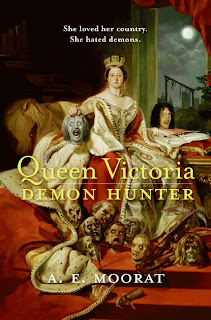
Queen Victoria, Demon Hunter by A.E. Moorat, 2010, Eos Books (Horror/ Humor/ Historical Fiction)
Ah, Queen Victoria, the stiff-upper-lipped little woman whose long rule oversaw the British Empire’s growing power in all things industrial, political, military, cultural, and scientific. She was a controversial monarch whose assassination was attempted some dozen times in her life. The first attempt, though few know it today, came on the eve of her ascension to the throne when a foul demon (yes, demon) infiltrated her bedroom and attempted to slice her into little pieces. Young Victoria, as told in author A.E. Moorat’s new biography Queen Victoria, Demon Hunter, is not too surprised that there are demons—she has received an excellent education, after all—but it does come as something of a shock that she, as queen, is to be the lead demon hunter of the land. Still, Victoria is determined to be a successful ruler in all areas, and willingly begins training under the Protektorate, a motley crew of warriors in possession of all manner of demon-slaying skills—and in Victorian England, demons come in all sizes and shapes. As Victoria learns the proper way to behead a zombie, defeat a werewolf, and tackle other evil spirits, her mind occasionally wanders to daydreams of handsome Prince Albert. Trying to balance the desires of the heart with the demands of a demon-ravaged kingdom is certainly a trial, but no one is better suited to meet the challenge than the new Queen Victoria. There’s enough gore here to thrill raving horror fans, enough historical detail to satisfy devoted Anglophiles, and plenty of dashes of humor, romance, and satire to tie it all together in a neat little bow—and then, of course, good old Vicky will come along and lop its head off.
Drood by Dan Simmons, 2009, Little, Brown and Co. (Historical Fiction/ Horror)
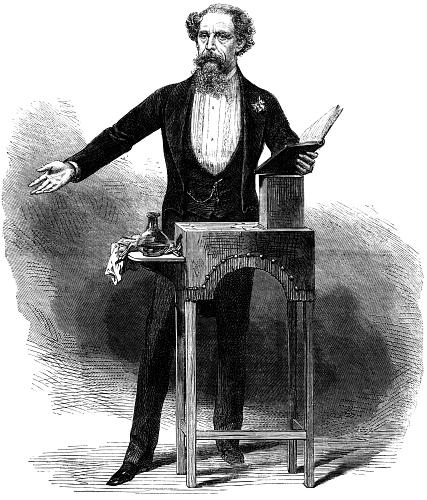
Charles Dickens may be a classic writer of fine literature today, but way back when, he was a major celebrity. Readers waited on edge for the newest installments of his novels to come out in weekly newspapers and magazines; his book readings were carefully crafted performances and boy, were they packed. And according to author Dan Simmons, Dickens was a strange and secretive man. In Drood, Dickens is the main character, though his real-life friend (“frenemy” is perhaps more accurate) Wilkie Collins narrates the story. The starting point is a horrifying and near-fatal train derailing in 1865 that Dickens survived but never entirely recovered from. Simmons uses this factual event to introduce a mysterious character who Dickens encounters amid the gore and wreckage of the train—a gaunt specter, calling himself Drood, who emits a decidedly creepy aura and has a sinister agenda of his own. Dickens becomes obsessed with tracking Drood and enlists Collins to assist him in nighttime voyages though London’s grotesque underground caverns and crypts. Collins, as portrayed in Drood, is bitterly jealous and opium-addicted; Dickens is an egomaniac of the highest order who’s keeping heavy secrets from friends and family, including the motive behind what will be his final, uncompleted book, The Mystery of Edwin Drood. Things get weirder, spookier, and more bizarre as the final years of Dickens’ life draw to a close for a wholly atmospheric blend of history, historical fiction, and supernatural horror that’s as dramatic (and melodramatic) as the novels by Dickens and Collins that inspired it. Be sure to check out Dickens’ novels (especially The Mystery of Edwin Drood), and don’t let Wilkie Collins, who remains largely in the shadow of his better-known contemporary, be forgotten again—his novels The Moonstone and The Woman in White are masterpieces in their own right.
Abraham Lincoln, Vampire Hunter by Seth Grahame-Smith, 2010, Grand Central Publishing (Horror/ Humor/ Historical Fiction)
Best known for living in a log cabin as a boy and ending slavery as our illustrious sixteenth president, a diary by the man himself (fortuitously discovered by Seth Grahame-Smith, author of Pride and Prejudice and Zombies) reveals that Abraham Lincoln was also a skilled slayer of vampires. Following his mother’s death at the hand (or bite) of a blood-sucking creature of the undead, young Abraham vows to spend the rest of his life ridding this great nation of the foul demon presence. And since slavery is a projection of the vampires’ natural desire for control over their victims, Abe vows to defeat that vile institution as well. His legendary strength and height are a definite advantage; his practiced skill with his sharp ax serves him well as he fights to crush the vampires’ political power—and just plain chop their heads off. The road to victory (and the White House) is not easy, and Abraham faces an uphill battle fraught with failed love affairs, sickly sons, dying soldiers, disguised vampires, and bloody fangs. Complete with documentary photographs, diary entries, quotes from letters, and explanatory footnotes, Abraham Lincoln, Vampire Hunter has the look and feel of a grand historical biography—but with tongue firmly in cheek. Continuing his tradition of adding scenes of gory mayhem to solid classics, Grahame-Smith might cause history buffs to grumble, but horror and humor fans will be tickled pink by the image of Honest Abe swinging his trusty ax at hoards of blood-thirsty sharp-toothed fangs.
The Pirates! In an Adventure with Scientists by Gideon Defoe, 2004, Pantheon Books (Humor/ Adventure/ Historical Fiction)
Charles Darwin changed the world with his theory of evolution. But first, he frolicked with pirates. When the very silly Pirate Captain and his crew of jolly buccaneers mistake Darwin’s ship The Beagle for a treasure ship from the Bank of England, Darwin charms the pirates with his fancy trained chimp, Mr. Bobo, who is a perfect little English gentleman and destined to be a start of the British stage. Chumming it up, Darwin and his new BFF the Pirate Captain head back to England to save the day. Darwin's brother, Erasmus, has been kidnapped by the vile Bishop of Oxford, who has invested heavily in P.T. Barnum’s traveling freak show and doesn't want any competition standing in his way—especially not from the likes of Charles Darwin and his upstart monkey. But with the pirates on the case, Darwin is certain to come out on top--if he can only convince the unruly crew to pose as scientists, dress in drag, and stop obsessing with ham. Author Gideon Defoe spins a yarn that is deliriously goofy (the 19th century characters indulge in such modern anachronisms as dental floss and post-it notes) but always endearing and charming. The Pirate Captain and his merry crew have several more adventure with noted celebrities of the age, including Karl Marx (The Pirates! In an Adventure with Communists) and Napoleon (The Pirates! In an Adventure with Napoleon), and even a run-in with the fictional Captain Ahab (The Pirates! In an Adventure with Ahab). But with Charles Darwin the Pirate Captain strikes up a true friendship (if only because Darwin has no comparable sword, beard, or ship to envy) and their adventure together is a droll, nonsensical romp with a light-hearted flair for the enjoyably ridiculous.
Love. It’s a wonderful thing, even when your new guy or gal is a vampire. Or a werewolf. Or even a zombie. Sure, it can be dangerous dating an undead, shape-shifting creature of the night, but that doesn’t mean the romance is gone. As these stories of inter-species and paranormal relationships show, sparks can really fly when a human falls in love with a monster--especially when every kiss might end with your head being bitten off.
Vampiresare the monsters we most often fall in love with. They’re immensely popular and trendy--Twilight, anyone?--even though authors have been writing about vampires for over a hundred years. But really, it’s no wonder. Vampires rise from the dead to bite and suck the blood of humans so they can remain immortal. There’s something definitely sensual about that, and the vampire’s best weapon is his power of seduction. Vampires are ageless, mysterious, and they need us humans to stay that way. No wonder we’re irresistibly drawn to them.
Dracula by Bram Stoker, 2009, Puffin Classics, originally published 1897 (Fiction Classics/ Fantasy/ Horror)
There are two basic kinds of vampire books—those where we fall in love with the vampire and those where we hunt the vampire. Dracula, believe it or not, is both, as well as being the first major vampire novel. On one hand, it’s the story of the hunt for the evil Count Dracula, the original undead monster who sucks the blood of his victims so he can live forever. On the other hand, it’s the story of two beautiful young women and the men who love them. Sweet, lovely Lucy receives three marriage proposals in one day—and then finds herself in the cold embrace of Count Dracula. Her suitors, led by Professor Van Helsing and accompanied by intelligent, vibrant Mina and her boy-toy Jonathon Harker, set out to avenge Lucy. But Mina soon encounters Dracula and forges a deep connection with him, and keeping her safe becomes a daunting task for the vampire hunters. Dracula is the source of almost everything we know and love about vampire mythology, from sleeping in coffins to turning into bats to how to make a new vampire. Even though Count Dracula is a grade-A creep and not a hunky vamp to fall over head heels in love with, there’s still dark romance and intrigue aplenty. And if you’re going to call yourself a fan of vampire fiction, you really have to know your Dracula.
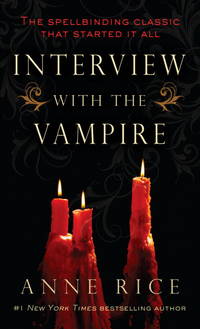
Interview with the Vampire by Anne Rice, 1997, Ballantine Books, originally published 1976 (Fiction/ Fantasy/ Horror/ Romance)
Vampire romance would not get far without Anne Rice’s vampire series, which begins here with the vampires Lestat and Louis. Amongst the steamy moss-draped streets of New Orleans in 1791, lonely lovesick Louis agrees to let the overwhelmingly persuasive vampire Lestat turn him into a fellow bloodsucker. For the next two hundred years, Louis and Lestat wander the earth, prey on humans, and seek out others of their kind—most notably the esteemed Parisian vampire Armand and Claudia, a doomed little girl whom Louis can’t bear to kill or to have as a fellow killer. The interview of the title takes place between Louis and a skeptical human reporter; the narrative is framed as Louis shares his tale in intimate, luxurious, atmospheric detail. There are many relationships in Interview with the Vampire—Louis and Lestat, Louis and Claudia, human and vampire—some based on love and some on hate, and most with an intriguing and complex blend of both. Anne Rice single-handedly transformed the vampire genre with this book. Because of Louis and company and their all-too-human desires, we stopped hunting vampires and let them seduce us, even though we know how deathly dangerous they are. Of course, the risk has been worth it—vampire romance is a flourishing genre of its own now and Anne Rice herself has contributed over half a dozen related titles. Interview with the Vampire, however, remains her masterpiece.
The Twilight Saga: Twilight/ New Moon/ Eclipse/ Breaking Dawn by Stephenie Meyer, 2005-2008, Little, Brown and Co. (Teen Fiction/ Fantasy/ Romance)
Few vampires have proved as irresistible as the hero of the Twilight series: smoldering, brooding, intensely hunky Edward Cullen. Twilight is the first book in a quartet that chronicles the challenges high school loner Bella Swan faces when she falls fangs-over-heels for Edward, a mysterious classmate who is also an immortal vampire. Even though theirs is a very dangerous attraction (Edward’s non-human-killing vampire family guards their secret carefully, and Bella is so appealing to Edward that he’s in constant danger of losing control and eating her), it’s Love At First Sight. Their love is continually tested by well-intentioned humans, desperate vampires, and a love-triangle threat in the shape of young Jacob. Jacob’s personality seems as sunny as Edward’s is moody—but he’s got a dark shape-shifting secret of his own and an increasingly important role to play in Bella’s life. Ultimately, despite the vampires and otherworldly creatures that haunt the Twilight saga, the series is Classic Romance all the way: two young lovers must fight against all odds to stay together. It’s a dark, twisted, intense courtship but still, fans of paranormal relationships have sunk their teeth into Twilight and its fellow books with an obsession that transcends mere trendiness. To readers who dearly love a good interspecies romance, Edward and Bella’s is one for the ages.
Sunshine by Robin McKinley, 2003, Berkley Books (Teen Fiction/ Fantasy/ Romance)
In the world of Sunshine, vampires are a constant presence. Leave them alone and they’ll leave you alone, that’s the general rule. Anyway, Rae “Sunshine” Seddon doesn’t have time to worry about vampires. She’s too busy baking cinnamon rolls for her loyal customers at the bakery, getting into tiffs with her well-intentioned mother, and trying to decide how serious to get with her on-again-off-again biker boyfriend. Until one night Sunshine gets a little fed up with the regular characters in her life and wanders off for some peace and quiet—only to end up surrounded by characters of the undead, blood-sucking kind. Sunshine is chained to a desperately thirsty (but still good-looking) vampire named Constantine who—surprisingly and mysteriously—refuses to kill her. In a Buffy the Vampire Slayer-esque sort of way, Sunshine finds herself drawing on untapped magical powers instilled in her by a sorceress grandmother and is soon caught between the desires of the human and vampire populations. Nevertheless, she’s determined to protect Constantine, for whom (like Buffy for Angel) Sunshine has developed something of a soft spot. Author Robin McKinley is best known for her modern retellings of fairy tales. Here, McKinley puts an urban spin on vampire lore. A thoroughly modern girl falls in with an old-fashioned forever-young vampire. Monsters are just as likely to lurk outside city bakeries as they are outside abandoned lakeside cabins. And savvy readers are sure to be alternately spooked and charmed by Sunshine.
The Sookie Stackhouse Southern Vampire Mysteries: Book 1, Dead Until Dark by Charlaine Harris, 2001, Ace Books (Fiction/ Mystery/ Fantasy)
Sookie Stackhouse is a small-town waitress on a seemingly permanent streak of bad luck. She can read minds (which is annoying), one of her coworkers has been murdered (which is unpleasant), and her new love interest is a vampire (which means he might kill her). Life in rural Louisiana has just gotten very complicated. Still, Bill is a hunk and dating a vampire does have its benefits—Sookie can’t hear the thoughts in his head, for one thing, which is a refreshing change—but it’s not all fun in the dark. Bill has some decidedly unsavory friends, and there is that pesky murder—and that’s just the first book! But Sookie’s no damsel in distress. She’s a smart, thoughtful, generous young woman who readers care about, even as author Charlaine Harris causes thrills and chills with a quirky array of supporting characters and suspenseful mystery plots. Plus there are vampires, and let’s face it, we all love a mystery with a blood-sucking undead creature of the night. Sookie’s relationships with various mythical creatures continue in eight other books. Each one is as colorful and atmospheric as Dead Until Dark, which serves as the introduction to Sookie and her distinctly unusual lifestyle (and is the inspiration for the hit TV-show True Blood). Cleverly blending romance, action, and the paranormal, Sookie Stackhouse is the go-to girl for some seriously spooky sleuthing.
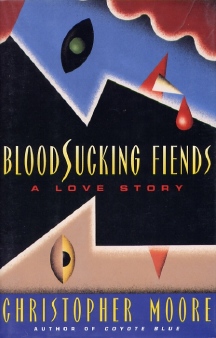
Bloodsucking Fiends by Christopher Moore, 1995, Simon and Schuster Books (Fiction/ Fantasy/ Romance/ Comedy)
When Jody is attacked and turned into a vampire on her way home from work, she doesn’t panic. Instead she gets help, someone to do all the things she can’t do during the sunny daylight hours. Aspiring writer Tommy is destined to be Jody’s boy-toy, and he doesn’t mind at all. Jody’s sexy and mysterious, and what better to inspire art than with a hot-and-heavy love affair? But everyday life soon gets in the way of romance—the fledgling couple can’t spend enough time together with Tommy working the late shift, their wildly different dining habits are interfering with date nights, the vampire who created Jody is framing her for murder, and the cops are mighty suspicious. The narrative of Bloodsucking Fiends is a tad uneven at times, but author Christopher Moore is juggling a lot of inventive genres—mystery, comedy, satire, and fantasy among them. And the story has its moments, among them Tommy and Jody’s gleeful experiments to find out which vampire myths are fact and which are fiction. Bloodsucking Fiends is a breath of fresh air in the moody, intense atmosphere of vampire-human romances. Even die-hard vamp-fans will appreciate the well-intentioned elbow in the ribs. Finally, someone acknowledges the weird, awkward, funny side of paranormal romance, and with a 2008 sequel titled You Suck, Moore doesn’t show any intention of letting up.
Let Me In by John Ajvide Lindqvist, 2007, Thomas Dunne Books (Fiction/ Horror/ Fantasy)
Republished as Let the Right One in after an internationally successful movie adaptation of the same name, the originally titled Let Me In is Scandinavia’s contribution to the vampire fad that is sweeping the globe—and for good reason. Vampires are creepy and fantastic, and when the setting is a lonesome snow-covered suburb in Sweden, the moody intensity just grows and grows. Oskar is a twelve-year-old boy who is constantly bullied and beaten at school. With no friends to turn to, Oskar’s outlets are daydreaming, shoplifting, and keeping a scrapbook of gruesome crimes clipped from the newspapers. Then he meets Eli, a girl about his age who moves into the apartment next door. Eli only comes out at night and smells a bit funny, but Oskar is desperate for companionship and Eli’s quirks suit his own oddness. Meanwhile, a series of brutal deaths begin to plague the area—bodies are drained of blood. It doesn’t take long to discover that Eli is a vampire stuck in a permanent childhood, a deadly little creature who is both desperate to survive and genuinely fond of Oskar. Their sweet, awkward relationship is a splendidly creepy contrast to the blood and gore of the murders. Author John Ajvide Lindqvist adds some original twists to an occasionally predictable story that is part crime novel, part horror story, part paranormal crush. The dark, atmospheric quiet of the film is an excellent companion to the novel and will allow you to be delightfully creeped out on both page and screen.
Vampires are solitary creatures of the night, but Werewolves—humans who transform into powerful super-wolves—roam in packs. This means lots of fussing, fighting, and family feuding. And when it comes to romance, no creature is more passionate than a wild untamed werewolf. Plus, you can date during the day. If you thought vampires were attractive, get ready to turn the pages of these next books. No doubt about it--werewolves are a rowdy, feisty, sexy pack of wild animals.
Blood and Chocolate by Annette Curtis Klause, 1997, Delacorte Press (Teen Fiction/ Fantasy/ Romance)
In Blood and Chocolate, the worthy werewolf finally gets a chance at love. Vivian is sweet sixteen, strong and beautiful, with all the boys on her tail—literally, because Vivian is a werewolf. But life is not as sweet as chocolate. Her close-knit werewolf pack has moved to a new home, needs a new leader, and definitely does not approve of Vivian’s new human boyfriend. But Aiden is sensitive and kind, and Vivian is sure that he will understand her other, wilder self. Her divided loyalties are put to the test when a contender for new pack leader takes an intimate interest in her, and life becomes even more complicated when a human is murdered and a werewolf is the culprit. Vivian’s attempt to lead a double life is endangering both the humans and the werewolves she cares about. Who is Vivian supposed to protect? Who is she supposed to be? The werewolves of Blood and Chocolate are sassy and stubborn, and they don’t make Vivian’s choices easy—but they certainly do make things interesting. Even with a pack of wild animals roaming through the pages, Blood and Chocolate remains a fierce, sexy, gripping coming-of-age story about love, betrayal, trust, and acceptance. And fans of author Annette Curtis Klause’s werewolf love will be pleased to know that she played matchmaker with our other favorite monster, the vampire, in her first book The Silver Kiss.
Shiver is a werewolf’s hungry reply to the best-selling, blockbusting, fan-favorite Twilight Saga, and Shiver’s young lovers Grace and Sam are more than a match for the moody intensity of Bella and Edward’s love affair. Grace is a solitary, intelligent girl who relishes the wild tranquility of the woods behind her house. The wolves that dwell there are especially fascinating, and one wolf in particular—a yellow-eyed handsome creature who once saved her from the rest of his pack—holds a unique attraction for her. That wolf is Sam, a werewolf who was bitten as a boy and who is just as smitten with Grace as she is with him. For years Grace and Sam keep their distance despite their curiosity, but during Grace’s seventeenth year they are thrown suddenly and violently together when wolves kill a boy and human hunters retaliate. Now, Grace finds herself nursing a wounded yellow-eyed boy who must be her beloved wolf, and the star-crossed lovers finally get to know each other. Sam and Grace’s romance is tender and true but fraught with danger. Author Maggie Stiefvater creates a werewolf mythology that keeps the creatures in wolf-form during the frigid winter months and allows the warm weather to transform them into humans for the few brief summer months. Sam’s injury makes him revert to teenage boy form, but the wolves, the humans, and the winter cold are swiftly approaching and threaten to destroy this new relationship and Sam and Grace’s very lives. Shiver is told from Sam and Grace’s alternating points of view, making this Romeo and Juliet plot (with a sequel, Linger, due in July 2010) all the more suspenseful, passionate, thrilling, and chilling.
Lonely Werewolf Girl by Martin Millar, 2008, Soft Skull Press (Fiction/ Fantasy)
Kalix is a lonely werewolf girl. She’s seventeen and angst-filled, not to mention drug-addicted, antisocial, and lovesick. She’s attacked her father, the Thane of the powerful MacRinnalch werewolf clan, and is on the lam in London. And no one is going to leave her alone. Her brothers Sarapen and Markus both want Kalix dead and are fighting each other for the throne, her sister Thrix is too busy designing a fashion wardrobe for the Fire Queen Malveria to be bothered with her little sister’s problems, her ex-lover Gawain has been banished, and a guild of professional werewolf hunters is hot on her trail. But when two human students, Daniel and Moonglow, take a kindly interest in Kalix, the lonely werewolf’s luck might just be about to change—even as civil war is about to erupt in the Scottish Highlands where her werewolf family dwells. And these werewolves are violent, passionate, impatient, and beautiful—which makes for a playful, witty, wicked page-turner of a story. The many love affairs, love triangles, and lovers’ quarrels play a big part of the action. Werewolves are, after all, a lusty bunch who really know how to hold a grudge. With a cast of characters ranging from a punkish Fire Elemental to twin werewolf rock star wannabes to childish, moody, endearing Kalix herself, Lonely Werewolf Girl is one helluva gritty, grungy urban fantasy.
Zombies come back from the dead to eat the brains of the living. Most authors won’t stoop so low as to pair a human with a zombie love interest, but there’s still a lot of romance to be mined when the undead roam the earth. But are flesh-eating zombies really deserving of love? Absolutely. After all, there’s someone for everyone--even rotting, moaning, stumbling reanimated corpses.
Breathers: A Zombie’s Lament by S.G. Browne, 2008, Broadway Books (Fiction/ Fantasy/ Romance/ Comedy/ Horror)
Andy Warner died in a car crash. After his chemical treatment at the funeral home but before his funeral, Andy woke up as a zombie. This is not incredibly unusual; it just happens sometimes. But zombies are not exactly welcomed back into their everyday lives as examples of a miraculous escape from death. Instead they’re barely tolerated, looked down upon as less-than-human and policed by Animal Control. Andy’s too dazed to mind at first—he can’t even talk because his lips are stitched together—but he finds time to emerge from his parents’ basement and attend Undead Anonymous meetings. There he meets a sexy suicide named Rita and Jerry, a banged-up walking-dead stoner. The trio is introduced to fellow zombie Ray, and Ray introduces them to the joys of the afterlife. Soon Andy is refusing to sit in the back of the bus and picketing for the return of zombie civil rights. With pretty Rita at his side, Andy just might get used to the zombie life—unless the human “breathers” have anything to say about it. Feeling sympathy for a flesh-hungry zombie is a new emotion for most readers, but we want Andy to have it all. We also don’t want to get eaten, and that’s what makes Breathers such a unique and unusual read—it’s gruesome, endearing, tragic, and darkly comic all at the same time. Author S.G. Browne describes his debut novel as a zom-rom-com—a zombie romantic comedy. With a genre-bending label like that, what more can you ask for?
Pride and Prejudice and Zombies by Jane Austen and Seth Grahame-Smith, 2009, Quirk Books (Fiction Classics/ Romance/ Fantasy/ Humor)
Jane Austen's Pride and Prejudice is one of the most beloved love stories of classic literature. Author Seth Grahame-Smith decided that the only thing that could improve the story was, naturally, zombies. And even die-hard fans of Jane Austen will be hard pressed to disagree. As our story begins, a mysterious plague is bringing the deceased back to life to roam the English countryside in search of fresh human brains. Miss Elizabeth Bennett, well-versed in both the feminine and the deadly arts, is content to defend her family against the zombie threat—until she meets the dashing, arrogant, equally-skilled Mr. Darcy. Scenes from the original Pride and Prejudice are intermingled with zombie mayhem. Darcy admires Elizabeth’s fine eyes at the Meryton ball; zombies attack. Elizabeth promenades at Pemberley; zombies attack. Elizabeth and Darcy are recast as scornful acquaintances occasionally united in battle against the moaning, groaning walking dead. And still, the classic romance unfolds exactly the way it’s supposed to. After all, nothing brings a couple together like fighting off zombie hoards.
Note: Pride and Prejudice and Zombies has spawned a whole slew of Jane Austen-monster hybrids. Not only is Sense and Sensibility and Sea Monsters lurking on bookshelves nearby, but Mr. Darcy, Vampyre and Vampire Darcy's Desires hide in the shadows, and Jane herself is a vampire out for revenge in Jane Bites Back. When vampires, werewolves (maybe Werewolves at Mansfield Park?), and zombies starts breeding with the great classics of literature, well, that’s some real wild monster love.