Tuesday, October 12, 2010

Clever Girls and Classy Lasses


It was hard being a lady back in the days of long skirts and horse-drawn carriages. You were expected to be modest and sweet and to blush delicately when in the company of men. It was unladylike to work or study or ask too many questions or show your ankles. So when an author places a heroine of keen intellect and rebellious spirit in the rigid societies of the 18th, 19th, or early 20th centuries, readers can be sure of one thing—this clever, classy lass is going to break all the rules. Bright and brainy even when weighed down by layers of petticoats and the conventions of their time, these young ladies are sure to save the day (whether the adventure be magical or mysterious) and still be home in time for tea.

The Ruby in the Smoke: A Sally Lockhart Mystery, Book 1 by Philip Pullman, 2008, Knopf Books, originally published 1985 (Historical Fiction/ Mystery/ Teen Fiction)


On a cold afternoon in 1872, sixteen-year-old Sally Lockhart walks into her deceased father’s London office. By the time she walks out again, Sally is deep in a compelling mystery fraught with murder, betrayal, deception, cursed jewels, secrets from the distant past, and a whole crew of Victorian scalawags and villains. There’s more to her father’s death than meets the eye. A horrifyingly creepy old woman is out for Sally’s blood. A mysterious message warns Sally of something called the Seven Blessings. Danger lurks around every corner and Sally herself is the key to unlocking all the intertwining mysteries that threaten her very life. But Sally is nothing if not resourceful, and with a few understanding friends of her own (including Frederick Garland, a charming young photographer), our intrepid heroine sets out to right wrongs and uncover truths. The reader, needless to say, becomes Sally’s ally right away. Author Philip Pullman, best known for the intricate fantasy worlds of His Dark Materials trilogy, knows full well how to create a heroine who his readers will follow through thick and thin; he also knows the subtle and masterful art of spinning a good old-fashioned rip-roaring adventure story. As the series continues, Sally continues to build a new life for herself—and solves a whole mess of thrilling, chilling, bump-in-the-night mysteries while she’s at it.

Sally Lockhart Mysteries by Philip Pullman
1. The Ruby in the Smoke
2. The Shadow in the North
3. The Tiger in the Well
4. The Tin Princess

The Diamond of Drury Lane: Cat Royal Adventures, Book 1 by Julia Golding, 2008, Roaring Brook Press (Historical Fiction/ Mystery/ Teen Fiction) 


Abandoned on the doorstep of London’s Theatre Royal in Drury Lane when she was an infant, Catherine “Cat” Royal has spent all the years of her young life reveling in the chaos of life behind the scenes. No one knows the ins and outs of her adopted home better; no one is better acquainted with the theatre’s many actors, musicians, workers, and players. And when newcomers enter the world of the Theatre Royal, no one is quicker to get to know them than curious, kind-hearted Cat. In 1790, the theatre employs a new prompter with a secret identity, features a young ex-slave who is a virtuoso violinist, and garners attention from an upper-crust young Lord and Lady who take a noted interest in Cat. As rival Covent Garden gangs vie for power in the streets outside, Cat and her beloved theatre folk find themselves embroiled in the affair of a hidden diamond—and dealing with angry audiences, political turmoil, social tensions, and all the gritty sights and sounds of a vividly portrayed life in late 18th century London. Lucky for readers, Cat has her freckled nose in everyone’s business and as many questions about the mysterious goings-on as there are seats in the house. Cat Royal is a heroine to rally to and her many scrapes, escapades, and adventures are worthy of any reader’s attention.

Cat Royal Adventures by Julia Golding
1. The Diamond of Drury Lane
2. Cat Among the Pigeons
3. Den of Thieves
4. Cat O’Nine Tails
5. Black Heart of Jamaica
6.  The Middle Passage (ebook)

A Spy in the House: The Agency, Book 1 by Y.S. Lee, 2010, Candlewick Press (Historical Fiction/ Mystery/ Teen Fiction)


In 1853 London, twelve-year-old orphan Mary Quinn, arrested for stealing, is about to be hung from the gallows. She’s resigned to her fate; her short life has been miserable and cruel. But then, at the last minute, Mary is rescued from certain death and installed at Miss Scrimshaw’s Academy for Girls. For the next five years, Mary is brought up to be an intelligent, resourceful, independent woman—a real rarity in her day and age. At seventeen, Mary is presented with another surprise: The Academy is really the Agency, a secret detective firm comprised entirely of female investigators. Mary rises to this new challenge and is soon on her first mission. Posing as a prim and proper companion to a spoiled society belle, Mary’s goal is to uncover a possible smuggling ring run by the master of the house, shipping merchant Mr. Thorold. But things quickly get out of hand. Everyone connected to the Thorold establishment has an agenda, even petulant Miss Angelica and especially enigmatic James Easton. Separating the good guys from the bad guys—while juggling Victorian England’s strict gender roles, racial discrimination, and social class consciousness—is no easy task. Lucky for the reader, it makes for a great adventure. Penned by author Y.S. Lee, an honest-to-goodness Victorian scholar, A Spy in the House is a richly detailed and entirely compelling historical mystery.

The Agency Trilogy by Y.S. Yee
1. A Spy in the House
2. The Body in the Tower
3. The Traitor and the Tunnel (due 2011)

Theodosia and the Serpents of Chaos: Theodosia Throckmorton, Book 1 by R.L. LaFevers, 2007, Houghton Mifflin (Historical Fiction/ Fantasy/ Children’s Fiction) 


In 1906, eleven-year-old Theodosia Throckmorton roams the halls of London’s Museum of Legends and Antiquities. Her mother is an archeologist who sends precious artifacts to Theo’s father, the museum’s head curator. It’s something of a lonely life for a girl whose parents are so busy and important, but Theo is never bored—because the museum’s Egyptian wing is teaming with ancient objects of dark magic, and Theo is the only one who can sense the evil forces at work. With her trusty carpet bag of curse-breaking ingredients (it is surprising how effective wax, thread, and linen can be when the right words are chanted over them), Theo’s self-appointed mission is to de-curse the museum one artifact at a time. This task is severely complicated when her mother returns home with a new shipment of ancient Egyptian relics, one of which—the Heart of Egypt amulet—is pulsing with more dark magic than Theo has ever encountered before. Theo’s efforts to rid the museum of this object’s power lead her through a maze of dangerous secrets, German operatives, secret Brotherhoods, and international intrigue. Author R.L. LaFevers has combined history (including hints of the impending Great War), archeology, and Egyptian mythology to create a series about a plucky new heroine who is equal parts Nancy Drew and Indiana Jones and is sure to thrill readers of all ages.

1. Theodosia and the Serpents of Chaos
2. Theodosia and the Staff of Osiris
3. Theodosia and the Eyes of Horus

The Case of the Missing Marquess: An Enola Holmes Mystery, Book 1 by Nancy Springer, 2006, Philomel Books (Historical Fiction/ Mystery/ Children’s Fiction)


When fourteen-year-old Enola Holmes discovers that her free-spirited mother has disappeared, she enlists the help of her much-older brothers Sherlock and Mycroft. To Enola’s dismay, the gentlemen theorize that their mother has run off with the family money. The brothers have a low opinion of women; Enola (whom they haven’t seen since in years) is little more than a pest. Enola’s concern for her mother changes to envy and she determines to find her wayward parent and join her. Making an escape is easy—Enola is a Holmes after all, with all the powers of observation that the family name implies—but the little sister is as attracted to crime as the older brothers. Soon Enola is involved in the case of a missing young nobleman and her desire to solve the mystery makes it that much harder to evade her tenacious big brother Sherlock. The reader immediately takes Enola’s side in the family feud—she’s an engaging, winsome narrator who steady gains in confidence and charm. Enola shows her pluck as she follows the clues her mother left, runs away in disguise, and makes her own way in the big bad city of London. With Enola Holmes, author Nancy Springer has created a gutsy girl sleuth who is more than capable of outwitting and outsmarting her infamous brothers and equally able to rally readers to her cause.

Enola Holmes Mysteries by Nancy Springer
1. The Case of the Missing Marquess
2. The Case of the Left-Handed Lady
3. The Case of Bizarre Bouquets
4. The Case of the Peculiar Pink Fan
5. The Case of the Cryptic Crinoline

Sorcery and Cecilia, Or, The Enchanted Chocolate Pot:  Being the Correspondence of Two Young Ladies of Quality Regarding Various Magical Scandals in London and the County by Patricia C. Wrede and Caroline Stevermer, 2003, Harcourt Books, originally published 1988 (Historical Fiction/ Fantasy/ Teen Fiction)


England, 1817. Cecelia is at home in the countryside while Cousin Kate is off to the big city for her first London season. The girls write to each other, and the book could be a comedy of manners based on the likes of Jane Austen—except that this is an England where magic is real. So when Kate blunders into a secret garden during a ceremony at the Royal College of Wizards and is nearly poisoned by a witch, and when Cecy spots a strange young man spying on her and finds a charm-bag under her brother’s bed, it’s precisely the sort of mystery that the clever cousins relish. And when the conundrum in London and the confusion in the country turn out to be related through a tangled web of magic spells, corrupt sorcerers, enchanted objects, and infuriating (but handsome) young men, Kate and Cecy must listen harder, creep quieter, and write more letters to uncover the clues and save the day. Sorcery and Cecelia is a collaborative novel written by two authors. Patricia C. Wrede wrote as Cecelia and Caroline Stevermer wrote as Kate, and the story grew out of the chapters they mailed back and forth to each other. The result is a charming and witty tale of wizards, chocolate pots, and Proper Etiquette in Polite Society. The (mis)adventures continue in two sequels to date.

Kate and Cecelia Mysteries by Patricia C. Wrede and Caroline Stevermer
1. Sorcery and Cecelia, or, The Enchanted Chocolate Pot
2. The Grand Tour, or, The Purloined Coronation Regalia
3. The Mislaid Magician, or, Ten Years After

The Illyrian Adventure:  A Vesper Holly Adventure, Book 1 by Lloyd Alexander, 2000, Puffin Books, originally published 1987 (Historical Fiction/ Fantasy/ Children’s Fiction)


When Professor Brinton Garrett arrives in Philadelphia with his wife in 1872 to take care of their new ward, the orphaned daughter of a fellow scholar, he expects to find a polite, somber, modest young lady. What he gets is sixteen-year-old Vesper Holly, a feisty, precocious wild-child who wins him over instantly, nicknames him “Brinnie,” and whisks him away on an adventure half-way across the world. Vesper longs to investigate first-hand her deceased father’s theories about the national and cultural legends of Illyria, a tiny country on the Adriatic Sea, and she won’t take “No” for an answer. When Vesper and Brinnie arrive in the itsy-bitsy ancient kingdom, they are immediately plunged into a centuries-old civil conflict between Illyria’s two proud ethnic groups. One adventure follows fast on the heels of another—Vesper and Binnie uncover a conspiracy against King Osman, have an exciting encounter with rebel leader Vartan, and search for long-lost national treasure. Along the way, Brinnie (narrating this first of five globe-trotting adventures by author Lloyd Alexander) learns to expect the unexpected from his new charge. Vesper is anything but the placid girl of the Victorian era. She’s brilliant, fearless, honest, and good-humored; she wears billowing trousers, is familiar with five languages, and can cuss in all of them. Smart, lively, and action-packed, The Illyrian Adventure and its fly-by-the-seat-of-her-pants heroine are nearly impossible to resist.

Vesper Holly Adventures by Lloyd Alexander
1. The Illyrian Adventure
2. The El Dorado Adventure
3. The Drackenberg Adventure
4. The Jedera Adventure
5. The Philadelphia Adventure
6. The Xanadu Adventure

The Mysterious Howling:  The Incorrigible Children of Ashton Place, Book 1 by Maryrose Wood, 2010, Balzer and Bray Books (Historical Fiction/ Mystery/ Children’s Fiction)


Miss Penelope Lumley, smart, sensitive, resourceful, recent graduate of the Swanburne Academy for Poor Bright Ladies and just fifteen years old, is hired on the spot to serve as governess at luxurious Ashton Place. Only then is she allowed to meet her charges—three children who, due to their tendency to gnaw, nip, and growl, appear to have been raised by wolves. Lord Fredrick caught them on his estate when he was out hunting and as he says, “Finders keepers.” Penelope is not daunted by her task. She gets on swimmingly with Alexander, Beowulf, and Cassiopeia Incorrigible, as Lord Fredrick names them (or Alawooooo, Beowooooo, and Cassawoof, as they call themselves). The children respond to poetry and games of fetch, and Penelope feels sure that French and Latin cannot be far behind. But then Lady Constance drops a bombshell. The children are expected to appear at the mansion’s Christmas ball. This means table manners, fancy dress, and the ability to stand still when a squirrel is spotted. As Penelope and the kiddies rise to the challenge, they begin to discover that there are many dangerous secrets at Ashton Place. Author Maryrose Wood adds plenty of amusing details to her unusual premise—her heroine’s overactive imagination, the children’s endearing mischief-making, and a tone that is droll, cheeky, and thoroughly giggle-inducing. Readers will be howling for a sequel. 

The Incorrigible Children of Ashton Place by Maryrose Wood
1. The Mysterious Howling
2. The Hidden Gallery (due 2011)

The Sweetness at the Bottom of the Pie: A Flavia de Luce Mystery, Book 1 by Alan Bradley, 2009, Delacorte Press (Historical Fiction/ Mystery)
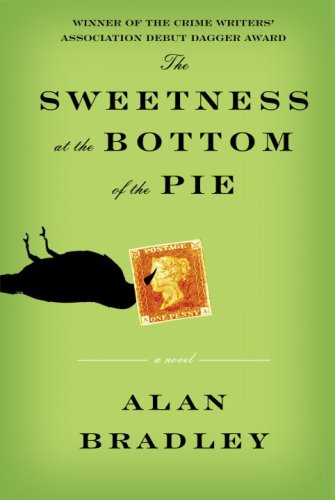


Eleven-year-old Flavia de Luce is a sly, secretive child. Her favorite hobby is concocting poisons in the upstairs laboratory of her old manor home. She has an extensive vocabulary, a knack for picking locks, and an unflappable sense of determination. So when a dead bird with a postage stamp stuck through its beak is found on the doorstep and a murdered man is found in the cucumber patch, Flavia rises to the occasion like no other detective, young or old, we’ve ever met before. Set in a small English village in 1950, The Sweetness at the Bottom of the Pie is chock-full of traditional mystery characters—the gossipy cook, the gardener with a mysterious past, the stoic police inspector. Then there’s Flavia’s family—a deceased mother whose presence still lingers, a passive father who is devoted to his stamp collection, and a pair of older sisters who cling to their own interests as obsessively as Flavia clings to her chemistry flasks and beakers. Of course out of all these finely-drawn characters, it is Flavia who takes the cake, saves the day, and wins the hearts of readers. This is author Alan Bradley’s first book, and besides winning the prestigious Canadian Crime Writers’ Association Debut Dagger Award, it is only the first of a series that stars this highly original girl sleuth.

Flavia de Luce Mysteries by Alan Bradley
1. The Sweetness at the Bottom of the Pie
2. The Weed That Strings the Hangman’s Bag
3. A Red Herring without Mustard (due 2011)

Petronella Saves Nearly Everyone:  The Entomological Tales of Augustus T. Percival, Book 1 by Dene Low, 2009, Houghton Mifflin (Historical Fiction/ Mystery/ Teen Fiction)


Lords, ladies, foreign dignitaries, and the cream of Victorian society have turned out to celebrate Petronella Eunice Arbuthnot’s sixteenth birthday. But Petronella herself has bigger fish to fry. Her beloved guardian, the honorable Augustus T. Percival, has met with an unfortunate accident that has unexpected side effects—he has inadvertently swallowed a beetle and now has an insatiable appetite for insects. Such an impulse poses many opportunities for social embarrassment, particularly at an event as important as a young lady’s coming-out party. But things go even more awry when two particularly esteemed guests are kidnapped right from under Petronella’s elegant nose. Aided by her guardian (who keeps plucking moths from the air and popping them into his mouth), her best friend Jane (another pretty young thing with the heart of a prankster), and Jane’s well-connected big brother James (whose virile charms make her stomach do flips), Petronella plunges into a political mystery laden with ransom notes, midnight meetings, and hordes of oppressive Victorians determined to keep an upper-crust young lady from having the adventure of a lifetime. Petronella, needless to say, outwits them at every turn. Author Dene Low invests her debut novel with sly humor, charming period slang, and deliciously absurd details. Readers will be pleased as punch to learn that more adventures starring intrepid Petronella and her bug-hungry guardian are on their way.

Tuesday, September 28, 2010

Magic in the Backyard


Alice stepped in a rabbit hole and fell into Wonderland. A twister whisked Dorothy away to Oz. Peter, Susan, Edmund, and Lucy opened a wardrobe door and found the land of Narnia. Even Harry Potter discovered a magical world lurking just beyond the edges of the everyday. The parallel worlds that exist in fiction are by turns fantastic, quirky, dark, and dangerous. The books in this list prove that there’s magic right and left and in our very own backyards—if we know where to look.

The Magicians by Lev Grossman, 2009, Viking Press (Literary Fiction/ Fantasy)


Nerdy high school genius Quentin Coldwater spends most of his time wishing he were in Fillory, the fictional magic land featured in the children’s books that Quentin never outgrew. The Fillory series guarantees adventure and enchantment when the real world fails to live up to expectation—which, for Quentin, it frequently does. He’s too smart to be interested in school, he’s in unrequited love with his best friend’s girl, and happiness seems perpetually just out of reach. Even when Quentin discovers that magic is real, it’s a bit of a letdown. Admitted to an exclusive college of sorcery, Quentin is thrilled to finally belong—and then exhausted when the study of magic turns out to be just as grueling as the study of anything else. Quentin becomes a skilled magician with a close and catty group of friends, but the sense of completion that he expected magic to fulfill is still painfully absent. It’ll take something major to halt Quentin’s downward spiral into disillusionment—something like the revelation that Fillory is real and reachable. Fillory is a real place, but it’s not all happy adventures and talking bunny rabbits. It’s a dangerous place teeming with its own histories, politics, and enemies, and Quentin will have to face all his demons in order to survive. The Magicians is, at first glance, like a grown-up Harry Potter venturing into The Chronicles of Narnia, complete with the sex, drugs, and alcohol-fueled lifestyle of the modern party-school undergrad. But there’s a great deal of mystery, intrigue, and complexity behind the scenes as author Lev Grossman balances the power of fantasy with the harshness of reality. Every bit as satisfying as the fantasies of our youth, The Magicians is not to be missed—nor is the sequel, The Magician King, due out in 2011.

P.S. Fans of The Magicians have had a whale of a time creating plots and histories for the Fillory and Further books and their fictional author Christopher Plover. Check out these websites—and the “official” site for the Brakebills Academy of Magic.

Neverwhere by Neil Gaiman, 2003, Harper Perennial, originally published 1996 (Fantasy)


Richard Mayhew lives in London. He has a job. He has an apartment. He has a fiancé. He has a regular everyday sort of life. All that is about to change. Richard, bumbling and late to dinner, stops to help a dirty, bleeding young woman lying on the sidewalk. Much to fiancé’s chagrin, Richard scoops her up and takes her home to recuperate. The waiflike girl is named Door and there’s something very odd about her. Sure, she refuses to go to the hospital or call the police, and yes, she heals rather quickly and hides rather too well when a pair of ominous men in black come looking for her, but it’s more than that. When Door thanks Richard and leaves again, it seems the brief adventure is over. But then Richard begins to change. His friends don’t recognize him, his fiancé barely notices him, and strangers can’t even see he’s there. Knowing Door can answer his questions, Richard picks up on the few hints she dropped and plunges into London Below, a weird and wild world than exists under the sidewalks and subway tunnels of London proper and is inhabited by those who “fell between the cracks”—people who live in the sewers, people who talk to rats, people who can do magic. Soon Richard is one of Door’s companions on a dangerous quest through this bizarre subterranean land. If Richard wants to get back to his blissfully humdrum life, he’s got to prove his worth against all manner of assassins, monsters, and mayhem. Always inventive author Neil Gaiman is at his best here as he skillfully weaves myths and legends together with bits and pieces of the familiar to create a magical world that is entirely original. Witty and wickedly inventive, Neverwhere is fantasy at its finest.

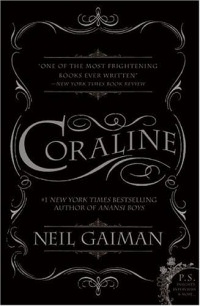
Coraline by Neil Gaiman, illustrated by David McKean, 2002, Harper Collins (Fantasy/ Teen Fantasy/ Children’s Fantasy)


For a “lost-in-a-magical-realm” story, author Neil Gaiman is, hands down, the go-to guy. The more he writes, the more fantastic his fantasy worlds get. In Coraline, for example, a bored little girl wiles away the rainy day exploring the rambling house she’s just moved into with her preoccupied parents. One intriguing door opens onto a brick wall—a division built when the big house was converted into units. But one night, in true Chronicles of Narnia fashion, Coraline turns the knob and walks into a parallel world where everything in her dull life is mirrored with fantastic effect. The toys are better, the scrawny black cat that hangs around outside can talk, and Coraline’s “other” parents are kind and attentive and loving—even if their sewn-on black button eyes are decidedly creepy. Coraline chooses to go back to her own world, but in doing so she sets off a chain of events with dangerous consequences. Her real parents have disappeared, and only another venture into the not-quite-right realm of the “other mother” can bring them back. A distinct air of menace pervades this suspenseful children’s story, harking back to ghost stories and grim fairy tales of yore. Tapping into age-old fears and complimented by the dark, scratchy illustrations of David McKean, Coraline’s chills have thrilled readers of all ages. Winner of the Hugo, Nebula, and Bram Stoker Awards, the book has also been adapted into a sophisticated graphic novel (illustrated by P. Craig Russell) and a whimsical animated movie.

InterWorld by Neil Gaiman and Michael Reaves, 2007, HarperCollins (Science Fiction/ Fantasy/ Teen Fantasy)


Fifteen-year-old Joey Harker has a gift for getting lost. So lost, in fact, that one day he wanders right out of our world and smack into another. This is Joey’s real gift—he’s a Walker, able to move effortlessly between countless parallel worlds. Joey’s new ability is also a dangerous one. Almost before he can blink, he’s being hunted by not one but two evil forces who seek to harness his world-walking power—the Binary, fierce members of a scientific world from one end of the spectrum, and the HEX, cruel citizens of a magical land from the other extreme. Joey’s only refuge is the InterWorld, an in-between place of balance populated by lots of other Joey Harkers from lots of other alternate Earths. These Joeys are anything but identical. There’s werewolf-ish Jakon Haarkanen from an Earth where evolution took a twist and humans descended from wolves, and J/O HrKr, part boy, part computer, from a scientifically advanced futuristic world, to name just a few. Joey must prove himself to these alternate selves as they all learn to wield their power to Walk—because Joey is about to cause several worlds’ worth of trouble. Fast-paced and action-packed, InterWorld is an adventure story that expects its readers to be familiar with science fiction standards like parallel universes and alternate timelines, and then expects readers to put everything they know on hold and just go along for the wild ride. Fantasy favorite Neil Gaiman is (no surprise) one of the inventive minds behind InterWorld. The other collaborator is Michael Reaves, television writer for such sci-fi gems as The Twilight Zone and Star Trek: The Next Generation. Together, Gaiman’s and Reaves’ genius for inventing new worlds rises to new heights of creativity and daring. Let’s hope there’s more where that came from.

Malice by Chris Wooding, 2009, Scholastic Press (Teen Fantasy/ Horror/ Graphic Novel)


Everyone knows about the underground comic book Malice. Supposedly it doesn’t even exist, but if you get your hands on a copy, mix a few ingredients, and chant “Tall Jake, take me away,” you’ll find yourself yanked into the pages of the comic’s sinister world. Of course, that’s just an urban legend. It’s a coincidence that the kids in the comic look like missing children. Those kids must be runaways, and the artist just uses their photos for inspiration…right? Wrong, and teenagers Seth and Kady are about to find out the hard way. When their friend Luke disappears, danger-loving Seth and curious Kady are immediately suspicious. When they find a blank comic book emblazoned with a big red M in Luke’s room, they begin to suspect that there’s more to Malice than mere rumor. Seth, bored of everyday hum-drum living, is eager to call Tall Jake and jump into the comic. But when the chant works, Seth is overwhelmed by a menacing world filled with clockwork monsters and mechanical mayhem. Not one to take any sort of adventure lying down, Seth joins forces with a rag-tag group of teens who have managed to defy Tall Jake and survive. Back in the real world, Kady is hot on the trail of Malice’s unknown creators—who turn out to be every bit as dangerous as the chaotic alternate world they’ve created. Toying with the conventions of horror movies, urban legends, and comic books, author Chris Wooding has crafted a heart-pounding, nail-biting tale of suspense. The packaging is part of the fun of Malice, with its three-dimension cover and interspersed sections of eye-catching comic book artwork. The cliffhanger ending will leave you holding your breath for the sequel, Havoc, due in October 2010.

War for the Oaks by Emma Bull, 2001, Orb Books, originally published 1987 (Fantasy)


Eddi McCandry is having a bad night. She broke up with her boyfriend, quit her band, and is being chased through downtown Minneapolis by a man in black and a very big dog. Cornered at last, Eddi is stunned to discover that the man and the dog are one and the same. The fellow is a phouka, a shape-shifting magical being, and he has just drafted Eddi into an age-old war between two dueling branches of faerie folk. The Seelie Court needs Eddi, a mortal, to bring balance to their battle with the dark Unseelie Court. Feisty and fiercely independent, Eddi has zero interest in being some pixie’s pawn, but she doesn’t have a choice—now that she’s been singled out by one faerie court, the sinister fey of the other will be after her in full force. The phouka—an infuriating, dashing trickster—is appointed Eddi’s guardian and guide through the magical realm now open to her. Overwhelmed, Eddi grounds herself in her passion for music. She starts another band and to her surprise, her recently acquired affinity for magic produces the best sound she’s ever played—with a bit of help from her new bandmates. The fey have been infiltrating the human world for ages, and boy, can they play some mean rock and roll. The band (with the grinning phouka as roadie) begins to garner some serious hype, but there’s still a battle between the forces of good and evil to win, and Eddi is about to become the center of some very dangerous attention. Grounded in the neighborhoods of the Twin Cities and brimming with as much rock and roll as magic, War for the Oaks is an urban fantasy cult classic that still packs a punch more than twenty years after its original publication.

Greywalker by Kat Richardson, 2006, Roc Books (Fantasy/ Mystery) 


Greywalker begins with Seattle-based private detective Harper Blaine getting the beating of a lifetime when a routine investigation leads to an unexpectedly bad end. Then, she dies—for two minutes. Resuscitated and recovering in the hospital, Harper is eager to put this incident behind her and get back to work. That, of course, is easier said than done. Because Harper begins experiencing strange phenomena—a foggy grey mist on the edges of her vision, ghostly shapes moving around her, snarling shadows that dodge and lunge. When she meets a married couple who have experience investigating the paranormal, Harper finally gets some answers. Her temporary death and her return to life have made her a Greywalker—someone able to move between the everyday world and the Grey, a shadowy realm halfway between life and death inhabited by ghosts, vampires, necromancers, and monsters. Harper is anything but thrilled by this startling revelation, but the Grey isn’t going away and soon her normal cases—finding a missing college student, tracking down a family heirloom—begin to show disturbing and dangerous signs of the paranormal. Harper is going to have to push her natural skepticism aside and accept her new abilities if she wants to solve her cases—and stay alive. Populated by intriguing characters both human and supernatural and led by a gutsy, sarcastic, wholly likeable heroine, Greywalker is a fantasy on par with Charlaine Harris’ Southern Vampire Mysteries starring Sookie Stackhouse and Jim Butcher’s Dresden Files featuring wizard-detective Harry Dresden. With Greywalker, author Kat Richardson pulls all the stops and pens a fast-paced, monster-packed novel (the first in a series) that is an exciting blend of hard-boiled detective mystery and gritty urban fantasy.

The Greywalker Series by Kat Richardson
1. Greywalker
2. Poltergeist
3. Underground
4. Vanished

The Stolen Child by Keith Donohue, 2006, Doubleday Books (Fiction/ Fantasy)


In the woods behind seven-year-old Henry Day’s house, there is another world. Hobgoblins, or changelings, inhabit the country wilderness; they are fairy-like sprites that kidnap children and leave one of their own behind. This is destined to be Henry’s fate. Nabbed from his hiding spot in the forest one day, the boy Henry is transformed into a fairy and renamed Aniday. Forever trapped in a child’s body, Aniday learns the woodsy brand of stealthy magic that ensures the survival of the wild little band. The changeling who takes his place becomes human and lives out his life as Henry Day, identical in every way to the original boy save for a new prodigious talent at the piano. As the now-human Henry and the new hobgoblin Aniday mature, they are both haunted by the past. Bookish Aniday, using stolen scraps of paper and found pencil stubs, keeps track of his new life amongst the changelings and clings to fading memories of his first family. Henry settles into the grooves of modern American life in the 1960s, but he is plagued by recollections even more distant—his own original human life, from way back before his wild fairy days, back when he was a human boy who was replaced by a changeling and became one himself in turn. As the lives of Henry Day and Aniday separate and twist and turn to collide once more, author Keith Donohue relates the cycle of human to changeling and back again with an eerie precision that is anchored in everyday details. Haunting and strange, The Stolen Child will make readers firmly believe in the ageless children of the woods—and maybe even question their own true identities and histories.

Little, Big by John Crowley, 2006, Harper Perennial, originally published 1981 (Literary Fiction/ Fantasy)


When anonymous Midwestern city boy Smoky Barnable locks eyes with long tall Daily Alice Drinkwater, it is love at first sight. Following a strange but quaint set of instructions (eat food that is made not bought; pack a suit that is old not new), Smoky walks to Edgewood—not found on any map—to marry Alice, live in the rambling Drinkwater house that is built in every style, and become part of this singular family’s history. The house was designed by great-grandfather John Drinkwater, an eccentric architect and author with a theory about concentric worlds within worlds. Daily Alice and her sister Sophie spent their childhood frolicking with Uncle Auberon, a man who devoted his life to capturing photographic evidence of the elusive “they” who dwell in the wilderness that surrounds the family home. Two of the Drinkwater children, Alice’s son and Sophie’s daughter, leave the ancestral home to embark on big, strange, wondrous adventures in the big city and in the wild wild wood. And enigmatic Aunt Cloud endlessly consults her much-sought-after deck of cards and traces the Drinkwaters’ progress through the unending story of life. The Drinkwaters are without doubt a magical family, and Little, Big is without doubt a fantasy novel of unparalleled beauty and style. Author John Crowley writes a lyrical prose as he tells the fanciful, whimsical saga of this almost mythical family and the various magical boundaries, fairy realms, and other-worlds that its members encounter and inhabit. Full of moments of wonder, clarity, and mystery, Little, Big is a fine, graceful, wandering fantasy story that you’ll want to read again and again and linger over and make last as long as you possibly can.

Note: Other previously reviewed books that feature ordinary people tumbling into extraordinary magical realms include Philip Pullman’s utterly fantastic and all-absorbing His Dark Materials trilogy; Summerland, Michael Chabon’s adventure-filled tribute to magic, mythology, and the great game of baseball; yet another Neil Gaiman story, Stardust, with a fairy tale twist; The Book of Lost Things by John Connolly, an eerie fantasy about a young boy lost in a strange land; and that timeless classic The Neverending Story by Michael Ende.

Tuesday, September 14, 2010

Be My Private Eye


Gumshoes, flatfoots, shamans, private eyes, P.I.s. Call them what you will, but there is no detective like the private investigator. These sleuths are not copper-on-the-beat policemen or armchair amateurs with the luxury to solve crimes in their spare time. The private eye is a tough-as-nails consummate professional, and you’ll be more than willing and able to pay for these expert crime-solving services.

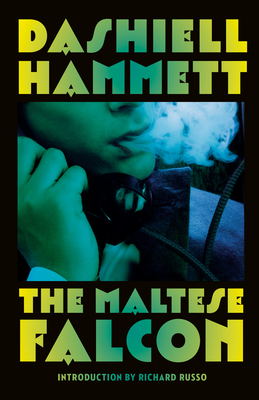
The Maltese Falcon by Dashiell Hammett, 1992, Vintage Books, originally published 1930 (Mystery)


Sam Spade is a sardonic, detached, keen-eyed private detective with his own unwavering code of honor. So when his partner Miles Archer is killed while tailing a man suspected of running off with a new client’s sister, Spade is immediately on the case—even though he’s been making time with Archer’s wife. But that was just a passing fancy. The new client, Brigid O’Shaughnessy, is the real deal: bright, beautiful, and a complete liar. She doesn’t even have a sister. What Brigid does have is an intriguing story about a valuable falcon statue and lots of low-down dirty gangsters hot on its trail. Embroiled in this plot, Spade keeps his wits and stays one step ahead of the bad guys—even though with all the crossing and double-crossing going on, he doesn’t always know who the bad guys are. Author Dashiell Hammett’s pulp fiction potboiler, with its sparse prose and compelling characters, has become a classic. Influencing even fellow mystery author Raymond Chandler (creator of the second best-known hardboiled detective Philip Marlowe), Sam Spade is the granddaddy of every hard-assed, wise-cracking, no-nonsense private eye on the street. Humphrey Bogart’s top-notch performance as Sam Spade in the 1941 film adaptation, a classic in its own right, has guaranteed that a certain black bird will be causing trouble for decades to come.

The Big Sleep by Raymond Chandler, 1992, Vintage Books, originally published 1939 (Mystery)


When private investigator Philip Marlowe is called to the massive mansion of paraplegic millionaire General Sternwood, he doesn’t expect to be plunged into a mess of blackmailers, gangsters, and drug dealers. But he takes it all in stride, because Marlowe is as hard-nosed (not to mention hard-drinking and chain-smoking) as they come. Sternwood’s wild-child daughter Carmen is a vivacious tease of a girl, and she’s being blackmailed. Marlowe is charged with putting a stop to the extortion and getting Carmen out of trouble, but the girl—and her drop-dead-gorgeous, tough-as-nails big sister Vivian—proves to be more than a handful. The sisters have agendas of their own and both know some shady characters. No one is telling the truth, the whole truth, and nothing but the truth. In fact, most of what comes out of their lips is about as far from the truth as you can get. Pornographers, gamblers, and murders all become part of the Byzantine plot as Marlowe scowls his way across the dark underbelly of 1940s Los Angeles. He may be surrounded by double-crossing bad guys and taunting femme fatales, but Marlowe is never outwitted, outpaced, or outmatched. Cynical and world-weary, Marlowe is an all-American anti-hero and the star of several of author Raymond Chandler’s trademark hardboiled noir thrillers. Lauren Bacall played Vivian to Humphrey Bogart’s Marlowe in the 1946 film adaptation, cementing The Big Sleep’s place in the detective lit canon.

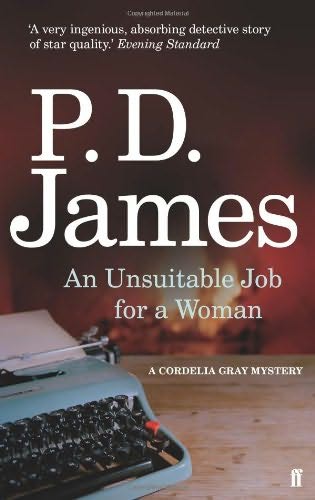
An Unsuitable Job for a Woman: A Cordelia Gray Mystery by P.D. James, 2001, Scribner Books, originally published 1972 (Mystery)


It took awhile for women to enter the private eye profession without serving as secretaries or seductresses. When they did, the ladies proved to be every bit as tough, efficient, and intuitive as their male predecessors. In 1972, author P.D. James introduced Cordelia Gray, a young woman who inherits a London detective agency. Of course, it’s an awfully run-down detective agency, and Cordelia only gets it when her she finds her mentor Bernie Pryde, a cancer-ridden ex-cop, dead in the office. Bernie committed suicide but left his beloved P.I. firm in the capable hands of his youthful assistant. Cordelia bites the bullet, defies convention, and makes the business her own. Luck is on her side when her first case is a high profile investigation into the supposed suicide of a prominent scientist’s son. The son is Mark Callender, an intelligent Cambridge student who suddenly left school, became a gardener for a wealthy family, lived in a cozy little cottage, and then hung himself. To Cordelia, questioning Mark’s uncooperative friends and investigating the puzzling crime scene, the pieces don’t fit. Digging deep into Callender family secrets, Cordelia uncovers a web of mysterious circumstances that someone doesn’t want brought to light. Now Cordelia herself is a target, but no good private investigator lets something as trivial as danger stand in the way. Cordelia, despite her youth and inexperience, is determined to be a damn good P.I. Author P.D. James (born in 1920 and publishing since 1962) is as experienced a mystery writer as they come. Tight plotting, attention to detail, and compelling characters mean that Cordelia Gray is a detective to be reckoned with—and she appears in one more mystery, 1983’s The Skull Beneath the Skin.

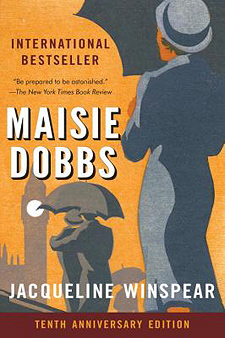
Maisie Dobbs by Jacqueline Winspear, 2003, Soho Press (Historical Fiction/ Mystery)


Written years after Cordelia Gray hit the P.I. scene but set decades earlier, Maisie Dobbs is another young woman with a keen eye who defies stereotype and hangs her shingle as a private detective. The year is 1929 and England is still recovering from the devastating effects of World War I. But Maisie Dobbs, ex-maidservant, student of master-detective Maurice Blanche, former front-line nurse, is turning a new page and opening her own private investigations agency in London. Her allies include her previous employer Lady Rowan (who discovered her maid reading philosophy in the library one night, correctly gauged this unusual servant’s intellect, and sent her straight off to University) and neighborhood handy-man Billy Beale (sharp, street-wise, an investigative-assistant in the making). Maisie herself is an acute observer of human nature, intuitive and sensitive and able to relate to people of all classes and backgrounds, but she’s also nursing her own war wounds. Still, she’s ready to put all that behind her when her first case comes along. It begins as a tedious investigation into the whereabouts of a seemingly unfaithful wife, but before long the trail leads to a secluded convalescent home for soldiers damaged in mind and body—from which very few men ever emerge alive. Now Maisie is face to face with the tragedies of the Great War that she’s tried so hard to forget, and with a complex mystery on her hands to boot. Author Jacqueline Winspear’s portrait of post-World War I England is pitch-perfect and her heroine is remarkably strong and well-drawn. Maisie Dobbs is a fine example of romance, mystery, and historical fiction all rolled into a suspenseful, moving story.

Maisie Dobbs Mysteries by Jacqueline Winspear
1. Maisie Dobbs
2. Birds of a Feather
3. Pardonable Lies
4. Messenger of Truth
5. An Incomplete Revenge
6. Among the Mad
7. The Mapping of Love and Death

The No. 1 Ladies’ Detective Agency by Alexander McCall Smith, 2009, Anchor Books, originally published 1998 (Mystery)


There are not many detective agencies in Botswana. There are even fewer ladies’ detective agencies in Botswana. In fact, there are none—until now. Using the funds from the sale of her beloved father’s cattle, middle-aged Mma Precious Ramotswe sets up the No. 1 Ladies’ Detective Agency in her small hometown of Gaborone. As the country’s only female private investigator, Mma Ramotswe is not entirely certain that her gamble will pay off. But sure enough, the clients come. Women want to know where their cheating husbands have strayed. Fathers want to know which boys their young daughters are dating. And there are more sinister crimes afoot too, as in the case of a missing little boy. But Mma Ramotswe handles them all in her own fashion. Armed with only a detecting manual, the example of mystery writer Agatha Christie, and her own more-than-competent intuition and understanding of her fellows, Mma Ramostwe tackles every case with humor and wisdom. Told in a series of vignettes that trace Mma Ramotswe’s history as well as her present casework, author Alexander McCall Smith paints a vivid portrait of Africa and the people who love to call it home. Cozy, gentle, and brimming over with true glimpses into the myriad workings of human nature, Mma Ramotswe and her little detective agency are a welcome addition to the otherwise hard-edged world of private eye fiction—and so popular that HBO has developed a No. 1 Ladies’ Detective Agency television show.

1. The No. 1 Ladies’ Detective Agency
2. Tears of the Giraffe
3. Morality for Beautiful Girls
4. The Kalahari Typing School for Men
5. The Full Cupboard of Life
6. In the Company of Cheerful Ladies
7. Blue Shoes and Happiness
8. The Good Husband of Zebra Drive
9. The Miracle at Speedy Motors
10. Tea Time for the Traditionally Built
11. The Double Comfort Safari Club

The Case of the Missing Servant: From the Files of Vish Puri, India’s “Most Private Investigator” by Tarquin Hall, 2009, Simon and Schuster (Mystery)


Vish Puri is India’s “Most Private” private investigator. With a team of delightfully nicknamed employees (the driver goes by “Handbrake;” the firm’s female agent is known as “Facecream”), a network of contacts in high (and low) places, and even a few sleek new modern technologies, the plump, middle-aged gentleman is Delhi’s master of respectability, confidentiality, and discretion. But despite being the proud recipient of the Super Sleuth Award from the World Federation of Detectives for solving the Case of the Missing Polo Elephant in 1999, most of Vish Puri’s clients are mamas and papas wanting their prospective sons-and-daughters-in-law investigated. So when a lawyer comes to Puri with a tale of a missing housemaid, false accusations, and bureaucratic corruption, the dapper detective jumps at the chance to get back to some real sleuthing. But Puri faces several complications, including a baffling request from a famous war hero, a doctor’s orders to diet (and a wife eager to comply), and an overly-inquisitive mother (“Mummy-ji”) who refuses to accept that elderly ladies are simply not cut out to be detectives. Despite the challenges, it will never be said that Vish Puri, Indian’s acclaimed “Most Private Investigator,” failed to solve the case. British author Tarquin Hall has made Delhi his second home, and he does credit to modern India’s fabulously chaotic atmosphere. Lively, clever, and with a charming cast of unforgettable characters, The Case of the Missing Servant (and its 2010 sequel, The Case of the Man Who Died Laughing) is a new mystery series well worth keeping an eye on.

The Spellman Files by Lisa Lutz, 2007, Simon and Schuster Books (Fiction/ Mystery)


It’s hard growing up with a pair of private investigators for parents, a mom and pop who wield a hard line of questioning whenever anyone steps out of line—which for Izzy, middle child in the overly-inquisitive Spellman clan, is pretty often Izzy was the family rebel, with years of teenage hjinks and all-night parties under her belt. But now, at age twenty-eight, Izzy is grounded by the nuts-and-bolts of detective work as a P.I. for Spellman Investigations, which operates out of the family home in San Francisco. Her youthful misadventures make her ideally suited to telling lies, keeping secrets, and spying. True, her parents are not above tailing her on dates, but Izzy is making it work—until she meets Daniel Castillo, dentist, ordinary guy, and love of her life. Trying to keep her familial obligations and her romantic life separate is next to impossible, so Izzy quits the family business. Of course, she can’t get away that easily. The Spellmans are not accustomed to keeping out of each other’s affairs. Her parents bargain for one last case (one old, cold, missing-persons case), but things get infinitely more complicated when her fourteen-year-old kid sister Rae goes missing too, forcing the Spellmans to work together if they want to keep their family intact. Narrated in a conversational tone by wry-humored Izzy (equal parts Dirty Harry, Bridget Jones, and Nancy Drew) and sprinkled throughout with her numerous lists of misdeeds, The Spellman Files is a laugh-out-loud lesson in suspense, mystery, romance, and quirky family dysfunction.

1. The Spellman Files
2. Curse of the Spellmans
3. Revenge of the Spellmans
4. The Spellmans Strike Again

Storm Front: The Dresden Files, Book 1 by Jim Butcher, 2000, Roc Books (Fantasy/ Mystery)


Harry Dresden’s detective agency is not your average P.I. firm, and Harry is not your average P.I. Harry Dresden is a wizard. He’s even in the phone book, but there’s not a helluva lot of money in this line of work—his basement apartment’s best asset is its dank sub-basement—so Harry consultants on some of the stranger cases that fall into the lap of the Chicago P.D. When the police request his presence at the scene of a double homicide, Harry jumps at the opportunity to get ahead on next month’s rent. But the murders are bizarre, grisly, and unquestionably the result of dark art. Investigating this crime means danger of more than just the usual seedy-city-underbelly type. Harry will need to dodge sultry vampires, ticked-off faeries, and the quick-to-judge (and even quicker to punish) White Council. To make matters worse, suspicion soon falls on Harry himself—he does, after all, know magic. And nothing makes it harder to clear you name than the actual villain—a mysterious, powerful practitioner of the blackest of black magic—hot on your heels. Anything that can go wrong will go wrong, but it’ll take more than that to knock Harry Dresden off a case. Supported by Harry’s detailed back story and evolving relationships with characters human and inhuman alike, author Jim Butcher creates a gritty fantasy world that is firmly rooted in the real locations and history of the city of Chicago. Led by the likes of this wise-cracking, dry-humored, heroic young wizard-detective, Storm Front is irresistible.

The Dresden Files by Jim Butcher
1. Storm Front
2. Fool Moon
3. Grave Peril
4. Summer Knight
5. Death Masks
6. Blood Rites
7. Dead Beat
8. Proven Guilty
9. White Night
10. Small Favor
11. Turn Coat
12. Changes

The Unknown by Mark Waid, art by Minck Oosterveer, 2010, BOOM! Studios (Mystery/ Fantasy/ Comic/ Graphic Novel)


Catherine Allingham is the smartest person in the world and the world’s most famous private investigator. She’s used her superb intellect to solve infamous crimes like the Black Dahlia murder and the code of the Zodiac Killer. When the police request her help, it’s a mere minute’s work to puzzle out the crime scene and present the solution to the head-scratching cops. But now, diagnosed with a terminal illness and given just six months to live, Cat is about to tackle the greatest unsolved mystery of all: death. After hiring on a whim an unusually observant ex-bouncer named James Doyle to serve as a bodyguard and an extra pair of eyes, Cat sets out to solve an X-Files-esque burglary from a high-tech science laboratory in Europe. The object stolen might very well hold the key to the secrets of the afterlife—secrets Cat needs very much to learn, since she’s begun to hallucinate a chalky-faced specter who dogs her every step. James, open-minded and good-natured, quickly becomes more than a sidekick to impulsive Cat and the two are well on their way to a true partnership by the time the action-packed plot kicks into high gear. Author Mark Waid has Cat and James argue metaphysics in between brawls with bad guys and artist Minck Oosterveer’s darkly elegant comic panels lend an air of moody suspense to the story. Some timeless conventions of the comic book genre are honored (Cat is busty; James is brawny; the villain is a towering, glowering, hulk with minions at his beck and call), but The Unknown is first and foremost an intelligent and sophisticated piece of art. A sequel, The Unknown: The Devil Made Flesh, is scheduled for publication in April 2011.