Showing posts with label biography. Show all posts

Tuesday, March 29, 2011

Why We Love Jane


Jane Austen (1775-1817) is more popular today than she ever was in her all-too brief life. Arguably the best-known female writer in literary history, Jane wrote only six books—Sense and Sensibility, Pride and Prejudice, Emma, Mansfield Park, Northanger Abbey, and Persuasion—before she died at the age of forty-two. Some think of her as the ultimate romantic, the founding mother of the chick lit genre. Some admire her keen wit and observant eye, seeing in Jane an uncanny ability to critique society. Not merely content to read Jane’s books, we’ve created an entire industry around her legacy—sequels, prequels, spin-offs, modern adaptations, and a unique body of work that analyzes why exactly we’re so fond of dear old Jane.

Jane Austen: A Life by Claire Tomalin, 1997, Alfred A. Knopf Books (Biography/ 19th Century English Novelists) 


The first biography of Jane Austen was published a few years after her death by a nephew; it was meant to be the final word on “Aunt Jane” and her quiet, humble existence. To her later biographers, Jane proved exceptionally elusive—despite leading such a supposedly ordinary existence, there are very few records, notes, letters, or other papers that reveal what Jane was really like. Guesswork is a must for an Austen biographer, especially since sister Cassandra destroyed many of Jane’s letters, which hints at a private life that was more dramatic than historical fact leads us to believe. Jane Austen: A Life, the 1997 biography by Claire Tomalin, is one of the best. Tomalin reveals details about the lives of family and friends to throw light on how Jane lived and worked and thought and felt; Jane’s life is placed firmly in its context of 18th and 19th century religion, politics, and war. Most importantly, the evolution of Jane’s writing is thoughtfully traced. The reader is left with a vivid sense of Jane, her work, and her life. And that, given the difficulty of truly explaining Jane, is the best Austen fans can wish for.

Becoming Jane Austen: A Life by Jon Spence, 2007, Hambledon Continuum Books (Biography/ 19th Century English Novelists)


The only other writing Jane left behind (besides her novels, a few half-finished works-in-progress, and a handful of childhood scribblings) is her letters. Jane’s elegant literary style is not on show in these missives; these are everyday thoughts put down on the spur of the moment, gossip, news, and family jokes. But there is one tantalizing incident—a flirtation with one “Tom Lefroy.” Tom and Jane met, danced, chatted, and parted forever. Schoolgirl crush or doomed love affair? We’ll never know, but that doesn’t stop biographer Jon Spence from speculating that this relationship was a turning point in Jane’s life that directly inspired the love stories she later wrote. Spence also highlights the possible influence of Jane’s fashionable, glamorous cousin Eliza de Feuillide, whose first husband was guillotined during the French Revolution. By making connections between historical fact and literary fiction, Spence infuses Jane’s life with the romance and drama that Austen fans long to know she experienced. Becoming Jane Austen was the inspiration for the 2007 Hollywood movie Becoming Jane, which firmly casts Jane Austen as the heroine in her very own romantic comedy.


“The Janeites” in Collected Stories by Rudyard Kipling, 1999, Everyman’s Library/ Alfred A. Knopf Books, originally published 1922 (Fiction/ Short Story Collections)


Rudyard Kipling’s 1922 “The Janeites” is one of the first stories to mention Jane Austen as a member of the literary canon, as an author one is expected to know and love. In the story, a simple-minded ex-soldier recounts how, thanks to Jane, he survived World War I. Humberstall is wounded and reassigned to the position of assistant mess waiter. While he’s working, he notices the senior mess waiter conversing on equal terms with military officers. The subject, of course, is Jane Austen. Humberstall has never heard of this “Jane woman,” but he can tell that a passion for her is something akin to being a member of a secret society. Soon Humberstall is escaping the horrors of war by learning the meaning of “Tilney,” learning how to spell “Catherine De Bugg,” naming artillery after other characters, and gossiping about whether Jane ever got married. Humberstall tells his own story so Kipling writes in a lower-class British dialect; it’s charming (once you get used to it) and Austen fans will get a kick out of Humberstall’s crash-course in all things Austen.

“Jane Austen Faints” in Virginia Woolf’s Nose: Essays on Biography by Hermione Lee, 2005, Princeton University Press (Nonfiction/ Literary History and Analysis/ Biography)


How does a biographer handle the ambiguities, contradictions, missing years, mythmaking, facts, and fictions? When British writer Hermione Lee gets to the case of Jane Austen, she has plenty to talk about. Given the piddling amount of factual information that exists from Jane’s forty-two years on earth, Austen is a notoriously tough subject. Any incident that is known—no matter how trivial—is ripe for debate. Once, according to family legend, Jane Austen fainted. The cause was the unexpected news that Mr. Austen had decided to move the family to Bath; the result has been intense biographical speculation. This is Jane exhibiting extreme emotion; it must be important. Lee examines various Austen bios see what different writers have made of the incident. Is Jane shocked by how sudden the news is? Terrified of city life, away from the familiar green countryside? Afraid a secret love affair has been uncovered and she is being forcibly separated from her suitor? The real cause is unknown, and so every biographer’s point of view colors our vision of Austen—and forces us to question whether we can ever really know Jane as well as we think we do.

Jane’s Fame: How Jane Austen Conquered the World by Claire Harman, 2009, Henry Holt and Co. (Nonfiction/ Literary History and Analysis/ 19th Century English Novelists)


Even if you’ve never read any of Austen’s books, you’re familiar with their titles and plots. Note the success of the BBC’s TV Pride and Prejudice miniseries starring Colin Firth as Mr. Darcy, or the chick lit bestseller Bridget Jones’s Diary (a modern retelling of Pride and Prejudice, complete with its own Mr. Darcy), or the Hollywood movie Clueless (a modern retelling of Emma), or the recent book mash-up Pride and Prejudice and Zombies. Today, Jane is everywhere, and author Claire Harmon shows us how she got there. This is a biography not of Jane’s life but of her fame—her quiet life followed by a few brief decades where no one knew her name, and then a century-long revival that has yet to end. Harman shows us Jane as a feminist and as an anti-feminist, Jane as a prickly old maid and Jane as a token for “girl power,” Jane as a Hollywood heroine and as a Bollywood starlet. We meet Jane’s detractors (Charlotte Brontë, Mark Twain) and Jane’s fans (Rudyard Kipling, Virginia Woolf). We figure out our own personal reasons for loving Jane. However she is viewed and analyzed and adapted, one thing becomes very clear in this fascinating exploration—Jane Austen is here to stay.

Sanditon and Other Stories by Jane Austen, 1996, Everyman’s Library, originally published 1870-1871 (Fiction Classics)


Forget all the sequels, prequels, and spin-offs. Never mind the sexual innuendos in Mr. Darcy Takes a Wife and the cartoon violence in Sense and Sensibility and Sea Monsters. Throw out the mystery series starring Mr. and Mrs. Darcy (by Carrie Bebris) and the mystery series starring Jane herself (by Stephanie Barron). You don’t need the next best thing; there IS more Jane. When she died, Jane left several unpublished works. Two of these we know as Northanger Abbey and Persuasion, but the fragmentary Sanditon, the few chapters of The Watsons, and the novella Lady Susan showcase Jane at her finest. Sanditon begins with an overturned carriage, several gossipy chapters about the characters’ lives, and ends just when the heroine becomes entangled in a romantic mystery. The Watsons features a young lady brought up by wealthy relations and shipped back to her poor family in the country—rather the opposite of Mansfield Park’s Fanny Price. Lady Susan is a sassy little tale about a man-hunting widow who wants her daughter to marry well—and herself to remarry even better. These fragments, believe it or not, are every bit as good as the real thing.

Tuesday, July 20, 2010

The Real Lives of Curious George, the Cat in the Hat, and Other Old Friends


Curious George, the BFG, Mike Mulligan and his Steam Shovel. Could anyone ask for better friends than these? Well, sure: their authors. Beatrix Potter and Dr. Seuss are every bit as well known as their fictional counterparts, and you can bet that their stories are just as interesting. The biography or autobiography of a children’s author is guaranteed to be one of color and creativity, and just as hard to put down as that original book that captured your childish heart all those years ago.

Beatrix Potter’s Journal by Beatrix Potter, edited by Frederick Warne Publishers, 2006, Warne Books (Biography/ Picture Book)


Beatrix Potter (1866-1943) was drawing backyard creatures, pet rabbits, and guinea pigs from her earliest years. A dreamy and creative child who loved art and nature and animals, it’s no surprise that her creations Peter Rabbit, Jemima Puddle-Duck, and Mrs. Tiggy-Winkle became very real and dear to her. This illustrated biography, in the form of a fictional journal based on real diaries and letters, is a true gem. Flaps lift to show beautiful reproductions of artwork, envelopes open, letters unfold (the letter from Beatrix’s brother about getting the exact measurements of a pet bat is a particular delight), and sketches and other documents from Beatrix’s life are scattered throughout her handwritten journal entries. From her drawings of fungi to her relationship with her publisher Norman Warne to her purchase of her own Hill Top Farm in England’s Lake District, Beatrix Potter’s life is one filled with old-fashioned romance, understated humor, and the charming little animal critters that have been loved by readers for over one hundred years.

The Journey That Saved Curious George: The True Wartime Escape of Margret and H.A. Rey by Louise Borden, illustrated by Allan Drummond, 2005, Houghton Mifflin Books (Biography/ Picture Book)


Curious George and his friend the Man with the Yellow Hat currently reside in picture books, television sets, and movie screens. But they got their start in a humble flat in Paris, where their creators H.A. and Margret Rey came to honeymoon and stayed to live and work. Both H.A. (Hans Alberto; 1898-1977) and Margret (1906-1996) were Jews born in Hamburg, Germany; when Hitler’s forces invaded France in 1940, the couple knew it was time to leave. Joining millions of people who fled the city and crowded the trains, the Reys made their escape on a pair of rickety bicycles—with the manuscript that would become Curious George (his original name was Fifi) strapped to Hans’ back. The book that tells of this amazing journey through France, across the Atlantic, and to New York City is a lovely work of art all by itself. Author Louise Borden conveys the Reys’ story in poetic style. Allan Drummond’s illustrations are charming and energetic, whether they show the romance of the Reys’ pre-war years or the more desperate rush to stay one step ahead of the Nazis. Photographs, letters, passport stamps, and intimate details lend authenticity to this story that has become a real legend in the history of children’s literature.

Boy and Going Solo by Roald Dahl, 2009, Puffin Books, originally published 1984 and 1986 (Autobiography/ Memoir) 


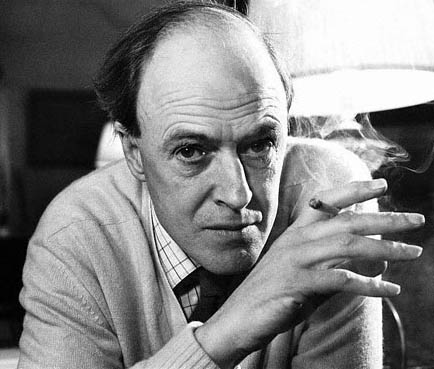
Roald Dahl (1916-1990) is the quintessential children’s author. From Charlie and the Chocolate Factory to The BFG to James and the Giant Peach, this perpetually popular author has the unique ability to tell a fantastic story. The man clearly had a wildly creative imagination, but he also lived a wildly creative life. He relates that life in two volumes: Boy and Going Solo. Boy is chock-full of antics and escapades from Dahl’s childhood—his vacations in Norway, his schoolboy pranks (including “The Great and Daring Mouse Plot”), and his eccentric family members. Savvy readers will spot not a few larks that clearly inspired his later fiction. Going Solo chronicles Dahl’s adult life, specifically his adventures in Africa working for the Shell Oil Company and his acts of derring-do as a RAF pilot during World War II. The real joy of his memoirs comes from Dahl’s distinct narrative voice—wry and tongue-in-cheek, full of dark humor and gleeful irony. Family photographs and documents dot the pages of both volumes, and the most recent edition collects the two memoirs in a single book and features lively cover art by Quentin Blake, whose illustrative style is practically synonymous with Roald Dahl’s most beloved books.

When Everybody Wore a Hat by William Steig, 2003, Joanna Cotler Books (Autobiography/ Picture Book)


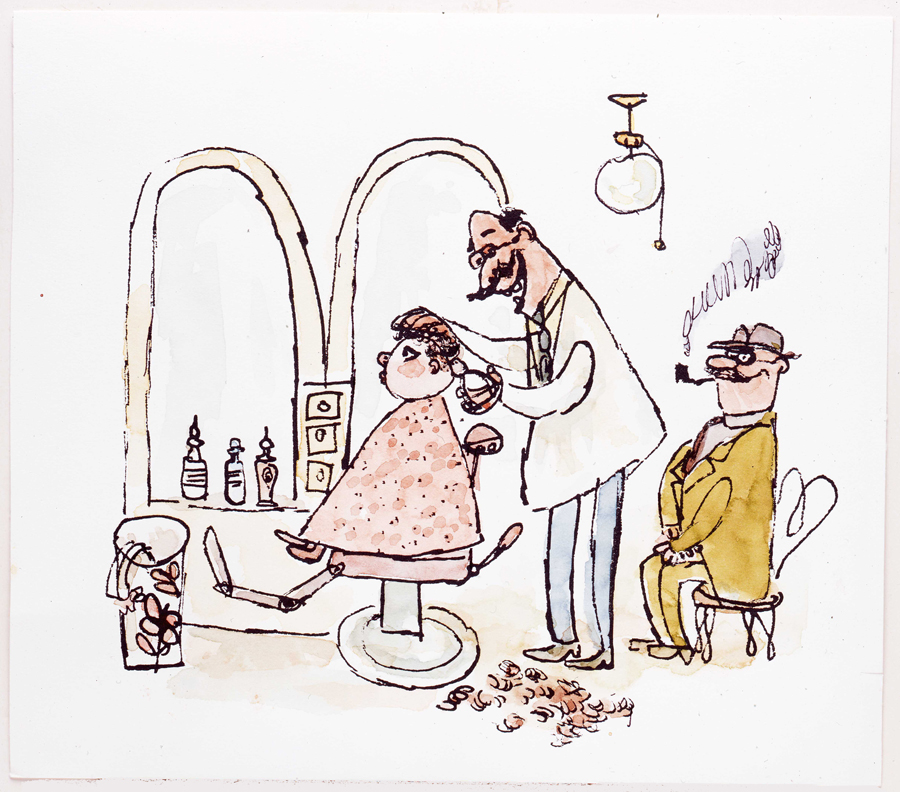
William’s Steig’s autobiography is a story for children. But anyone who knows William Steig—author of the original ugly-loving Shrek!; creator of Sylvester and the Magic Pebble, in which the main character spends most of the book as a rock—will understand that anything by this author will feature his trademark matter-of-fact tone and understated charm. When Everybody Wore a Hat is about Steig’s childhood in the Bronx, way back when you could see a movie for a nickel and a hat was as essential as shoes and a shirt. Through bright, childishly expressive illustrations, Steig (1907-2003) shows us life through his own eight-year-old eyes: an outing on the river with Mama and Papa decked out in stripes and polka-dots; neighborhood characters like elegant Mrs. Kingman who was “looked on by the women in admiration”; Steig’s first haircut at Ditchick’s Barbershop. There’s a healthy dose of realism as well, conveyed with a child’s simple directness: Papa yelling at the radiator when there isn’t enough heat, Mama’s tears when she receives sad news from the Old Country, and the bombs and blood of World War I. Deceptively simple but instantly engrossing, this slim little autobiography offers a slice of old-fashioned life and a look at the formative years of an inventive and irreverent author.

Bill Peet : An Autobiography by Bill Peet, 1989, Houghton Mifflin (Autobiography/ Illustrated Memoir)


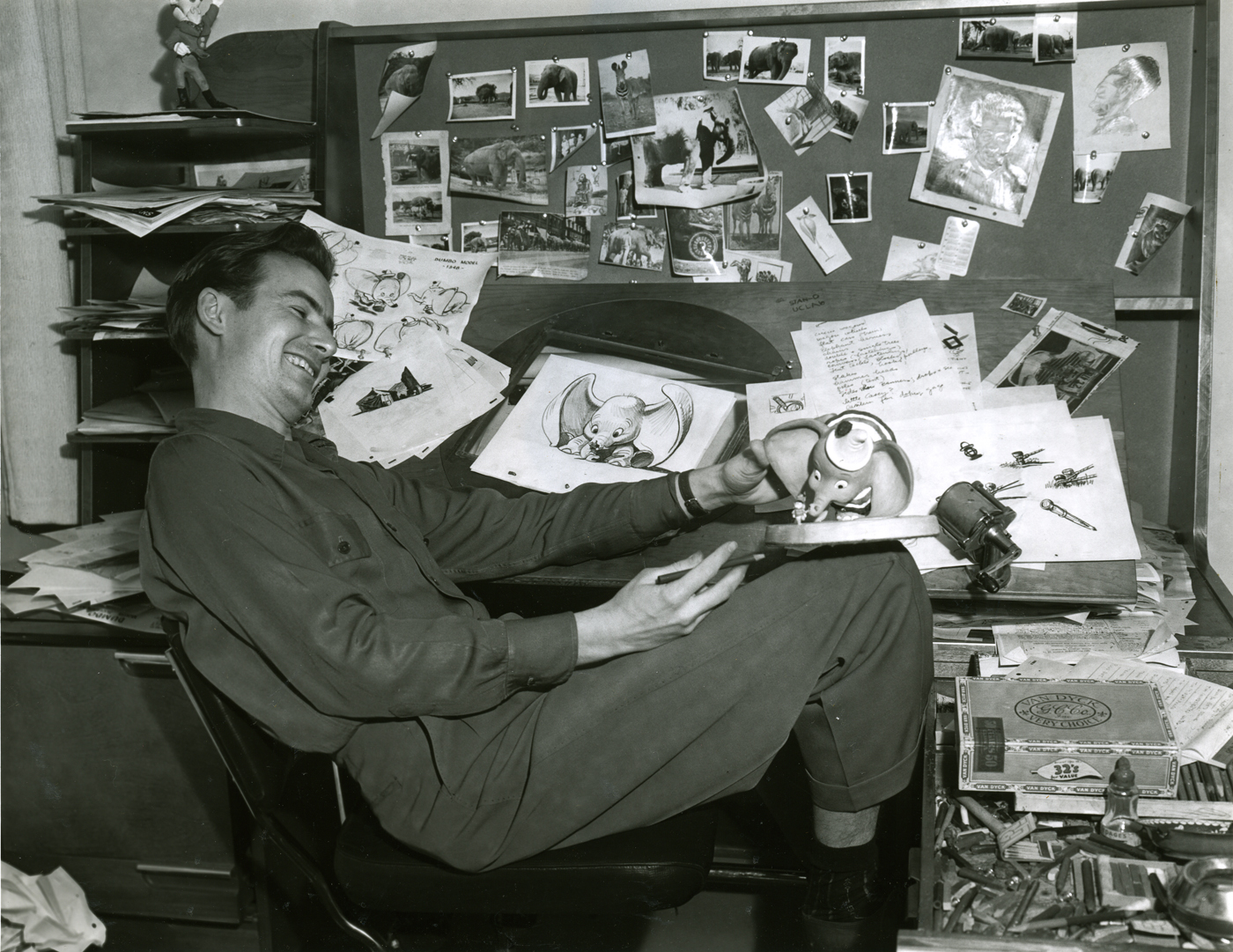
In 1937, a young storyboard artist at Disney Studios got sick and tired of drawing Donald Duck over and over and stormed out, hollering “NO MORE DUCKS! NO MORE LOUSY DUCKS!” That artist was Bill Peet (1915-2002), beloved children’s author of The Gnats of Knotty Pine, Chester the Worldly Pig, and Buford the Little Bighorn (to mention just a few), and that anecdote is one of many that he relates in his self-titled autobiography. Peet got his start at Disney, becoming a lead story man for classic films like Dumbo, Cinderella, The Sword in the Stone, and 101 Dalmatians before his own career as a children’s book author finally brought him, fame, fortune, and artistic freedom. Peet tells his life story in pictures and words—his artistic creations dance across every page as he chronicles his childhood during the Great Depression, his storyboard presentations for the great Walt Disney, and his own studio where he wrote and illustrated his books. The insight into the workings of Disney productions is revealing and entertaining and Peet always has a sense of humor about whatever life throws his way. As engaging as one of the author’s own storybooks, Bill Peet: An Autobiography is a delightful portrait of an artist at work

Ezra Jack Keats: A Biography with Illustrations by Dean Engel and Florence B. Freedman, 1995, Silver Moon Press (Biography/ Picture Book)


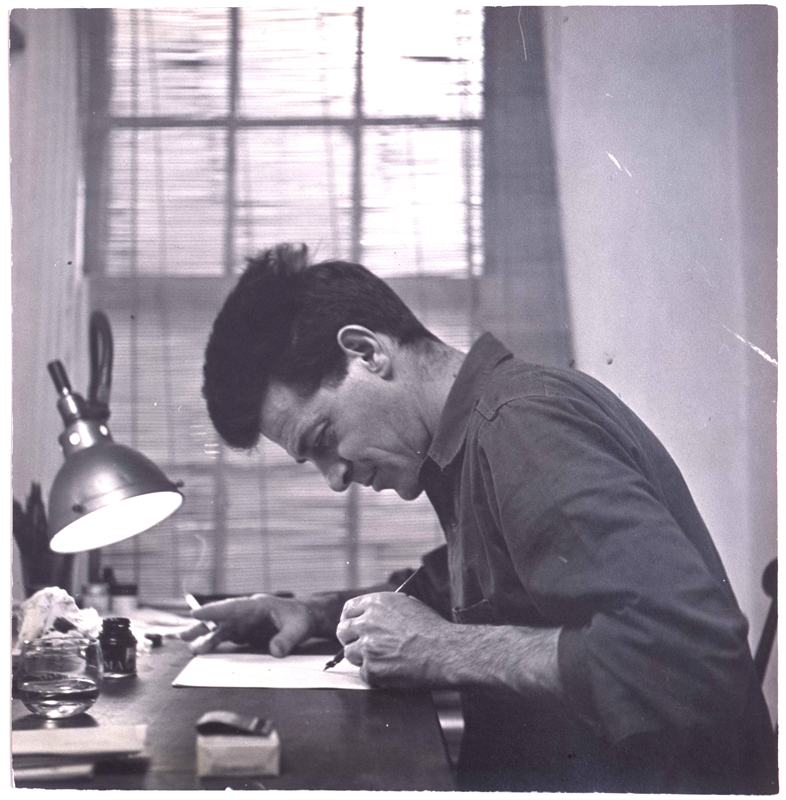
He was born Jack Ezra Katz, but you know and love him as Ezra Jack Keats (1916-1983), author of The Snowy Day, Whistle for Willie, Goggles!, and many others. From his penny-pinching childhood in the Great Depression to his years inking comics for Five-Star Comics (creators of Captain Marvel) to his experiments with fabric and collage, art was a crucial comfort for Keats. In this biography, the events of Keats’ life are illustrated by his own artwork. When little boy Ezra gets picked on by bullies in his Brooklyn neighborhood, we see an illustration of a similar scene from Goggles!. When Ezra explores the city of Paris as a struggling young artist, we see a self-portrait on a colorful Parisian street. And when Ezra realizes that there are very few black children in picture books and creates his hero Peter, we see that iconic image from The Snowy Day of little Peter in his red hood looking at his footprints in the snow. Ezra’s life is reconstructed in a simple, straightforward narrative that rolls along like a storybook. It’s a heartfelt, poignant tribute to an award-winning artist, written by people who knew (Florence B. Freedman was his high school teacher!) and loved him.

Virginia Lee Burton: A Life in Art by Barbara Elleman, 2002, Houghton Mifflin (Biography)

If you have a lasting fascination with steam shovels, snow plows, and construction sites, you probably know Virginia Lee Burton—or at least her storybook creations Mike Mulligan and His Steam Shovel, The Little House, and Katy and the Big Snow. There’s also Burton herself, and she takes center stage in this elegant biography. From her student years in the early 1920s studying dance and design to the deliberate research methods she incorporated to write and illustrate her books, Burton (1909-1968) was a woman ahead of her time. She had an active career in an era when most women were housewives. She was an environmentalist before the term existed, a nature-lover who relished country living. She was an innovator in book design (Katy plows right through the text on the page in Katy and the Big Snow). She was an artist of many mediums—there’s an entire chapter dedicated to the folksy textiles created by her Folly Cove Designers. Author Barbara Elleman fills the pages of her biography with photographs, sketches, and images from the children’s books that made Virginia Lee Burton famous. The tone is highly celebratory (any trials and tribulations are very much glossed over) but the final product is a loving tribute to a talented and cherished storyteller.

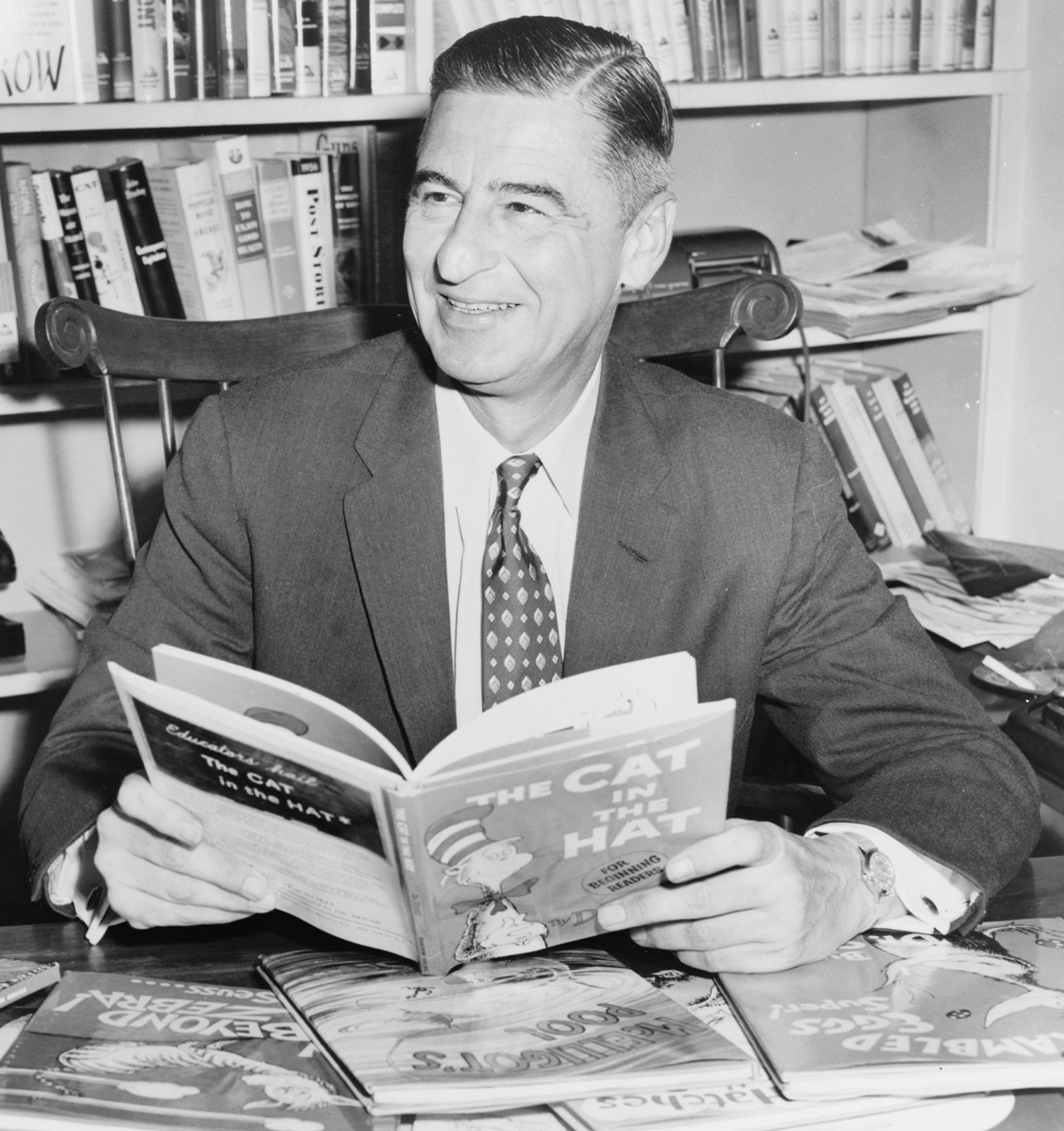
The Seuss, the Whole Seuss, and Nothing But the Seuss: A Visual Biography of Theodor Seuss Geisel by Charles D. Cohen, 2004, Random House Books (Biography)


Dr. Seuss is a household name. We all know that Horton heard a Who and that the Grinch stole Christmas. But did we know that Theodor Seuss Geisel (1904-1991) first penned cartoons for Dartmouth College’s literary magazines in the early 1920s? Are we familiar with Geisel’s advertisements for Flit bug spray? Thanks to Charles D. Cohen’s extensive biography, we are now. The Seuss, the Whole Seuss, and Nothing But the Seuss offers a retrospective of Geisel’s life and art with a particular emphasis on his pre-children’s book days. Here we meet Geisel way back when he was a boy in rural Massachusetts, back when he was an ad man for Standard Oil and General Electric, back when he was a political cartoonist during World War II, back before he was Dr. Seuss. His whimsical animal-esque characters are present from day one, even if they are occasionally tempered by the commercial nature of his early work. And when the limits are lifted, watch out—richly reproduced examples of Geisel’s art cover the pages of this “visual biography.” Cohen lets Geisel speak for himself as much as possible and excerpts from letters, interviews, and articles tell much of the artist’s story. What ultimately comes across, in all its absurd Seusssian glory, is the very real sense of a man whose creativity knew no bounds.