Showing posts with label picture books. Show all posts

Tuesday, July 20, 2010

The Real Lives of Curious George, the Cat in the Hat, and Other Old Friends


Curious George, the BFG, Mike Mulligan and his Steam Shovel. Could anyone ask for better friends than these? Well, sure: their authors. Beatrix Potter and Dr. Seuss are every bit as well known as their fictional counterparts, and you can bet that their stories are just as interesting. The biography or autobiography of a children’s author is guaranteed to be one of color and creativity, and just as hard to put down as that original book that captured your childish heart all those years ago.

Beatrix Potter’s Journal by Beatrix Potter, edited by Frederick Warne Publishers, 2006, Warne Books (Biography/ Picture Book)


Beatrix Potter (1866-1943) was drawing backyard creatures, pet rabbits, and guinea pigs from her earliest years. A dreamy and creative child who loved art and nature and animals, it’s no surprise that her creations Peter Rabbit, Jemima Puddle-Duck, and Mrs. Tiggy-Winkle became very real and dear to her. This illustrated biography, in the form of a fictional journal based on real diaries and letters, is a true gem. Flaps lift to show beautiful reproductions of artwork, envelopes open, letters unfold (the letter from Beatrix’s brother about getting the exact measurements of a pet bat is a particular delight), and sketches and other documents from Beatrix’s life are scattered throughout her handwritten journal entries. From her drawings of fungi to her relationship with her publisher Norman Warne to her purchase of her own Hill Top Farm in England’s Lake District, Beatrix Potter’s life is one filled with old-fashioned romance, understated humor, and the charming little animal critters that have been loved by readers for over one hundred years.

The Journey That Saved Curious George: The True Wartime Escape of Margret and H.A. Rey by Louise Borden, illustrated by Allan Drummond, 2005, Houghton Mifflin Books (Biography/ Picture Book)


Curious George and his friend the Man with the Yellow Hat currently reside in picture books, television sets, and movie screens. But they got their start in a humble flat in Paris, where their creators H.A. and Margret Rey came to honeymoon and stayed to live and work. Both H.A. (Hans Alberto; 1898-1977) and Margret (1906-1996) were Jews born in Hamburg, Germany; when Hitler’s forces invaded France in 1940, the couple knew it was time to leave. Joining millions of people who fled the city and crowded the trains, the Reys made their escape on a pair of rickety bicycles—with the manuscript that would become Curious George (his original name was Fifi) strapped to Hans’ back. The book that tells of this amazing journey through France, across the Atlantic, and to New York City is a lovely work of art all by itself. Author Louise Borden conveys the Reys’ story in poetic style. Allan Drummond’s illustrations are charming and energetic, whether they show the romance of the Reys’ pre-war years or the more desperate rush to stay one step ahead of the Nazis. Photographs, letters, passport stamps, and intimate details lend authenticity to this story that has become a real legend in the history of children’s literature.

Boy and Going Solo by Roald Dahl, 2009, Puffin Books, originally published 1984 and 1986 (Autobiography/ Memoir) 


Roald Dahl (1916-1990) is the quintessential children’s author. From Charlie and the Chocolate Factory to The BFG to James and the Giant Peach, this perpetually popular author has the unique ability to tell a fantastic story. The man clearly had a wildly creative imagination, but he also lived a wildly creative life. He relates that life in two volumes: Boy and Going Solo. Boy is chock-full of antics and escapades from Dahl’s childhood—his vacations in Norway, his schoolboy pranks (including “The Great and Daring Mouse Plot”), and his eccentric family members. Savvy readers will spot not a few larks that clearly inspired his later fiction. Going Solo chronicles Dahl’s adult life, specifically his adventures in Africa working for the Shell Oil Company and his acts of derring-do as a RAF pilot during World War II. The real joy of his memoirs comes from Dahl’s distinct narrative voice—wry and tongue-in-cheek, full of dark humor and gleeful irony. Family photographs and documents dot the pages of both volumes, and the most recent edition collects the two memoirs in a single book and features lively cover art by Quentin Blake, whose illustrative style is practically synonymous with Roald Dahl’s most beloved books.

When Everybody Wore a Hat by William Steig, 2003, Joanna Cotler Books (Autobiography/ Picture Book)


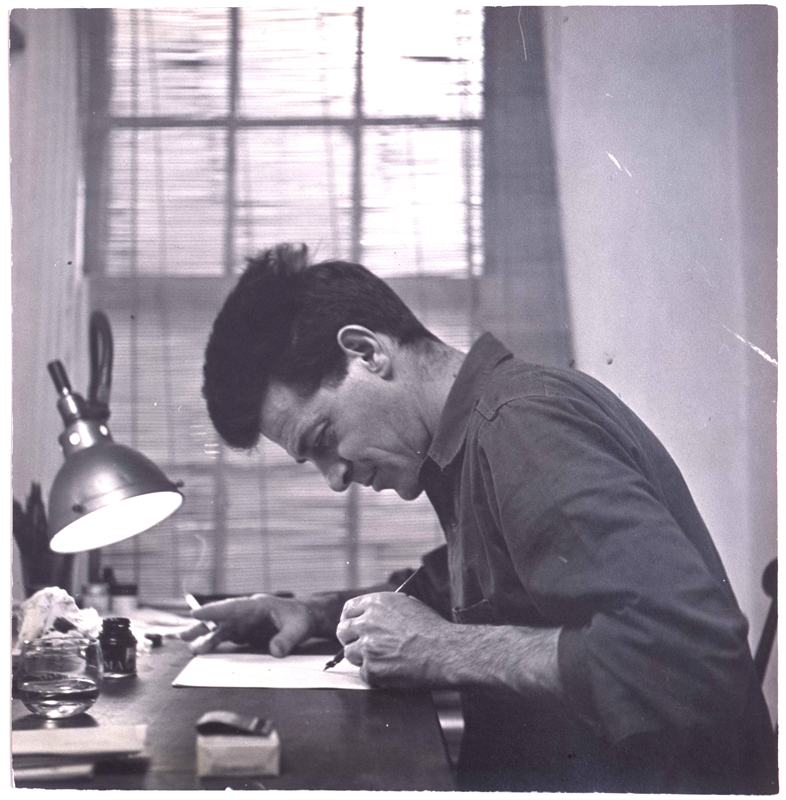
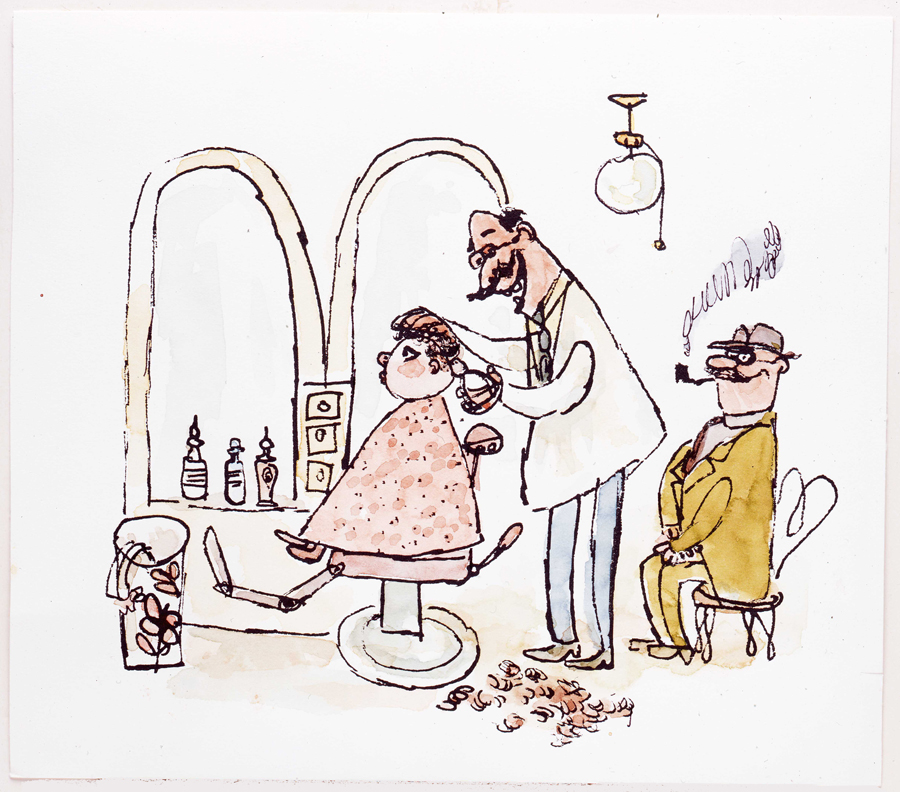
William’s Steig’s autobiography is a story for children. But anyone who knows William Steig—author of the original ugly-loving Shrek!; creator of Sylvester and the Magic Pebble, in which the main character spends most of the book as a rock—will understand that anything by this author will feature his trademark matter-of-fact tone and understated charm. When Everybody Wore a Hat is about Steig’s childhood in the Bronx, way back when you could see a movie for a nickel and a hat was as essential as shoes and a shirt. Through bright, childishly expressive illustrations, Steig (1907-2003) shows us life through his own eight-year-old eyes: an outing on the river with Mama and Papa decked out in stripes and polka-dots; neighborhood characters like elegant Mrs. Kingman who was “looked on by the women in admiration”; Steig’s first haircut at Ditchick’s Barbershop. There’s a healthy dose of realism as well, conveyed with a child’s simple directness: Papa yelling at the radiator when there isn’t enough heat, Mama’s tears when she receives sad news from the Old Country, and the bombs and blood of World War I. Deceptively simple but instantly engrossing, this slim little autobiography offers a slice of old-fashioned life and a look at the formative years of an inventive and irreverent author.

Bill Peet : An Autobiography by Bill Peet, 1989, Houghton Mifflin (Autobiography/ Illustrated Memoir)


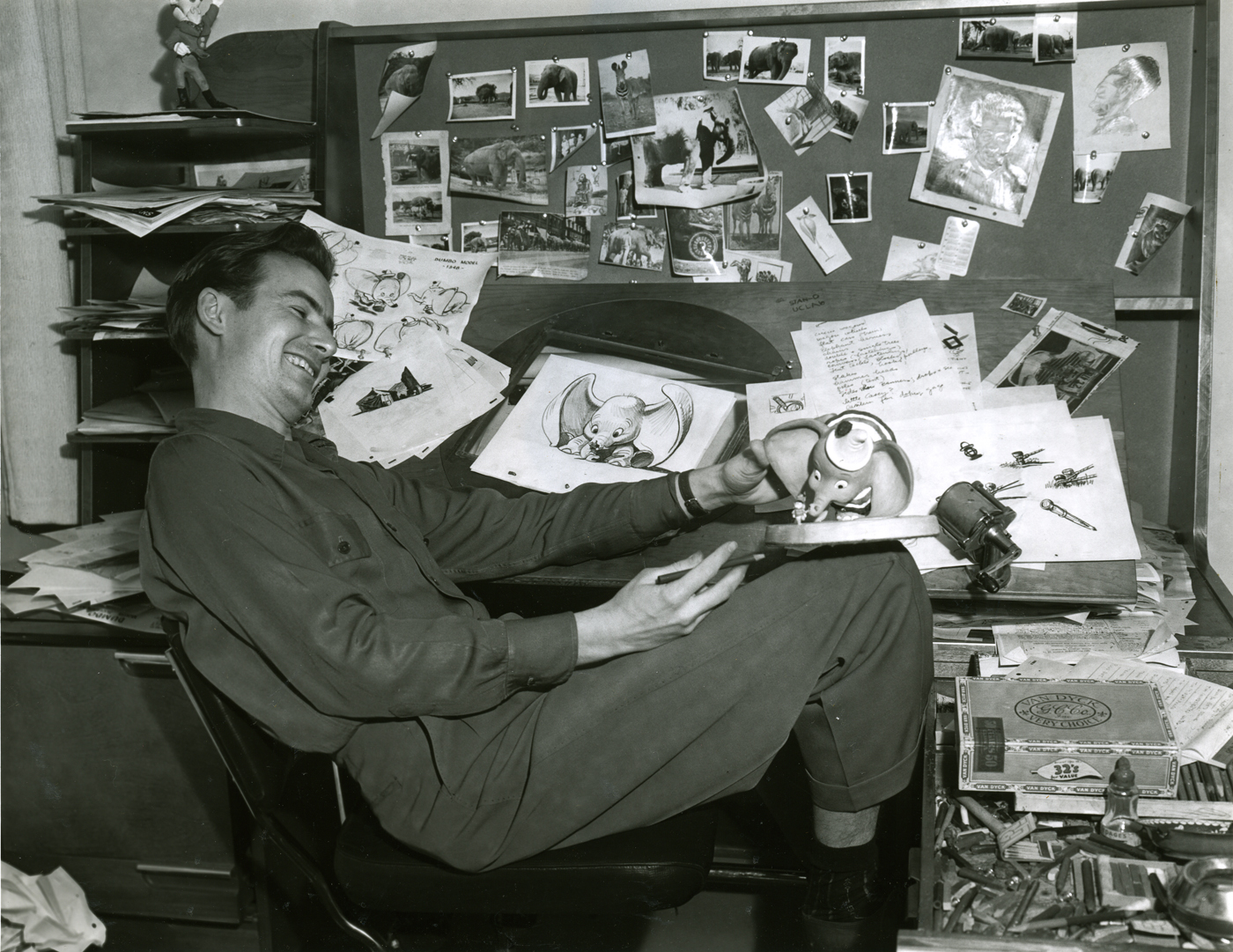
In 1937, a young storyboard artist at Disney Studios got sick and tired of drawing Donald Duck over and over and stormed out, hollering “NO MORE DUCKS! NO MORE LOUSY DUCKS!” That artist was Bill Peet (1915-2002), beloved children’s author of The Gnats of Knotty Pine, Chester the Worldly Pig, and Buford the Little Bighorn (to mention just a few), and that anecdote is one of many that he relates in his self-titled autobiography. Peet got his start at Disney, becoming a lead story man for classic films like Dumbo, Cinderella, The Sword in the Stone, and 101 Dalmatians before his own career as a children’s book author finally brought him, fame, fortune, and artistic freedom. Peet tells his life story in pictures and words—his artistic creations dance across every page as he chronicles his childhood during the Great Depression, his storyboard presentations for the great Walt Disney, and his own studio where he wrote and illustrated his books. The insight into the workings of Disney productions is revealing and entertaining and Peet always has a sense of humor about whatever life throws his way. As engaging as one of the author’s own storybooks, Bill Peet: An Autobiography is a delightful portrait of an artist at work

Ezra Jack Keats: A Biography with Illustrations by Dean Engel and Florence B. Freedman, 1995, Silver Moon Press (Biography/ Picture Book)


He was born Jack Ezra Katz, but you know and love him as Ezra Jack Keats (1916-1983), author of The Snowy Day, Whistle for Willie, Goggles!, and many others. From his penny-pinching childhood in the Great Depression to his years inking comics for Five-Star Comics (creators of Captain Marvel) to his experiments with fabric and collage, art was a crucial comfort for Keats. In this biography, the events of Keats’ life are illustrated by his own artwork. When little boy Ezra gets picked on by bullies in his Brooklyn neighborhood, we see an illustration of a similar scene from Goggles!. When Ezra explores the city of Paris as a struggling young artist, we see a self-portrait on a colorful Parisian street. And when Ezra realizes that there are very few black children in picture books and creates his hero Peter, we see that iconic image from The Snowy Day of little Peter in his red hood looking at his footprints in the snow. Ezra’s life is reconstructed in a simple, straightforward narrative that rolls along like a storybook. It’s a heartfelt, poignant tribute to an award-winning artist, written by people who knew (Florence B. Freedman was his high school teacher!) and loved him.

Virginia Lee Burton: A Life in Art by Barbara Elleman, 2002, Houghton Mifflin (Biography)

If you have a lasting fascination with steam shovels, snow plows, and construction sites, you probably know Virginia Lee Burton—or at least her storybook creations Mike Mulligan and His Steam Shovel, The Little House, and Katy and the Big Snow. There’s also Burton herself, and she takes center stage in this elegant biography. From her student years in the early 1920s studying dance and design to the deliberate research methods she incorporated to write and illustrate her books, Burton (1909-1968) was a woman ahead of her time. She had an active career in an era when most women were housewives. She was an environmentalist before the term existed, a nature-lover who relished country living. She was an innovator in book design (Katy plows right through the text on the page in Katy and the Big Snow). She was an artist of many mediums—there’s an entire chapter dedicated to the folksy textiles created by her Folly Cove Designers. Author Barbara Elleman fills the pages of her biography with photographs, sketches, and images from the children’s books that made Virginia Lee Burton famous. The tone is highly celebratory (any trials and tribulations are very much glossed over) but the final product is a loving tribute to a talented and cherished storyteller.

The Seuss, the Whole Seuss, and Nothing But the Seuss: A Visual Biography of Theodor Seuss Geisel by Charles D. Cohen, 2004, Random House Books (Biography)


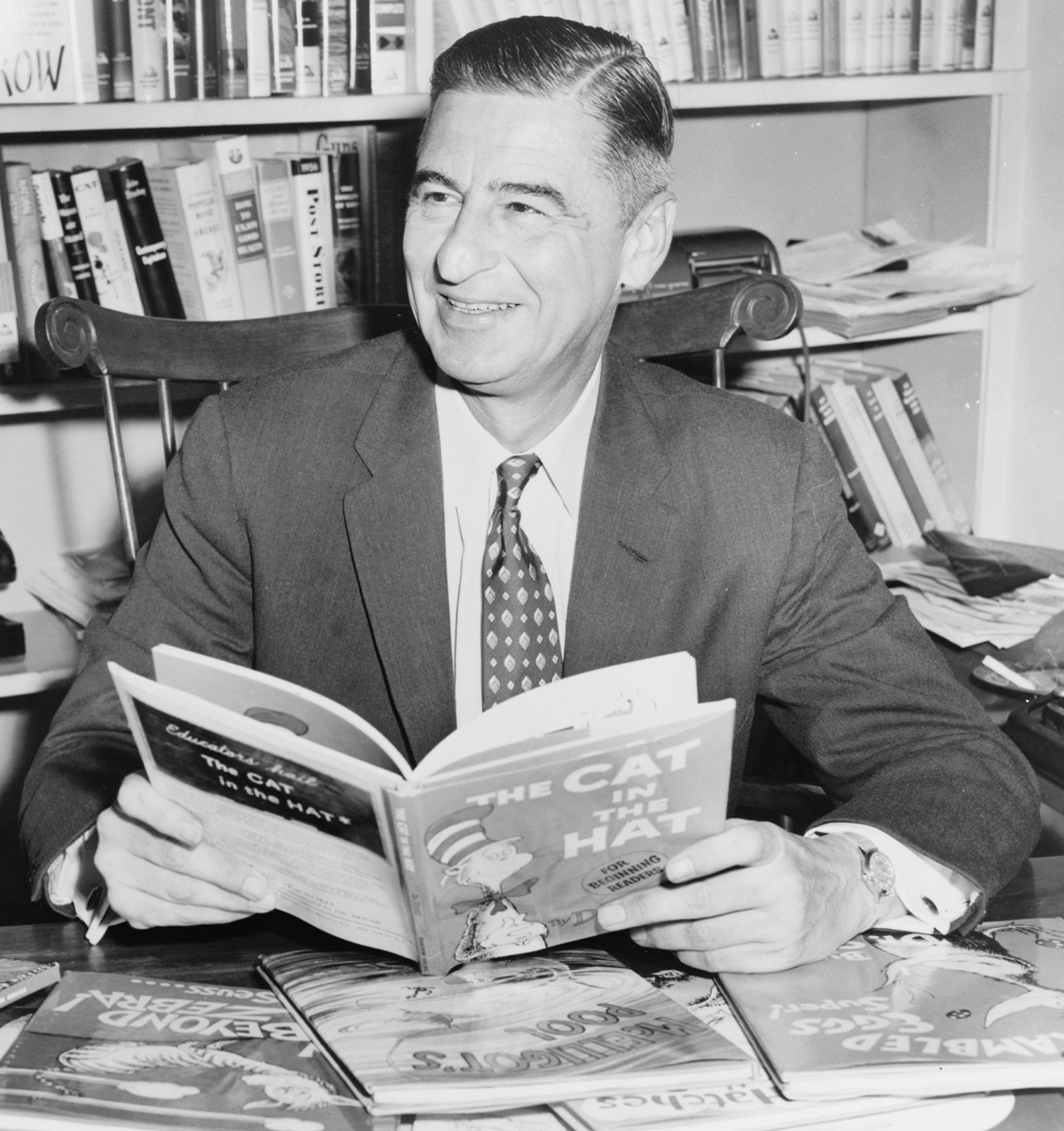
Dr. Seuss is a household name. We all know that Horton heard a Who and that the Grinch stole Christmas. But did we know that Theodor Seuss Geisel (1904-1991) first penned cartoons for Dartmouth College’s literary magazines in the early 1920s? Are we familiar with Geisel’s advertisements for Flit bug spray? Thanks to Charles D. Cohen’s extensive biography, we are now. The Seuss, the Whole Seuss, and Nothing But the Seuss offers a retrospective of Geisel’s life and art with a particular emphasis on his pre-children’s book days. Here we meet Geisel way back when he was a boy in rural Massachusetts, back when he was an ad man for Standard Oil and General Electric, back when he was a political cartoonist during World War II, back before he was Dr. Seuss. His whimsical animal-esque characters are present from day one, even if they are occasionally tempered by the commercial nature of his early work. And when the limits are lifted, watch out—richly reproduced examples of Geisel’s art cover the pages of this “visual biography.” Cohen lets Geisel speak for himself as much as possible and excerpts from letters, interviews, and articles tell much of the artist’s story. What ultimately comes across, in all its absurd Seusssian glory, is the very real sense of a man whose creativity knew no bounds.

Tuesday, June 22, 2010

Picture Books for Big People


There are picture books that children love—The Berenstein Bears, Clifford the Big Red Dog—and picture books based on cartoons like Scooby Doo or Dora the Explorer. There are picture books that we lovingly recall even when we’re not children anymore—Where the Wild Things Are, Goodnight Moon, The Snowy Day. And then there are picture books that are meant for a wider audience. They tend to be overlooked, because we think of storybooks, with their big colorful pictures, as books that are meant for little children only. But a simple story can be just as heartfelt, dramatic, and exciting as any book double its size. You’ll be surprised at the wit, elegance, and sophistication that can be packed into a picture book’s brief but stunning pages.

The Enemy by Davide Cali, illustrated by Serge Bloch, 2009, Schwartz and Wade Books (Children’s Fiction) 


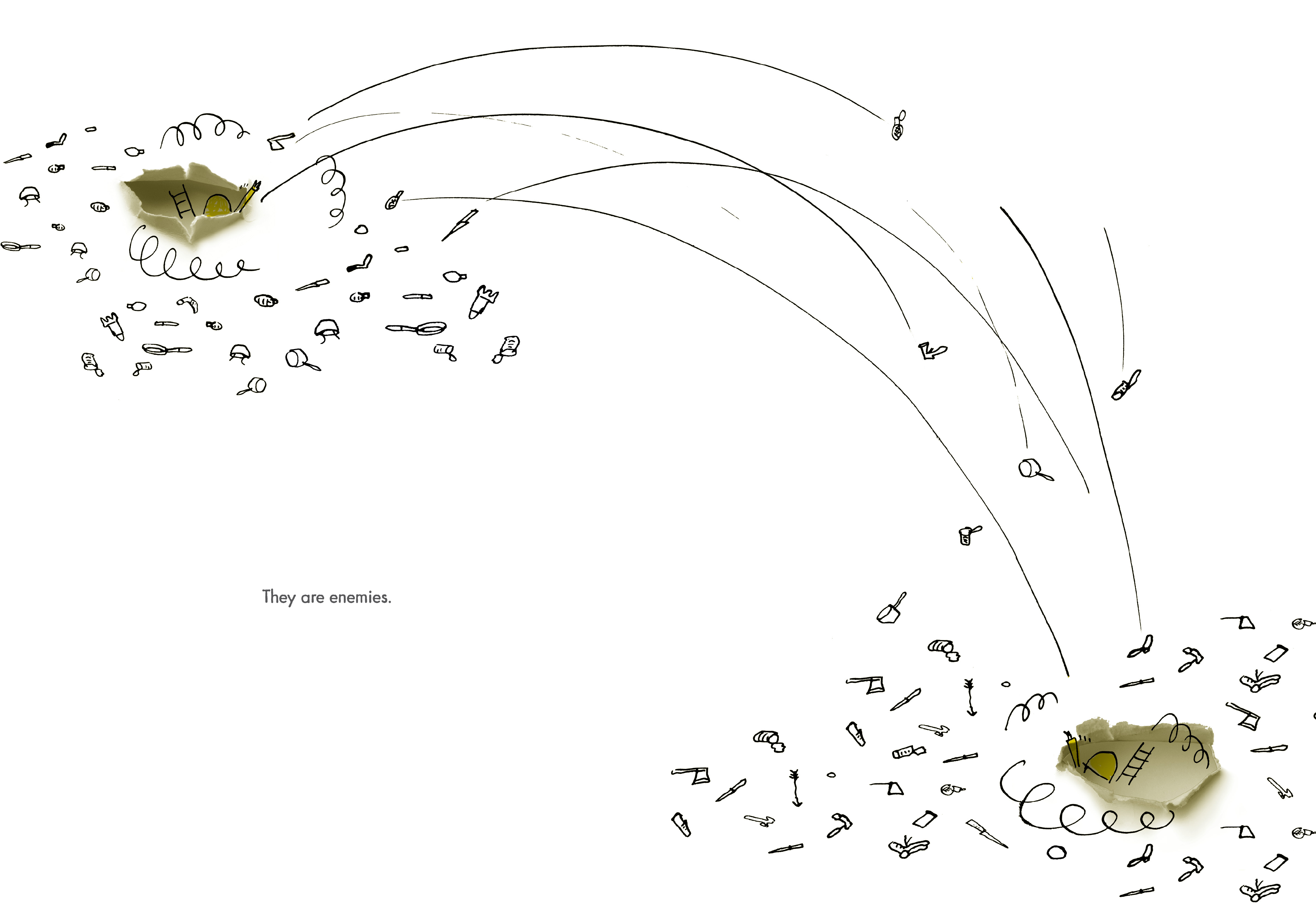
Two opposing soldiers in foxholes contemplate each other and the nature of war in this deceptively simple children’s book. At first, the soldiers think of each other only as The Enemy, a nameless, faceless, dangerous other. When it rains, the soldiers only consider their own discomfort—the thought that the enemy might be just as wet and gloomy never crosses their minds. Both soldiers consult manuals that assure them the enemy is little more than “a wild beast” whose only goal is to hurt and harm. But when the soldiers tire of their tedious duties, they end up sneaking past the other in the night and into each other’s foxholes, where they are confronted with evidence of the supposed enemy’s humanity. The choice to continue or end the war, then, becomes a great deal more complex. The two soldiers are little cartoon men existing on an otherwise blank white page; their foxholes are collaged bits of torn paper; the covers of their manuals are bright spots of red. This subtle simplicity is the work of artist Serge Bloch; the plaintive testimonies of the soldiers are penned by author Davide Cali. The result is a lesson in war and peace that we are never too old to learn.

The Rabbits by John Marsden, illustrated by Shaun Tan, 2003, Simply Read Books, originally published 1998 (Children’s Fiction)


The Rabbits is a picture book, but it is a beautiful and sophisticated picture book, the kind that can be read and reread from age eight to eighty. The story begins when a ship full of white rabbits arrives on a faraway shore, armed with black muskets and other strange technologies. The rabbits come to take rather than give, and to the marsupial-like inhabitants who have lived for generations in harmony with nature, the rabbits are terrifying indeed as they chop down trees, construct factories, and alter the land to suit their own purposes. Out of fear and anger, especially after their children are taken, the marsupials rise in rebellion against the rabbits, but by then it is too late—the rabbits are too many, the marsupials are too few, and the damage is done. Author John Marsden and illustrator Shaun Tan are from the land Down Under, and their story is an allegory for the settlement of Australia and the destruction of the aboriginal people at the hands of the self-righteous European settlers in the 19th century. It’s a mature theme indeed, highlighted by Tan’s gorgeous, highly-stylized, intricate paintings of canon-wielding rabbits marching to overcome the sand-colored marsupials armed only with their spears and their sense of right. This story book is no fairy tale, and that means its powerful message hits home with eloquence and compassion.

Woolvs in the Sitee by Margaret Wild, illustrated by Anne Spudvilas, 2005, Camberwell Press (Children’s Fantasy Fiction)


Dystopias come in all forms, even picture books. But Woolvs in the Sitee is not for little children. Told by a lonely, scared boy, this dark story features text scrawled in graffiti-like writing across the page, with words misspelled and misshapen to heighten the sense of atmospheric ruin conveyed by the bleakly elegant illustrations. Ben, a young boy who has lost his family and spends his days hiding in a dank basement, tells readers that there are “woolvs in the sitee,” but these are not forest animals, oh no, these are “shadows prowling,” hateful and dangerous beings who “will kum for me and for yoo.” Ben’s only ally is his upstairs neighbor Mrs. Radinski, who offers food and water and comfort. One night, Ben is lured outdoors by a clean blue sky (the seasons are otherwise “topsee turvee,” hinting at some devastating apocalyptic disaster). The blue sky turns out to be merely a painted wall, but Mrs. Radinski braves the dangers of the street to bring Ben home to safety. And when Mrs. Radinski disappears, Ben must decide whether or not to risk all his fears and the horrors of the city to return the favor. Australian author and illustrator team Margaret Wild and Ann Spudvilas collaborate on a gripping book with mature themes, despite its slim size. The edgy text merges with images of rusty oranges streetlights, buildings that drip with streaks of black and gray, and scratchy charcoal figures in deep shadows. A deeply evocative dystopian vision, Woolvs in the Sitee should not be overlooked.

The Miraculous Journey of Edward Tulane by Kate DiCamillo, illustrated by Bagram Ibatoulline, 2006, Candlewick Press (Children’s Fiction/ Fantasy) 


Edward Tulane is a beautiful, hand-crafted, china toy rabbit, a doll who is adored and cared for by a little girl named Abilene. Abilene loves Edward almost as much as Edward loves himself; he is, after all, a truly wonderful specimen, and as such he can’t be bothered with any emotion more serious than concern for his extensive wardrobe. But when this very vain bunny takes a tumble over the side of an ocean liner while the family is on a voyage, he embarks on a world of adventure. From the bottom of the ocean, to the net of a humble fisherman, to the backpack of a cheery hobo, to the arms of an ill little girl, Edward Tulane, rabbit extraordinaire, slowly but surely learns to love. But the lesson is painful—everyone Edward loves is eventually lost to him. As his heart (and the reader’s) breaks again and again, Edward is once again in danger of becoming a cold, distant rabbit. This elegant little fairy tale, with its shades of The Velveteen Rabbit, is an achingly beautiful story of loss and love told by master storyteller Kate DiCamillo and illustrated in sepia tones and muted color plates by Bagram Ibatoulline. Their collaboration truly brings The Miraculous Journey of Edward Tulane to life.

The Latke Who Couldn’t Stop Screaming: A Christmas Story by Lemony Snicket, illustrated by Lisa Brown, 2007, McSweeney’s Books (Children’s Fiction/ Humor) 


What’s a latke to do when Christmas lights, candy canes, and trees just don’t get it? Scream, of course, at the top of its potato pancake lungs until it gets the point across. Born of potato flakes and oil, the star of The Latke Who Couldn’t Stop Screaming leaps from his frying pan and runs shouting through the night. Confronted by ignorant, self-obsessed Christmas paraphernalia, the latke attempts to explain the meaning of Hanukkah, from the miraculous oil-burning lamp to the eight nights of gift-giving. Since this is a story by cheeky children’s author Lemony Snicket (best known for his gleefully gruesome Series of Unfortunate Events), any implied message about the holiday spirit or the meaning of the season gets turned topsy-turvy in an impish little tale that delights in the absurd and the unexpected. Artist Lisa Brown’s bright retro illustrations lend sass and spunk to Snicket’s irreverent “Christmas Story,” which is sure to tickle the funny bones of all ages and faiths, regardless of the season. Who knew latkes could be so delightfully amusing?

The Mysteries of Harris Burdick by Chris Van Allsburg, 1984, Houghton Mifflin (Children’s Fiction/ Fantasy)


This classic opens with a mysterious note from beloved children’s book author Chris Van Allsburg: The illustrations on the following pages were left at a publishing house by one Harris Burdick. Burdick delivered his portfolio for consideration, left, and was never heard of again. All that remains are fourteen illustrations for fourteen unknown stories. Each picture is accompanied by a title and a caption. In The Seven Chairs, for example, a dainty nun flies through ornate halls on a straight-backed chair while a pair of men in long robes gaze up her sedately. The caption reads, “The fifth one ended up in France.” There’s a blank spot on the dove-covered wallpaper of The Third Floor Bedroom, accompanied by the line, “It all began when someone left the window open.” Look closer, and you'll spot another dove, paper-wing lifted, about to take flight. All this mystery and fantasy is conveyed through Van Allsburg’s trademark style that can convey realism and whimsy in a single stroke. The Mysteries of Harris Burdick has been firing the imaginations of readers since its publication in 1984. A portfolio edition is now available with a new author’s introduction and one more “discovered” drawing. The interactivity of the book continues at The Mysteries of Harris Burdick website where Van Allsburg posts stories sent to him by his legions of fans, who include Stephen King (writing a solution to The House on Maple Street, where a neatly-gabled neighborhood home blasts into the sky on rocket boosters with the caption “It was a perfect lift-off”) as well as school children, amateur writers, and non-writers who couldn’t resist the lure of a good mystery. We dare you not to be inspired.

The Arrival by Shaun Tan, 2007, Arthur A. Levine (Children’s Fiction/ Fantasy/ Graphic Novel)


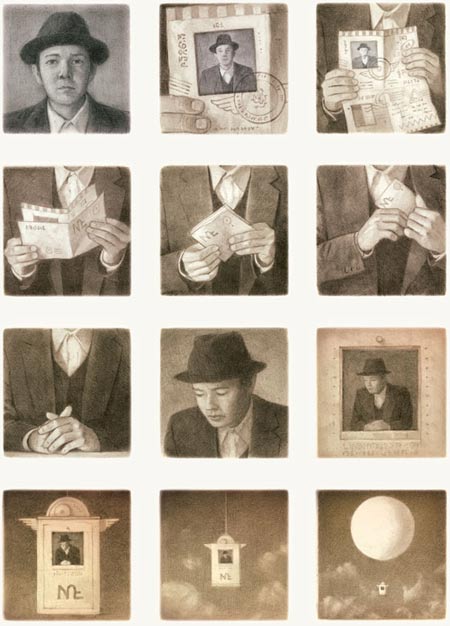
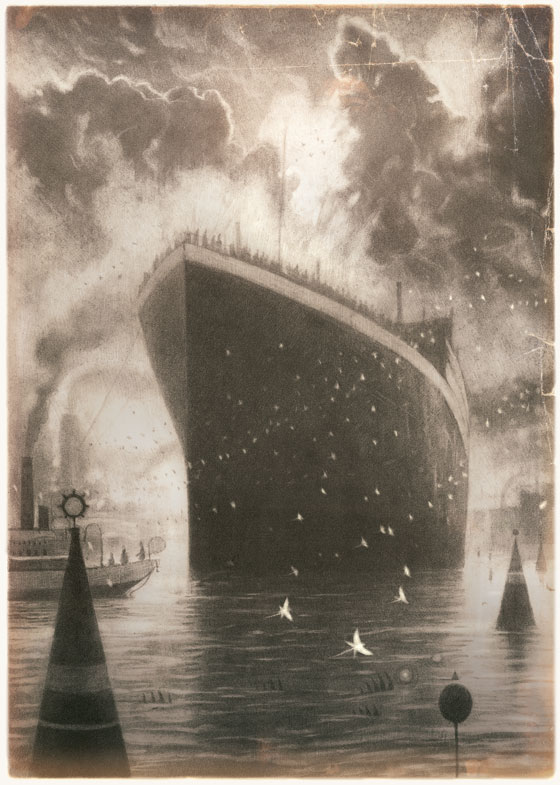
The Arrival is an elegant and haunting work of art that hovers somewhere between graphic novel, comic strip, and picture book—or maybe encompasses them all. Wordless, told entirely through sepia-toned drawings that cover the pages in comics-style panels or full-page spreads, the story of The Arrival is nonetheless clear and true and stirring. A lone immigrant leaves his homeland to embark on an unknown journey and a quest for a better life. Along the way he is confronted by the strange, the wondrous, and the terrible, because there is a healthy dose of the fantastic in this picturesque storybook. Giant dragons' tails overshadow villages, ornate cities rise from bizarre landscapes, and quirky little critters accompany the residents of the foreign country where the man finally makes a new life. At first he’s put off by the creature that adopts him—a creepy-cute round little fellow with a wide smiling mouth and a long wagging tail. But the comfort of a constant companion eventually becomes a boon, as do the histories of the friendly strangers he meets. Turn-of-the-century dress and architecture meld flawlessly with elements of science fiction that abound in The Arrival—not just the captivating little beasties, but strange methods of travel, spiraling towers, and an invented alphabet by Australian author Shaun Tan that conveys more than anything else the bewildering confusion that surrounds a refugee in a strange new land. Brimming over with visual metaphors that add layers of beauty and complexity, The Arrival is a magical tribute to the unflagging immigrant spirit.

The Invention of Hugo Cabret: A Novel in Words and Pictures by Brian Selznick, 2007, Scholastic Books (Children’s Fiction/ Illustrated Novel)


The Invention of Hugo Cabret is a 544-page picture book, and it is a fantastic, magical adventure. In 1930s Paris, twelve-year-old orphan Hugo Cabret lives a secret life behind the walls of the city’s train station. His job is to maintain the station’s many clocks, but his passion is repairing a small mechanical man that his deceased father found in a museum attic. If it ever works, the automaton’s gears will turn and it will write a message; in his grief and loneliness, Hugo believes this will somehow be a message from his father. When he is caught stealing wind-up toys for mechanical parts from the station’s toy booth, Hugo’s life changes forever. Put to work by the crotchety old toymaker and befriended by the toymaker’s inquisitive goddaughter, sensitive Hugo begins to emerge from his shell and make some intriguing connections between the toymaker’s true identity, his father’s history, and his own future. Along the way, author Brian Selznick pushes the boundaries of what the picture book can do. Subtitled A Novel in Pictures and Words, sections of the story are conveyed through silvery charcoal illustrations that zoom in and out as your turn the pages like a film on a screen. Cinema is a theme of the story, and movie stills—especially those from early French filmmaker Georges Méliès’ whimsical A Trip to the Moon—are interspersed throughout the book, as are archival photographs of the Paris of the day. More than an illustrated or graphic novel, the combination of written word and visual image is wholly unique to The Invention of Hugo Cabret, and it’s a combination that won the book the 2008 Caldecott Medal for best illustrated children’s break. Elegant, sophisticated, and charming from cover to cover, this genre-busting book is breaking new ground.