Tuesday, November 23, 2010

Going Underground


There’s something irresistible about underground. Tunnels become mazes with adventures around every bend. Caves are home to strange, wild creatures. Archeological tombs hold the treasures of the ages. Even a basement or cellar can contain mysteries and surprises that can thrill us to the bone or set our hair on end. There’s no knowing what lurks in the deep dark underground, but finding out is sure to be an adventure.

Neverwhere by Neil Gaiman, 2003, Harper Perennial Books, originally published 1996 (Fantasy)


Richard Mayhew lives in London. He has a job, an apartment, and a fiancé. He has a regular everyday sort of life. All that is about to change. Late to dinner, Richard stops to help a dirty young woman bleeding on the sidewalk. The waiflike girl is named Door and there’s something very odd about her, but Richard brings her home and cleans her up. When Door leaves, it seems the adventure is over. But then Richard begins to change. His friends don’t recognize him, his fiancé barely notices him, and strangers can’t even see he’s there. Knowing Door has the answers, Richard plunges into London Below, a weird and wild world inhabited by those who “fell between the cracks”—people who live in the sewers and subway tunnels, people who talk to rats, people who are magic. Soon Richard is one of Door’s companions on a dangerous quest through this strange land. If Richard wants to get back to his blissfully humdrum life, he’s got to prove his worth against all manner of assassins, monsters, and mayhem. Author Neil Gaiman is at his best here as he skillfully weaves myths and legends together with the familiar to create a magical world that is entirely new. Witty and wickedly inventive, Neverwhere is fantasy at its finest.

Tunnels, Book 1 by Roderick Gordon and Brian Williams, 2008, Chicken House/ Scholastic Press (Fantasy/ Adventure/ Teen Fiction)


Londoner Will Burrows has always been a loner. His pale skin and white hair make him an outcast at school. His family life is complicated by a television-obsessed mother and a kid sister who’s taken over the management of the household. Will does have a connection with his dad—a shared love for archeological excavation. Still, father and son keep secrets from each other. When, at separate dig sites, they each uncover impressive underground structures that don’t show up on any of London’s schematics, Will and his dad know they’re onto something big. But then Mr. Burrows disappears. Will enlists the help of his only friend, Chester, and keeps digging. What the boys finally find is astonishing—an immense Victorian-style city carved into the living rock. This is “the Colony,” a secret civilization hidden beneath the earth. Will seems to have an odd connection with this subterranean society, and while Chester is locked in jail, Will is taken in by a Colonist family. He is fascinated by the cavernous Colony and its citizens, but Will never forgets Chester—or his missing father. Tunnels only sets up the adventure; final gripping chapters and a cliff-hanger ending ensure that more danger, excitement, and mystery wait in the even-deeper reaches of this extraordinary fantasy world.

Tunnels Series by Roderick Gordon and Brian Williams
1. Tunnels
2. Deeper
3. Freefall

Gregor the Overlander: The Underland Chronicles, Book 1 by Suzanne Collins, 2003, Scholastic Press (Fantasy/ Children’s Fiction)


Gregor’s mother works hard to make ends meet. His father vanished three years ago, and Gregor is responsible for babysitting his little sister. It’s a pretty dreary life for an eleven-year-old kid. But then baby sister Boots disappears down a vent in the laundry room one afternoon and Gregor dives in after her. They fall into the Underland, a fantastic world deep underground that’s populated by pale-skinned humans and giant talking animals. The subterranean dwellers suspect that Gregor is the subject of a prophecy that promises an “Overlander” warrior will lead them to victory against an army of rat invaders. Gregor has no desire to embrace his destiny—until he learns about another Overlander held captive by the rats. Gregor thinks of his father and accepts the adventure that lies ahead. He’s accompanied by quite the motley crew—Underland royalty, flying bats, a creepy rat, a big old spider, and a couple of giant cockroaches who take quite a fancy to precocious little Boots. Gregor’s reluctance to stay in the Underland does not extend to readers, who will be thrilled with the amount of detail that author Suzanne Collins lavishes on the world she imagines below ours—a wealth of magical creatures living a mythology of their own in a fantastic series of adventures.

The Underland Chronicles by Suzanne Collins
1. Gregor the Overlander
2. Gregor and the Prophecy of Bane
3. Gregor and the Curse of the Warmbloods
4. Gregor and the Marks of Secret
5. Gregor and the Code of Claw

The City of Ember: The First Book of Ember by Jeanne DuPrau, 2003, Random House Books (Fantasy/ Children’s Fiction)


The city of Ember is the only light in a world of darkness. But now, more than two-hundred years after apocalyptic events destroyed the rest of the world, Ember is beginning to fail. Supplies are running low and power outages that plaque the city are becoming more frequent. Still, life goes on. On Assignment Day, the city’s twelve-year-olds leave school and accept their lifelong work assignments. For curious-as-a-cat Lina Mayfleet, this means becoming a Messenger, delivering notes and gaining access to every area of Ember. For stoic handyman Doon Harrow, this means keeping the centuries-old generator patched together in the Pipeworks far below the city. But Lina and Doon soon stumble across long-buried secrets. The city’s founding fathers never meant for their people to dwell in darkness forever. The instructions for escape have been lost by corrupt city officials, and now, with resources fading fast and the citizens’ anxiety rising high, it’s up to Lina and Doon to find the pieces of the puzzle and save their city—even if it means venturing into the pitch-dark void that stretches beyond the dimming streetlights. Author Jeanne DuPrau invents mechanics, politics, and mysteries for the city of Ember and readers will breathlessly go along for the ride as Lina and Doon bring surprising new truths to light.

The Books of Ember by Jeanne DuPrau
1. The City of Ember
2. The People of Sparks
3. The Prophet of Yonwood
4. The Diamond of Darkhold

The Great Stink by Clare Clark, 2005, Harcourt Books (Historical Fiction/ Mystery)


William May is a veteran of the terrors of the Crimean War. It is the 1850s, but modern readers will have no difficulty recognizing the signs of post-traumatic stress disorder—poor William is fragile, damaged, and unable to relate to his former life. He finds some measure of solace underground as a surveyor for a massive engineering project to revamp London’s outdated, unstable, and very stinky sewer system. Also patrolling the sewers is Long Arm Tom, a “tosher” who searches for valuables and catches rats for dogfight bait. Then William witnesses a brutal murder in the tunnels and, due to his slipping hold on reality, is fingered as the culprit and locked away. While William languishes in prison, it’s up to Long Arm Tom to prowl the dark underground in search of the truth. Though the ending may come a trifle too neatly for some readers, most will be swept away by author Clare Clark’s attention to historical detail. Victorian London is richly evoked in all its triumphs and tragedies, from the engineering feats that created London’s sewers to the horrors of the Crimean War to the harsh differences between the lives of the city’s social classes. The Great Stink is a fine mystery and an even finer portrait of a unique historical time and place.

The Water Room: A Bryant and May Mystery by Christopher Fowler, 2005, Bantam Books (Mystery)


The Peculiar Crimes Unit is a controversial branch of the London Police Department that takes on cases that are just a bit too “off” for the regular police to cope with. Arthur Bryant and John May, the grumpy old men of criminal investigation, have been with the PCU since its inception. May is down-to-earth; Bryant is a cantankerous loner whose acquaintances tend to be mystics, psychics, and Wiccans. Still, they get things done. But with budgets stretched thin, the PCU is looking like less of a necessity. And Bryant and May aren’t helping matters by investigating cases brought to them by friends—May pokes around in the affairs of a disgraced academic and Bryant looks into the death of a little old lady. But the old lady was found drowned in her bone-dry basement. And May’s down-on-his-luck scholar is being paid big money to explore London’s ancient underground river system. With dogged determination, curmudgeonly charm, and good old-fashioned detecting, the duo finds a compelling mystery with a solution that lies deep underground. The Water Room is author Christopher Fowler’s second PCU novel and he is in fine form. There’s plenty of mystery, intrigue, and dark humor, but the real heart of the story is the spirited relationship between the indomitable Bryant and May.

Bryant and May Mysteries by Christopher Fowler
1. Full Dark House
2. The Water Room
3. Seventy-Seven Clocks
4. Ten Second Staircase
5. White Corridor
6. The Victoria Vanishes
7. Bryant and May on the Loose

The Seventh Sinner: A Jacqueline Kirby Mystery, Book 1 by Elizabeth Peters, 2005, Avon Books, originally published 1972 (Mystery)


Pretty young Jean Suttman is thrilled to death to be studying archeology in Rome. It’s a city seeped in ancient history and artifacts. She’s found a group of friends who are fellow scholars and artists. And she’s just met visiting librarian Jacqueline Kirby, who, despite her middle-aged no-nonsense appearance, is an unconquerable spitfire with powers of observation that are only matched by her sharp tongue. So when Jean stumbles across the dead body of a universally disliked fellow scholar during a tour of the ancient underground Temple of Mithra, no one is better equipped to solve the mystery than Jacqueline Kirby. There are, however, plenty of suspects—because Jean keeps meeting with unfortunate accidents, and only her seven dearest friends had the means and opportunity to cause so much trouble. Besides creating a nifty little mystery, author Elizabeth Peters crafts a delightful cast of sinister, sweet, and highly suspicious characters. But it is Jacqueline Kirby, librarian extraordinaire, who takes the cake—and this is merely her first appearance in a very delightful series of mysteries.

Jacqueline Kirby Mysteries by Elizabeth Peters
1. The Seventh Sinner
2. The Murder of Richard III
3. Die for Love
4. Naked Once More 

Pitch Black: Don’t Be Skerd by Youme Landowne and Anthony Horton, 2008, Cinco Puntos Press (Graphic Novel/ Nonfiction/ Biography) 


Pitch Black is a graphic novel collaboration between artist Youme Landowne and Anthony Horton, a homeless young man living in the subway tunnels of New York City. The two struck up a conversation one day while Landowne was waiting for a train, and after an exchange of art and stories, the unlikely duo decided to document Horton’s unique biography. Given up for adoption as a baby and then passed from foster home to foster home, Horton’s childhood was grim and violent. A harsh life on the city streets followed, every day a battle for survival. Then one day Horton flees from pursuing cops into a subway tunnel. Underground, Horton finally finds a place of refuge. Though a life in the dark and damp, surrounded by rats and garbage, may not sound ideal, Horton finally has the mentors and friends that he lacked growing up. He shares his story with Landowne—and with the reader—with an unflinching eye. The stark, black-and-white artwork shows life on the streets in all its gritty reality. But despite it all, readers will come away with a sense of hope and inspiration and a new respect for those who—whether by choice or by necessity—live their lives differently.

Tuesday, November 9, 2010

Book-a-Saurus Rex


Brontosaurus. Triceratops. Tyrannosaurus Rex. We all had a dinosaur obsession in childhood, way back when words like bilkanasaurus and thecodontosaurus simply rolled off our tongues. We’re expected to outgrow the dino phase, but no one ever really stops being completely fascinated by the extinct giants, as the myriad of museum exhibits, dinosaur encyclopedias, and nature channel TV specials well attest to. And when it comes to books about prehistoric reptiles, the sky’s the limit. Far and away beyond mere encyclopedic entries, the dinosaur books included here are true to their subject: wild, wonderful, and larger than life.

The Lost World by Sir Arthur Conan Doyle, 2008, Penguin Classics, originally published 1912 (Fiction Classics/ Fantasy/ Adventure)


Daily Gazette reporter Ed Malone is in love with a girl. But the girl isn’t very keen on lowly newsboys; she wants the romance and heart-pounding bravery of an adventurous explorer like Richard Francis Burton or Henry Morton Stanley. Lucky for Malone, there’s an explorer right in town—although cantankerous Professor Challenger’s reputation has taken a hefty blow due to his claims of prehistoric creatures alive and well in the Amazonian basin. But even a discredited adventurer is good enough for Malone and before he knows it, he’s on his way back to South America with Challenger, skeptical scientist Professor Summerlee, and experienced explorer Lord John Roxton. The motley crew is instantly plunged into a whole mess of action and excitement—meeting with secretive Amazonian tribesmen, fighting with primitive ape-people, and (of course!) fleeing from roaring dinosaurs. It’s true that there’s more than a touch of early 19th century racism and classism, but if you can grit your teeth and bear it through the political incorrect bits, you’ll be rewarded with a fantastic, witty, true-blue tale of derring-do.

Jurassic Park by Michael Crichton, 1990, Random House (Science Fiction/ Thriller)


You know and love the 1993 Steven Spielberg blockbuster movie Jurassic Park, but that thrill-ride is based first and foremost on author Michael Crichton’s bestselling book of the same name. After decades of research, genetic engineering firm InGen, headed by dapper little old gentleman John Hammond, has successfully cloned the ancient DNA of fifteen species of dinosaur. To show off this astounding breakthrough, Hammond creates Jurassic Park, a dinosaur-themed amusement park and nature conserve on a remote island off the coast of Costa Rica. He invites some very exclusive guests to give the park their stamp of approval before the grand opening—awestruck paleontologists Alan Grant and Ellie Sattler, sarcastic chaos theorist Ian Malcolm, and his own precocious grandchildren Tim and Lex. It comes as no surprise that all the high-tech science and high-end security cannot stop nature from taking its course, and soon the guests are running for their lives from escaped tyrannosauruses and hungry velociraptors. This sounds a lot like the movie, but the expertly-crafted novel is perfectly paced with fresh plot twists, complex character relationships, fascinating scientific theory, and even more action-packed scenes of nail-biting suspense and heart-pounding adventure.

Tyrannosaur Canyon by Douglas Preston, 2005, Forge Books (Science Fiction/ Thriller)


Mild-mannered do-gooder Tom Broadbent is riding his horse home across the New Mexican desert when he stumbles upon a man dying from gunshot wounds. The man thrusts a tattered notebook into Tom’s hands and, with his final breath, begs Tom to “bring this to my daughter.” Of course, it’s not just any old everyday notebook. It contains a coded map leading to an unprecedented scientific discovery: The perfectly preserved remains of a tyrannosaurus rex. This is a secret worth killing for, and soon Tom and his pretty wife Sally are in danger from a jailbird assassin, a ruthless British paleontologist, and a deadly squad of undercover army operatives. This colorful cast of characters also includes an ex-CIA agent turned monk-in-training and a talented lab assistant languishing in the forgotten depths of the American Museum of Natural History. Over-the-top? You bet, and it’s a ton of fun. Author Douglas Preston has a fine grip on what makes a good thriller—good guys, bad guys, cliffhanger chapter endings, a pinch of astounding scientific theory, and intrigue and suspense up the wazoo.

Bone Sharps, Cowboys, and Thunder Lizards: A Tale of Edward Drinker Cope, Othniel Charles Marsh, and the Gilded Age of Paleontology by Jim Ottaviani and Big Time Attic, 2005, G.T. Labs (Nonfiction/ 19th Century History/ Graphic Novel) 


Once upon a time in the late 1800s, there were two fossil hunters named Edward Drinker Cope and Othniel Charles Marsh. Cope and Marsh are the granddaddies of modern paleontology. They were scholars and scientists at the top of their field. They discovered the creatures we know today as stegosaurus, allosaurus, diplodocus, and triceratops. Cope and Marsh also absolutely, completely, and bitterly hated each other. In the late 19th century, dino discoveries were making headlines and capturing the public’s imagination, but even the entire American West was not big enough to contain the egos and ambitions of these two men. Cope and March stole from each other’s dig sites and mocked each other’s research. Their public squabbles grew so intense that the period of their study is now simply called the “Bone Wars.” And in Bone Sharps, Cowboys, and Thunder Lizards, graphic novelist Jim Ottaviani and the artists of the Big Time Attic collective gleefully bring Cope and Marsh’s feud to vivid life. Famous characters like P.T. Barnum, Buffalo Bill, and artist Charles R. Knight pepper the narrative, but Cope and Marsh’s story steals the show and makes for a fast, funny, and truly delightful read.

Lulu and the Brontosaurus by Judith Viorst, illustrated by Lane Smith, 2010, Atheneum Books for Young Readers (Children’s Fiction) 


Little Lulu always gets her way. If her parents dare to say “No,” Lulu simply changes their minds by employing her trademark ear-shattering shriek. For her birthday this year, Lulu demands a pet brontosaurus. Her parents refuse, Lulu screeches until light bulbs shatter, and then the precocious tot heads into the forest—suitcase containing pickle sandwiches in hand—to find a dinosaur all by herself. After lions, tigers, and bears (oh my), the brontosaurus of Lulu’s dreams rears his giant head. But there’s a problem—the dinosaur thinks that Lulu is going to become his pet. As Lulu and the brontosaurus meet their match in each other, the reader will find more than enough charm in author Judith Viorst’s tongue-in-cheek cautionary tale. Artist Lane Smith lends a hand with adorably droll illustrations, and the result is a lively, lovely tale for children of all ages.

Dinotopia: A Land Apart From Time by James Gurney, 1992, Turner Publishing (Science Fiction/ Fantasy/ Picture Books/ Illustrated Novels)


In 1862, Professor Arthur Denison and his son Will are shipwrecked on a tropical island. Almost immediately, they encounter strange signs of life—enormous footprints, mysterious noises, and bizarre animals. To Denison and Will’s immense surprise, the inhabitants of this island are dinosaurs who live in unity and harmony with humans. Dinotopia—the name is the island—is a peaceful, innovative, cooperative society. Denison and Will are expected to contribute their skills as well and journey across the island to register at Waterfall City. Along the way, they befriend Dinotopia’s human and dinosaur citizens and observe first-hand the extraordinary workings of this unique—but still mysterious and even dangerous—world. Author James Gurney presents this sophisticated picture book as Arthur Denison’s journal. As such, it is filled with scientific observations and beautiful, realistic illustrations of the people, creatures, and places of Dinotopia—including the dinosaurs, who are portrayed in all their glory as they work, play, and learn side-by-side with humans. Dinotopia: A Land Apart From Time is whimsical, fantastic, and worthy of being read again and again by dinosaur enthusiasts of all ages.

Dinotopia by James Gurney
1. A Land Apart From Time
2. First Flight (Prequel)
3. The World Beneath
4. Journey to Chandara

Anonymous Rex by Eric Garcia, 2000, Villard Books (Mystery/ Fantasy/ Humor)


Dinosaurs are not extinct. Really, they’re not. They’ve simply learned to evolve and coexist. They live among us in secret, wearing latex human disguises, carefully governed by watchful Councils, and recognizing each other by their distinct dino-scents. The hero of Anonymous Rex is Vincent Rubio, a Los Angeles private detective and a velociraptor. Rubio is a dino in disgrace. He disobeyed the Council’s strict rules while investigating the suspicious death of his partner. He’s broke, addicted to basil, and has a single chance at redemption when he is assigned a case of arson at a dinosaur-owned nightclub. Rubio’s sleuthing uncovers police evidence gathered by a brontosaur sergeant, plots hatched by scheming dinosaur widows and mistresses, and a triceratops geneticist’s evil plot. Author Eric Garcia gleefully works his premise, spilling the dirt on the dinosaurs’ secrets to survival and blowing the cover on many supposedly-human luminaries. Complete with interspecies fighting, lying, spying, and loving, Anonymous Rex is a riotous, ridiculous romp.

Vincent Rubio Mysteries by Eric Garcia
1. Anonymous Rex
2. Casual Rex
3. Hot and Sweaty Rex

Thursday, October 28, 2010

Booklist Additions, Part 2


So many books, so many booklists. Here are a few new additions.

Past + Future = Steampunk

Larklight: A Rousing Tale of Dauntless Pluck in the Farthest Reaches of SpacePhilip Reeve, illustrated by David Wyatt, 2006, Bloomsbury Books (Children’s Fiction/ Science Fiction/ Fantasy/ Adventure) by


The year is 1851. Victoria is queen; Prince Albert is her husband. Plucky Art Mumby and his fussy big sister Myrtle are loyal subjects of the Crown. But they don’t live in England. They don’t live in Canada or Australia or India or anywhere else in the British Empire—the British Empire on Earth, that is. In this Victorian England, Britain’s colonies extend into the far reaches of space (thanks to Sir Isaac Newton, whose discoveries in the 1700s made the “Conquest of Space” possible). So Art and Myrtle live with their absent-minded father at Larklight, a ramshackle old mansion that orbits somewhere beyond the moon. It’s a bit dull out in outer space, but when a pack of giant white spiders invade early one morning and capture their father, things perk up considerably. Rescued by teenage space-pirate Jack Havock and his motley crew of alien misfits, Art and Myrtle embark on a voyage across the galaxy to solve the mystery of the very large spiders. Along the way they encounter moon moths, a mad scientist, and plenty of other space monsters. Art narrates for the most part, with Myrtle’s prim and proper (and very funny) diary entries filling in a few holes. The tone throughout is breezy and whimsical and very merry indeed. Author Philip Reeve delivers a whole lot of futuristic space technology that is firmly rooted in a comical Victorian sensibility, and the whole is a riotous steampunk romp that transcends age and makes for rip-roaring adventure.


How to Read Two Books At Once

Lincoln’s Dreams by Connie Willis, 1992, Bantam Books, originally published 1987 (Fiction/ Fantasy/ Mystery)


Jeff is a researcher for a Civil War-era historical fiction writer. This means he spends his days looking up the history of generals’ horses or finding exactly where President Lincoln’s sons are buried. When Jeff meets Annie, the patient of an old friend who works at a sleep institute, everything he knows about history is turned on its head. Annie is having nightmares, terrible dreams about the Civil War. Her doctor thinks they’re a symptom of a psychiatric problem, but Jeff is not convinced: there are details in Annie’s dreams that she couldn’t possibly know. As Jeff and Annie explore Annie’s dreams, they come to believe that they aren’t hers at all—they are the dreams of Confederate General Robert E. Lee. Whisking Annie out of the reaches of both the doctor and the history writer, Jeff and fragile, stubborn Annie drive up and down the east coast, alternately visiting and escaping the Civil War sites, and try to find a way to bring both Annie and Lee some measure of peace at last. Along the way, the couple tries to distract themselves with Jeff’s employer’s new book—a historical novel about a simple southern man who finds himself drowning in the horrors of the Civil War. Lincoln’s Dreams is, like all author Connie Willis’ books, chock-full of historical details and overflowing with absorbing suspense.

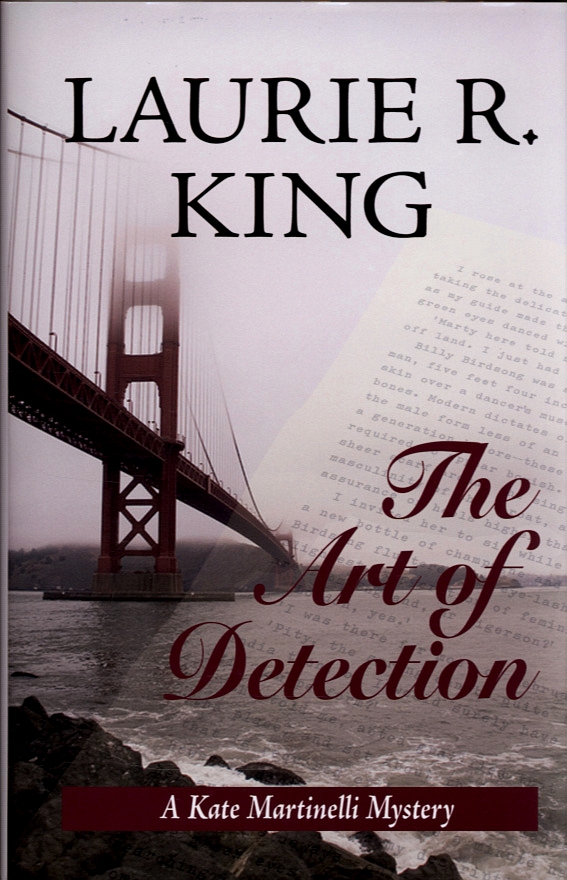
The Art of Detection by Laurie R. King, 2006, Bantam Dell Books (Mystery)


Inspector Kate Martinelli has seen a lot of strange things in her years as a San Francisco detective, but the murder of Philip Gilbert might just take the cake. Mr. Gilbert’s body was found in an old gun emplacement in the Marin Headlands of the Golden Gate Park. Since Gilbert made his living as a Sherlock Holmes connoisseur (even his home is decked out as a replica of Holmes’ Victorian study at 221B Baker Street), it’s a pretty odd place to get killed. The link becomes clear, however, when a manuscript that may be an unpublished Sherlock Holmes story by Sir Arthur Conan Doyle comes to light. Gilbert bought the document for a scant $30; it may be worth millions and that may be motive for murder. Kate reads the story for clues: In Prohibition-era San Francisco, “Mr. Sigurson” (one of the aliases Conan Doyle used for Holmes) investigates the murder of a transvestite’s military lover. As the connections between the murders (one in the fictional past of the short story, and one in Kate’s all-too-real present) add up, the no-nonsense inspector follows leads and interviews suspects. She also banters with her gruff police partner Al Hawkin, shares quiet moments with her life partner Leonora, and parents their precocious three-year-old daughter. Author Laurie R. King infuses both stories with her trademark precision and atmosphere—Holmes frequents the gritty dives of 1920s San Francisco while Kate investigates her modern city’s diverse inhabitants. Both mysteries are compelling, and the way they ultimately weave together is storytelling at its finest. 


The Original Good Old-Fashioned Ghost Story

Rebecca by Daphne Du Maurier, 1997, Avon Books, originally published 1938 (Classics/ Mystery/ Romance)


“Last night I dreamed I went to Manderley again.” This simple declaration begins the unforgettable tale of a young bride, her darling husband, his charming home, and his impressive, vivacious, gorgeous—and deceased—first wife. Our nameless narrator is an almost impossibly naïve girl barely out of school, but that’s charm enough to captivate aristocratic Maxim de Winter, and the young lady is over the moon that a man so rich and distinguished should take any notice of her. Soon the newlyweds are installed in the ancestral de Winter manor, where the new Mrs. de Winter is expected to run the household with smooth competence. And though the timid young lass does her utmost best, she can’t help but feel overwhelmed by her husband’s busy and important schedule, the wealth and status of her new position, the sly manipulations of the sinister housekeeper Mrs. Danvers, and above all, the long dark shadow cast by the first mistress of Manderley, the impeccable Rebecca de Winter. If our in-over-her-head heroine stands half a chance of making her marriage work—or of simply staking out her own place in the world—she’s got to understand the mysterious circumstances surrounding Rebecca’s death, plunge the depths of Mrs. Danvers’ unnatural devotion to the dead woman, and even explore her secretive husband’s own motives. But Rebecca’s very presence haunts every aspect of the new bride’s life, pushing her (and the reader, who’s in major suspense by this time) closer and closer to the brink of despair. A stirring Gothic romance, Rebecca is author Daphne du Maurier’s masterpiece. It’s also a superb, understated tale that has withstood the test of time to remain an atmospheric, ghostly little haunt of a thriller.


The Classics Never Die

When You Reach Me by Rebecca Stead, 2009, Wendy Lamb Books (Children’s Fiction)


In 1978 New York City, twelve-year-old Miranda’s favorite book is the science fiction class A Wrinkle in Time by Madeleine L’Engle. L’Engle’s book has similarities with Miranda’s life that make the story meaningful to this latch-key kid in the big city. Like its heroine, Miranda is a bookish student who seems to be on the outs with everyone else. Her best friend, neighbor boy Sal, won’t walk home with her anymore. Her upbeat but always-at-work mother is preoccupied with becoming a contestant on the TV game show The $20,000 Pyramid. The harmless homeless man, who frequently sleeps with his head under the mailbox, is making Miranda more and more uneasy. The new constant in Miranda’s life is arguing about the elements of time travel that occur in A Wrinkle in Time with nerdy-cool classmate Marcus—a boy who once inexplicably punched Sal in the gut. And then there’s the strange notes that appear asking for Miranda’s help, beginning with one that reads “I am coming to save your friend’s life, and my own.” The lives of Miranda’s friends, family, classmates, and neighbors may seem tangled into one of the knots that Miranda so likes to tie, but as our heroine picks up a clue here and relates a seemingly simple scene there, the threads of the story weave together into a flawless little mystery that packs a big wow of an ending. A quietly impressive story that lingers long after its last page has been turned, When You Reach Me won the prestigious 2010 Newbery Award for best children’s book.


Harry Potter’s BFFs

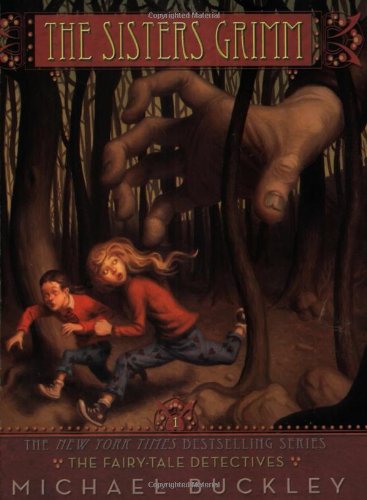
The Fairy-Tale Detectives: The Sisters Grimm, Book 1 by Michael Buckley, illustrated by Peter Ferguson, 2005, Amulet Books (Fantasy/ Children’s Fiction)


Eleven-year-old Sabrina Grimm and her kid sister Daphne have been on their own ever since their parents disappeared a year ago. Hoisted from one foster home to another, the girls—especially Sabrina—are tough, quick, and independent. When a woman claiming to be their Grandmother Grimm takes them into her home, Sabrina is suspicious. Their parents told them their grandparents were dead, and no twinkly-eyed lady is going to win her over that easily. Daphne, on the other hand, is enthralled with Granny Relda—because this strange woman also claims that the Grimms are descended from none other than the fairy tale-writing Brothers Grimm, and that the family’s long-time duty has been to solve crimes committed by and against the unusual inhabitants of the town of Ferryport Landing. By unusual Granny really means magical, because the townsfolk are straight out of every fairy tale and childhood classic you’ve ever read, from Prince Charming to Puck to the Three Pigs. And these “Everafters” can cause a lot of trouble—which becomes all too clear when Granny Relda goes missing. Now, like Harry Potter going from Muggle to magician, it is up to Sabrina and Daphne to embrace their untapped magical sides, save that little old lady, and keep their family—such as it is—together. Author Michael Buckley is very clever in his use of fairy tales personalities, but even if your knowledge of storybook folk is a little rusty, there’s still plenty of madcap adventure and tongue-in-cheek wit to go around. 

The Sisters Grimm by Michael Buckley
1.  The Fairy-Tale Detectives
2.  The Unusual Suspects
3.  The Problem Child
4.  Once Upon a Crime
5.  Magic and Misdemeanors
6.  Tales From the Hood
7.  The Everafter War


Welcome to Dystopia

Shades of Grey by Jasper Fforde, 2009, Viking Books (Science Fiction)


Every since the mysterious long-ago “Something That Happened,” the world has been drained of color. Only one color of the spectrum is visible to individuals, and society has been organized in a strict hierarchy based on what people can perceive—those who can see purple or green are higher up than those who can see red; the working class is made up of those who can only see in shades of grey. Our hero Eddie Russet is a Red, but he’s annoyed the rule-obsessed Colorocracy and has been ordered to the Outer Fringes with his father. Eddie has a bright future, if he can earn back enough merits. He’s tentatively engaged to a high-ranking Red and he’s a very perceptive Red himself. But then Eddie spots Jane G-23, an adorable but surly Grey who is suspiciously willing to rebel against the many standards and mores that keep everyone under control. Soon Eddie is involved in all manner of mysteries—he talks to an Apocryphal Man (a person who doesn’t fit into the prescribed system and is therefore deemed invisible), gets entangled in a search for the abandoned town of High Saffron, and finds spoons (the rules forbid spoons; no one really knows why but, boy, are they valuable). It takes a couple chapters to really get the hang of this colorless future, but Shades of Grey is a complex, sophisticated dystopia with a healthy dose of wit and charm. The sense of humor and satire is a breath of fresh air, and that’s author Jasper Fforde’s hallmark (he’s also the author of the genre-bending Thursday Next Series). For a lighter dystopia that’s still highly sophisticated, look no further than Shades of Grey—and look forward to the two books-in-progress that will make this into a delightfully colorful trilogy.

Ship Breaker by Paolo Bacigalupi, 2010, Little, Brown, and Co. (Science Fiction/ Teen Fiction)


The polar ice caps have melted. Oceans cover the cities. Fossil fuels have been used up. In this all-too-realistic future, teenage Nailer is a ship breaker. He works on a scavenging team that scrapes and scratches copper wire and steel from the washed-up oil tankers on the Gulf Coast. It’s dirty, dangerous work and the reward is a grim life of poverty under the thumbs of people who are richer, crueler—or both. Nailer spends his free time dodging his drug-riddled abusive father, but he does have something on his side—luck. After a city-killer hurricane sweeps the Gulf, Nailer finds a beautiful high-tech clipper ship, the kind the swank rich people sail the world on, wrecked on the beach. The luxury inside that torn-up boat is worth more than Nailer could make in a dozen lifetimes. But there’s a survivor, the beautiful daughter of a wealthy shipping company owner, and Nailer can’t bring himself to end her life and take her fortune. Instead, Nailer throws his lot in with this “Lucky Girl” and helps find her way back to the people she can trust. Their harrowing journey inland to the ruined cities of New Orleans and Orleans II is fraught with enemies at their heels (including mercenaries, pirates, and hybrid “half-man” dog creatures), overwhelming hardships, and brutal betrayals. And through it all, Nailer must desperately hope—no, trust—that he’s made the decision that’s both lucky and smart. Ship Breaker is an action-packed page-turner, but with it author Paolo Bacigalupi has also expertly constructed a stark, vivid future world and populated it with characters who are motivated, diverse, and true.


I’d Rather Be Reading

Book Lust: Recommended Reading for Every Mood, Moment, and Reason by Nancy Pearl, 2003, Sasquatch Books (Nonfiction/ Readers Advisory/ Bibliographies) 


Nancy Pearl is a superstar librarian. And avid lifelong reader and director of the Washington Center for the Book, she also has a weekly book review program on National Public Radio and worked as a public librarian in Seattle for years where she created the program “If All Seattle Read the Same Book.” There’s even a librarian action figure modeled on her. So when Nancy Pearl says “This is a good book,” people listen. With Book Lust, Nancy recommends over one hundred of her personal favorite books. Grouped into creative subjects that vary from “Bird Brains” to “Elvis On My Mind” to “Lady Travelers” to “Three-Hanky Reads” and everything in between, Nancy muses about plot, pacing, setting, character, and gets to the heart of why this book or that book is a good read. Book Lust (and its subsequent companion titles More Book Lust, Book Crush, and Book Lust To Go) is a book to be flipped through and dipped into depending on the moment and your own particular mood. Whether you’re a romance reader or a historical fiction fan, a lover of nonfiction or of fantasy, you’ll come away from Book Lust with reading possibilities galore.