Friday, December 4, 2009

Harry Potter's BFFs


Oh, Harry Potter, the famous orphan who’s also a wizard, a regular kid who becomes part of a fantastic world of magic and mayhem. Through seven suspenseful books and seven wonder-filled years at Hogwarts School, Harry transforms from an overwhelmed, awestruck little boy into a powerful and thoughtful young man. He has to make some extraordinary choices concerning his life, his friends’ lives, and the fate of the world, but he’s guided by an unforgettable cast of characters: schoolmates Ron and Hermione; wise and occasionally wacky Professor Dumbledore; magical friends Hagrid, Hedwig, and Sirius; magical foes Snape, Malfoy, and even Lord Voldemort, who’s a truly worthwhile villain if there ever was one. And then there’s all the pure magical fun of playing Quidditch, shopping in Diagon Alley, or taking a Defense Against the Dark Arts lesson. We could go on and on with unfulfilled prophecies, invisibility cloaks, clueless Muggles, scars that sense evil, and every little interwoven, imaginative detail that makes the world of Harry Potter so unique and so loved. Author J.K. Rowling is a world-renowned celebrity and the Harry Potter series has changed the history of children’s literature and the publishing industry. That’s a tough act to follow. But there are authors out there who’ve been able to build on the momentum of Harry Potter without merely copying the poor-kid-in-a-fantasy-world plot. These books owe a debt to Harry, but they’ve all struck out in new and original directions. The world doesn’t just need more Harry Potters, after all—just more wildly creative books about young heroes on fantastic and challenging adventures. And now more than ever, children’s authors are ready to deliver.


The Lightning Thief: Percy Jackson and the Olympians, Book One by Rick Riordan, 2005, Miramax Books/ Hyperion Books for Children (Children’s Fiction/ Fantasy/ Adventure)


If anyone is a contender for Harry Potter’s new BFF, it’s Perseus “Percy” Jackson. Like Harry, Percy is a black-haired, green-eyed boy (but no specs, though he is dyslexic and has ADHD) who just doesn’t fit into the world of run-of-the-mill human beings. Strange things keep happening to him. The adults in his life are not telling him the whole truth. And then Percy vaporizes his pre-algebra teacher, discovers his best friend is a satyr, and gets chased by a Minotaur. Percy, you see, is part of a magical, mythical world that might just top Harry Potter’s witchy ancestors. Percy was born into the Greek Pantheon of ancient gods and goddesses, who despite rumors to the contrary, are very real and camped out on Mount Olympus, currently located six-hundred floors above the Empire State Building. Percy’s father is none other than Poseidon, god of the sea, but Percy’s in for much more than a family reunion when he arrives at Camp Half-Blood, a safe haven for the education of young demigods. Poseidon and his brothers Hades and Zeus are at each other’s throats over the theft of Zeus’ mighty lightning bolt, Percy’s mother has disappeared, and Percy (like Harry) just might be the subject of a prophecy that predicts the end of civilization as we know it. Percy is sent on a quest to the Underworld with only his wits, a pen that magically turns into a sword, and his new friends Grover the satyr and Annabeth, daughter of the goddess of wisdom Athena. Percy is thrust into his new magical life pretty quickly and with a lot of danger lurking around the corners, but he’s a hard-nosed, wise-ass New York kid who is thrilled to finally belong—if he can get past the likes of snake-headed Medusa, three-headed Cerberus the hellhound, the riddling Oracle of Delphi, and Kronos the ancient evil Titan lord who, overthrown eons ago by the Olympian gods, is ready to make a mean comeback. Award-winning mystery writer Rick Riordan is not above having fun with his premise, which means the reader (familiar with Greek gods and monsters or not) is in for action-packed laughs that creatively blends the urban American landscape with classical Greek mythology. And Percy, despite the debt he owns to Harry Potter, is a likeable, original young hero with his own set of friends, fears, skills, stories, twists and turns that continue through five fast-paced, action-packed, adventure-filled books (with, hopefully, the promise of another Olympian series to come).


Percy Jackson and the Olympians by Rick Riordan
1. The Lightning Thief
2. The Sea of Monsters
3. The Titan’s Curse
4. The Battle of the Labyrinth
5. The Last Olympian


Artemis Fowl, Book One by Eoin Colfer, 2001, Miramax Books (Children’s Fiction/ Fantasy/ Adventure)


Artemis Fowl may have more in common with Harry Potter’s cunning nemesis Draco Malfoy than with the heroic boy wizard himself, but there’s still nothing more fun than a twelve-year-old criminal mastermind out to steal gold from leprechauns. And that’s exactly what young Artemis is up to. He’s under a lot of pressure—he’s a boy-genius descended from the family of an Irish mob that’s fallen on hard times, and it’s Artemis’ duty to restore the Fowls (especially his missing father and his ill mother) to their former glory. That, of course, is where the leprechaun gold comes in. With the remnants of his family’s wealth and his own highly superior brain power, Artemis has resources galore to kidnap a fairy and demand a costly ransom. Having recently poured his considerable means and talents into obtaining the Book, a magical tome that holds all the secrets of the fairy world, Artemis (assisted by his manly bodyguard Butler) is convinced that his plan is foolproof. But he didn’t count on his mark, elf Holly Short, to be an equally clever captain in the Lower Element Police Reconnaissance (LEPrecon) Unit, and to inspire a legion of smart-talking fairies, trolls, dwarves, and other otherworldly creatures to come rallying to her rescue. Now Artemis’ family mansion is under siege by the fairy armed forces and the crafty kid will need to employ all his wily ways to get his evil plot back on track. The story switches back and forth from Artemis’ camp to the highly inventive gritty underground of the fairies’ urban world, and throws in a wholloping dose of humor, high-tech thrills, snide comments from wise-cracking characters, and action-packed magic to seal the deal. Along the way, readers will realize that neither Artemis nor the fairies are as good or as bad as their first impressions would lead you to believe, and that there’s a great deal more mystery, suspense, and surprise boiling just under the surface. Author Eoin Colfer has described his series as “Die Hard with fairies,” and he more than delivers on that highly appealing premise that continues in five more books to date.


Artemis Fowl by Eoin Colfer
1. Artemis Fowl
2. The Arctic Incident
3. The Eternity Code
4. The Opal Deception
5. The Lost Colony
6. The Time Paradox


The Alchemyst: The Secrets of the Immortal Nicholas Flamel, Book One by Michael Scott, 2007, Delacorte Books (Children’s Fiction/ Fantasy/ Adventure)


In Harry Potter’s world, fifteen-year-old twins Josh and Sophie Newman would be Muggles, a couple of normal kids spending the summer with their aunt in San Francisco and working odd jobs to save money for a car of their own, completely oblivious to any magical occurrences. Until, that is, a creepy little man leading an army of tough guys made out of mud bursts into the bookstore where Josh works, kidnaps the owner’s wife, and makes off with one very particular rare book. Then Josh and Sophie are swept into a world of ancient history, myth, and legend because, to their surprise and awe, the bookstore owner is none other than Nicholas Flamel, amateur magician, expert alchemyst (meaning he can turns coal into silver, metal into gold, and brew a potion that results in eternal youth), and six-hundred-plus-years-old. The creepy little guy is evil Dr. John Dee and the wife is the good and lovely Perenelle Flamel, and both are just as long-lived and uniquely skilled as Nick Flamel. The stolen book, however, is more powerful than the three of them combined. It’s the ancient Codex and it contains all the magical and scientific secrets of the ages. In the wrong hands (like those of Dr. Dee) it’s a dangerous tool in the extreme. Josh and Sophie are more than mere witnesses to this sudden magical display in the middle of the city; the twins just might be the key to a legend that predicts the outcome of a coming battle between eons-old forces of good and evil. Time is running out and Sophie and Josh need some magical training ASAP. If more immortal potion isn’t brewed soon, Nicholas and Perenelle Flamel will die and the good guys (who include gods, goddesses, vampires, were-people, and ghosts) will lose a couple of very valuable, very important allies. Throwing everyday kids into magical happenings is a common plot device by now, but by bringing old legends to life (including many much older than the fact-based fourteenth century story of Nicholas Flamel) and letting the reader view them through the eyes of a couple of kids who are very attached to their cell phones, iPods, and Internet access, author Michael Scott succeeds in breathing new life into a familiar tale. The pace is fast, the story is action-packed, the fantasy is inventive, and it all ends on a cliffhanger. This is a series that’s still very much in the works; the third book was just released this year and the fourth installment is due in May of 2010.


The Secrets of the Immortal Nicholas Flamel by Michael Scott
1. The Alchemyst
2. The Magician
3. The Sorceress
4. The Necromancer


Inkheart: The Inkheart Trilogy, Book One by Cornelia Funke, 2003, The Chicken House Books (Children’s Fiction/ Fantasy/ Adventure)


Twelve-year-old Meggie lives a near-perfect life with her bookbinder father, Mo. Meggie’s mother disappeared years ago, but Meggie and Mo have coped by indulging in a mutual love of books. This calm and comfortable lifestyle is suddenly threatened one dark and stormy night. A stranger, calling himself Dustfinger, shows up to consult with Mo and, to put it frankly, scares the beejeezus out of Meggie. There’s more disturbing news when she realizes her father has been keeping a pretty big secret: Mo has the power to read books to life. When Meggie’s mild-mannered father reads out loud, the characters come leaping off the pages and into real life. An ill-fated reading nine years ago from a book called Inkheart created a villain named Capricorn, who wants his copy back from Mo and will stop at nothing to keep from being read back into fiction. It’s an imaginative, complex blend of fantasy that’s worthy of the dramatic clash between Muggles and magic in Harry Potter, especially with multilayered characters like tragic Dustfinger, creepy-cruel Capricorn, and intrepid Meggie, our young heroine who has a few tricks of her own tricks up her sleeves. This is a book about books in the best sense, with a mysteriously cozy atmosphere, lots of literary references, and fantasy galore. Getting lost (literally!) in a book has never been so magical.


The Inkheart Trilogy by Cornelia Funke
1. Inkheart
2. Inkspell
3. Inkdeath


The Field Guide: The Spiderwick Chronicles, Book One by Tony DiTerlizzi and Holly Black, 2003, Simon & Schuster Children’s Publishing (Children’s Fiction/ Fantasy/ Adventure)


The Spiderwick Chronicles might have a bit more in common with The Chronicles of Narnia or Lemony Snicket’s Series of Unfortunate Events, but there’s more than enough fantasy to satisfy Harry Potter’s fans. The adventure begins when the Grace children—thirteen-year-old Mallory and nine-year-old twins Simon and Jared—move into a dilapidated Victorian mansion with their recently divorced mother. It’s a tough time for the Grace family, and they’re not exactly thrilled with their new home. Mallory practices her fencing and Simon takes care of his pets, leaving Jared to mope around the crumbling house and uncover its secrets. With the help of his siblings one dark evening while their mother is at the store, Jared uncovers the source of some mysterious rustlings behind the walls, finds a dumbwaiter that lifts him up to a door-less library full of books about faeries, and follows clues to find one special book in particular, Arthur Spiderwick’s Field Guide to the Fantastic World Around You. Jared’s investigations get him in quite a bit of trouble as well—the noises in the wall were caused by a little sprite called a brownie, and the Grace kids have disturbed him. The brownie becomes a vengeful boggart who wreaks havoc on the family and their home, and Jared is blamed for it. But with the help of the Field Guide, Jared hopes he can appease the mysterious little creature and put matters to rest. Well, that’s what he thinks, anyway, but we know that with four more books in this delightful series, it’s certainly not going to be that easy. Authors Tony DiTerlizzi and Holly Black spin their fable as if it were a true story, with warnings to the reader and “real” documentary evidence. The illustrations (by DiTerlizzi) are half the fun of The Spiderwick Chronicles. Delicately inked in black and white with the occasional glossy full-page color painting, these Gothic-style drawings add atmosphere and character to the fast-paced, snappy story. The five slim hardcover volumes are designed to look like antique books as well, adding to the series’ mysterious flavor. With packaging this original and a story with more a pinch of menace to flavor its charm, The Spiderwick Chronicles (and the three books in the Beyond the Spiderwick Chronicles trilogy) proves to be old-fashioned fantasy of the very best kind.


The Spiderwick Chronicles by Tony DiTerlizzi and Holly Black
1. The Field Guide
2. The Seeing Stone
3. Lucinda’s Secret
4. The Ironwood Tree
5. The Wrath of the Mulgarath


Beyond the Spiderwick Chronicles by Tony DiTerlizzi and Holly Black
1. The Nixie’s Song
2. A Giant Problem
3. The Wyrm King


The Akhenaten Adventure: Children of the Lamp, Book One by P.B. Kerr, 2004, Orchard Books (Children’s Fiction/ Fantasy/ Adventure)


Twelve-year-old twins John and Philippa having loving, caring, well-to-do parents—rather the opposite of our old friend Harry Potter, right? Quite right. Until, that is, the twins get their wisdom teeth pulled. That seemingly simple rite of passage results in extreme growth spurts, a sudden attraction to heat and smoke, and the eventual discovery that John and Philippa are more than mere humans. Witch and wizard? No, sir, not this time. John and Philippa are descended from a long line of wish-granting magical guardians of all the luck in the world. Don’t call them genies in a bottle—call them the djinn. John and Philippa are quite pleased with their new magical powers, but they need a bit more training before they’re ready to start dwelling in lamps and making wishes come true. The twins head to Egypt for a summer with their Uncle Nimrod, who has extensive experience being a djinn—and, it turns out, a few enemies as well. An evil tribe led by distinctly nasty djinn named Iblis is after Nimrod for the location of the tomb of Akhenaton, a pharaoh who had seventy lost djinn under his control way back when in ancient Egypt. Whoever finds them now has the power to tip the world’s balance between good luck and bad. John and Philippa are more than up for the challenge, and so begins their adventuresome career as djinn which continues in four other books to date. Author P.B. Kerr puts an inventive new spin on the familiar children-with-magical-powers plot, but he could be a bit more sensitive and less colonial in his treatment of Egyptians (one of Nimrod’s servants, Karim, is nicknamed “Creemy,” and another character is named Baksheesh, which is not really a name at all but the Egyptian word for giving money as a tip or as charity). Still, The Children of the Lamp series is the kind of charming, clever, Indian Jones-style archeological adventure that appeals to the kid in all of us.


The Children of the Lamp by P.B. Kerr
1. The Akhenaten Adventure
2. The Blue Djinn of Babylon
3. The Cobra King of Kathmandu
4. The Day of the Djinn Warriors
5. The Eye of the Forest


Gregor the Overlander: The Underland Chronicles, Book One by Suzanne Collins, 2003, Scholastic Press (Children’s Fiction/ Fantasy/ Adventure)


Besides the fact that they both grow up lacking many of the creature comforts the rest of us take for granted—birthday presents, Christmas presents, new clothes, family vacations—Harry Potter and Gregor, the hero The Underland Chronicles, couldn’t be more different. Of course, they both go on some pretty incredible adventures, but while Harry longs for family and friends and a world where he belongs, eleven-year-old Gregor already has those things. True, his father has been missing for three years and his mother struggles to make ends meet, but Gregor has a caring family. When baby sister Boots disappears down a vent in the laundry room one summer afternoon, Gregor wants only to dive in after her and haul her back to reality, even if it is somewhat lacking in family stability. Instead, Gregor and little Boots fall into the Underland, a fantastical world deep underground that’s populated by pale-skinned, violet-eyed humans and giant talking animals—bats, rats, cockroaches, and spiders. Gregor’s sudden arrival throws the Underland into uproar. The underground dwellers suspect that Gregor is the subject of a prophecy (ok, so he’s got one more thing in common with Harry) that promises an “Overlander” warrior will lead the subterranean kingdom to victory in battle against an enemy army of rat invaders. Gregor has absolutely no desire to embrace his supposed destiny—until he learns of a human from the world above who has been held captive by the rats for years. Gregor immediately thinks of his lost father and accepts the adventure that lies ahead. He’s accompanied by quite the motley crew—a couple of kids who are Underland royalty, their flying bat companions, a terrifying rat who may or may not be an ally, a big old spider, and a couple of giant cockroaches who take quite a fancy to precocious little Boots. Gregor is still wary of his destiny as warrior, but he’s got a determined sense of right and wrong that rivals that of any other boy hero out there. His journey is fraught with danger and excitement which is, of course, the best kind of journey to read about. Gregor’s reluctance to stay in the Underland does not extend to readers, who will be thrilled with the amount of detail that author Suzanne Collins lavishes on the world she imagines below ours—a wealth of magical creatures living a mythology of their own in a delightful series of adventures.


The Underland Chronicles by Suzanne Collins
1. Gregor the Overlander
2. Gregor and the Prophecy of Bane
3. Gregor and the Curse of the Warmbloods
4. Gregor and the Marks of Secret
5. Gregor and the Code of Claw


The Mysterious Benedict Society by Trenton Lee Stewart, 2007, Little, Brown & Co. (Children’s Fiction/ Mystery/ Adventure)


“Are you a gifted child looking for special opportunities?” This unusual newspaper ad catches the eye of an especially observant and inventive orphan named Reynie Muldoon. It also catches the eyes of ready-for-adventure Kate Wetherall, brainy and sensitive George “Sticky” Washington, and very contrary little Constance Contraire. The children pass a series of tests for the mind and spirit and are recruited by the philanthropic Mr. Benedict. Their mission: Infiltrate the Learning Institute for the Very Enlightened, a school run by the brilliant but dastardly Ledroptha Curtain. Mysterious messages are issuing forth from the school to brainwash the unsuspecting population, and Reynie, Kate, Sticky, and Constance need to combine their unique talents and skills to save the day. The reader gets to follow clues and solve puzzles right along with the kids for a reading experience that is interactive, exciting, and thoughtful. Reynie and his pals are Muggles sure enough, but Harry, Ron, and Hermione are definitely given a run for their money by the creative problem-solving that The Mysterious Benedict Society gang whips up, not to mention working towards the same goal of saving the world by defeating a really dastardly bad guy. Reminiscent of Roald Dahl and Lemony Snicket’s stories of clever kids as well, The Mysterious Benedict Society is as rich in real-life issues as it is in character details, suspense, and surprises. The adventures and personalities of the kids are so delightful that we can only hope members of The Mysterious Benedict Society will meet again and again—and sure enough, a third book was released just a few short weeks ago.


The Mysterious Benedict Society by Trenton Lee Stewart
1. The Mysterious Benedict Society
2. The Mysterious Benedict Society and the Perilous Journey
3. The Mysterious Benedict Society and the Prisoner’s Dilemma


Airborn by Kenneth Oppel, 2004, HarperCollins (Young Adult Fiction/ Fantasy/ Adventure)


Matt Cruse was born in the air. His mother gave birth to him aboard a flying airship and now, fourteen years later and three years after the death of his father, Matt’s a cabin boy on the luxurious passenger ship Aurora. He lives to fly; he’s devoted to his ship and his captain and is eager to make his way up the chain of command and pilot the Aurora himself someday. But first, Matt’s in for a very big adventure. One night while he’s on watch in the crow’s nest, Matt spots a hot air balloonist in trouble over the Pacificus Ocean. The Aurora takes the injured man on board where he dies, but not before Matt hears him whispering about mysterious winged creatures of the air. A year later, the balloonist’s granddaughter, a willful and high-spirited girl named Kate de Vries, is flying on Matt’s ship, eager to follow the trail of her grandfather’s research. Matt and Kate strike up a friendship, but before they can theorize about what Kate’s grandfather saw, the Aurora is set upon by pirates, pushed off course into a storm, and wrecked on a tropical isle. Matt’s desperately uneasy on the ground and worried sick about the fate of the ship, but Kate brings him an interesting distraction: This is the same island where her grandfather spotted his strange but beautiful bird-like animals, and Kate is confident she can find them too. But the pirates are still hot on the Aurora’s trail, ready and ruthless to put the lives of passengers, crew, and winged beasts in danger. Author Kenneth Oppel reinvents the past here, setting his story in a wonderful alternate early twentieth century where airships (like that infamous real zeppelin, the ill-fated Hindenburg) proved to be gloriously successful and came to rule the skies. Oppel draws on the stories of the Titanic and the Hindenburg and on classic adventure stories, but he’s created a truly unique fantasy world that’s chock-full of original details and characters and told in prose that’s precise and clear and filled to the brim with swashbuckling acts of derring-do. Harry Potter fans will find Matt Cruse infinitely likeable and will be captivated by the adventures of an extraordinary boy trying to find his element in a fantastic world.


Matt Cruse by Kenneth Oppel
1. Airborn
2. Skybreaker
3. Starclimber


Note: It’s due in part, no doubt, to Harry Potter’s phenomenal multimedia success, but children’s book authors really know what they’re doing these days. They know their audience of kids (and adults—don’t forget that so many grown-ups were immersed in the world of Harry Potter that publishers printed editions with adult covers!) is a technologically savvy group with their fingers in every kind of media imaginable. That means that authors, publishers, and fans work hard to create a strong online presence for their books. Check out the linked websites and you’ll see what I mean.

Friday, November 27, 2009

Adventure and Mystery in the Victorian Age


The Victorian Age is the perfect setting for adventure and mystery book series. It’s far enough in the past to be exotic and familiar enough for readers to relate to. It lasted a long time—Queen Victoria was on the throne from 1837 to 1901 and she brought her nation through a time of peace, progress, and prosperity. The Victorian British Empire had under its thumb Canada, Australia, areas of Africa and South America, and the entirety of the Indian subcontinent. Victorian celebrities (fictional and real) include the likes of Charles Dickens, the Brontë sisters, P.T. Barnum, Sherlock Holmes, Oscar Wilde, Jane Eyre, Count Dracula, Dr. Frankenstein, Buffalo Bill, and Jack the Ripper. The Victorians believed they were at the pinnacle of civilization, yet electricity, automobiles, and antibiotics were things of the future. Still, there was plenty of drama afoot as long-established standards clashed with new-fangled notions. Gas lamps glimmered through the fog of London’s streets. The rich dined well, rode well, and lived well while poor children worked in the streets as bootblacks and chimney sweeps. Society was slavishly devoted to the strict moral codes the governed the division of the classes and the restricted rights of women, but oh, did they ever love a good scandal! In short, book characters can travel the world, meet a wealth of interesting characters, defy conventions, have adventures, and solve mysteries for years and years, all the while securely under the umbrella of the glorious Victorian Age, an era of horse-drawn carriages, gossip over tea, disdain for foreigners, stiff upper lips, parasols, bustles, top hats, thrilling adventures, and chilling mysteries.

Crocodile On the Sandbank: An Amelia Peabody Mystery, Book One by Elizabeth Peters, 1992, Mysterious Press, originally published 1975 (Mystery/ Historical Fiction)


If you think the Victorian era was a prim and proper one when delicate ladies stayed quietly at home and fussed with their needlework, you’ve never met the irrepressible, indomitable Amelia Peabody. When near-spinster Amelia (she’s thirty-two) comes into a rather large inheritance, she flings off the mantle of home and hearth and sets out for faraway Egypt. Along the way she meets lovely Evelyn, abandoned by her lover with no means of support. With her typical disregard for convention, Amelia takes Evelyn under her wing and whisks her away up the Nile. Amelia indulges her passion for Egyptology at an archeological site run by the Emerson brothers. Amiable young Walter Emerson is smitten by Evelyn, but hot-tempered Radcliffe is soon butting heads with Amelia at every turn. And soon there’s a kidnapping attempt on Evelyn, a few too-coincidental accidents, and a walking, talking (well, moaning) mummy haunting the dig site. How Amelia solves these many mysteries is only half the fun. The historical details and the exotic setting add their charms, but Amelia herself is the biggest draw to this mystery series. Armed with her unflappable self-confidence, her dry wit, and her trusty umbrella, Amelia is a delightfully loveable Wonder Woman of the Victorian age. Amelia’s circle of family and friends grows over the years and there are always mysteries and murders to solve, but Amelia’s wit remains sharp, her passions always run strong, and her sense of determination never, ever flags.


1.  Crocodile on the Sandbank   
2.  Curse of the Pharaohs   
3.  The Mummy Case       
4.  Lion in the Valley       
5.  The Deeds of the Disturber       
6.  The Last Camel Died at Noon   
7.  The Snake, the Crocodile, and the Dog   
8.  The Hippopotamus Pool   
9.  Seeing a Large Cat   
10.  The Ape Who Guards the Balance
11.  The Falcon at the Portal   
12.  He Shall Thunder in the Sky
13.  Lord of the Silent
14.  The Golden One
15.  Children of the Storm
16.  Guardian of the Horizon
17.  The Serpent on the Crown
18.  Tomb of the Golden Bird

Flashman: From the Flashman Papers, 1839-1842, Book One by George MacDonald Fraser, 1999, HarperCollins, originally published 1969 (Historical Fiction/ Adventure)


Rogue, rake, cad, cur, blackguard, brute—you know all those great old-fashioned words for a jerk that nobody uses anymore? Well, bring them all back for Sir Harry Flashman, the Victorian Era’s most loveable scoundrel. A bawdy, jolly tale that is also great historical fiction, Flashman is a rousing, rollicking introduction to Harry Flashman’s “memoirs” and readers won’t fail to be charmed by Flashman’s candor as he gleefully sets the record straight and confesses all his past indiscretions, fabrications, and outright lies. In his first adventure, Flashman is out for little more than free drinks and fast women. A seduction-gone-wrong saddles him with a one-way ticket to Her Majesty Queen Victoria’s Armed Forces. Now Flashy just wants to save his ass, but he keeps getting flung right into the middle of every major historical event of the time, culminating in the last battle of the First Anglo-Afghan War. But Flashman is always the opportunist, making time to hone his skills as a lover, fighter, imposter, coward, and all around fascinating character. Harry Flashman is first heard of in a real Victorian novel—he’s a minor character, a schoolboy bully, in Thomas Hughes’ 1857 novel Tom Brown’s Schooldays. Over a hundred years later, George MacDonald Fraser resurrected Flashman for a twelve-book series that celebrates the escapades of this dastardly clever antihero in all his glory.


1.  Flashman       
2.  Royal Flash           
3.  Flash for Freedom   
4.  Flashman at the Charge
5.  Flashman in the Great Game   
6.  Flashman’s Lady
7.  Flashman and the Redskins
8.  Flashman and the Dragon
9.  Flashman and the Mountain of Light
10.  Flashman and the Angel of the Lord   
11.  Flashman and the Tiger
12.  Flashman on the March

The Cater Street Hangman: An Inspector Pitt Mystery, Book One by Anne Perry, 2008, Ballantine Books, originally published 1979 (Mystery/ Historical Fiction)


The Ellisons are a well-to-do Victorian family in a proper London neighborhood. Papa Ellison has a stiff upper lip and Mama is the all the right stuff Victorian ladies are made of; daughters Sarah, Emily, and Charlotte have a bit more spunk. Sarah, the eldest, is married to easy-going, easy-on-the-eyes Dominic while youngest sister Emily has her sights set on making a match of the finest quality. For Emily, it’s handsomely rich Lord Ashworth or bust, even if love doesn’t quite enter the picture. Middle sister Charlotte is the black sheep of the family. Her looks don’t compete with those of her fair, delicate sisters (darker hair, eyes, and complexion were decidedly not up to the high standards of Victorian feminine beauty), and she speaks her mind entirely too much and too easily for a young woman of good breeding. But these become minor issues when a series of murders suddenly plagues the Cater Street neighborhood where the Ellisons live. Women are being brutally strangled, and not only is this terrifying news in its own right, but murder is not the sort of event that attracts respectability. The Victorians loved a good scandal—but only, of course, when it happens to other people. Enter Inspector Thomas Pitt, an upstart of the first order who is far too scruffy, demanding, and familiar (especially with hot-tempered Charlotte) to tolorate, even if he is the police officer in charge of the case. But it cannot be denied (especially by Charlotte) that Pitt is intelligent, insightful, and even, given half a chance, sensitive. Romance has little time to flourish here, for the Cater Street Hangman is at large and the lives of the neighborhood’s fine young ladies—including the Ellison sisters—are very much in danger. Mystery writer Anne Perry pens a serious, atmospheric mystery that is rooted in historical details of London circa 1881, foggy nights and narrow alleys not to be excluded. Perry’s characters (most notably Inspector Pitt, plus a few select members of the Ellison family, not to give too much away) challenge the Victorian notions of class and gender which, of course, inspires the drama, action, and suspense that makes this Victorian mystery series one of the longest running and best loved of its kind.


1.  The Cater Street Hangman        
2.  Callander Square           
3.  Paragon Walk           
4.  Resurrection Row           
5.  Rutland Place           
6.  Bluegate Fields           
7.  Death in the Devil's Acre      
8.  Cardington Crescent       
9.  Silence in Hanover Close        
10.  Bethlehem Road           
11.  Highgate Rise           
12.  Belgrave Square       
13.  Farriers’ Lane 
14.  The Hyde Park Headsman
15.  Traitor’s Gate
16.  Pentecost Alley  
17.  Ashworth Hall 
18.  Brunswick Hall
19.  Bedford Square
20.  Half Moon Street 
21.  The Whitechapel Conspiracy
22.  Southhampton Row 
23.  Seven Dials
24.  Long Spoon Lane
25.  Buckingham Palace Garden

A Beautiful Blue Death: A Charles Lenox Mystery, Book One by Charles Finch, 2007, St. Martin’s Minotaur Press (Mystery/ Historical Fiction)


Charles Lenox is a gentleman of the highest class. Aristocratic birth and old money allow him to live a life of leisure in one of London’s best neighborhoods. For Lenox, leisure means sipping tea in front of a cozy fire, studying Roman antiquities, and—and this is what separates our Charles Lenox from the other rich but dull members of high society—solving mysteries. Lenox is an amateur detective; his wealth allows him to take pleasure in solving the crime rather than in getting paid to do so. He attracts people from the poor lower classes and, because of his status as a gentleman, the aristocracy trusts him to solve their mysteries as well. So when Lenox’s neighbor and close friend Lady Jane Grey learns that her former maid has committed suicide, she asks Lenox to investigate. The maid, Prue Smith, was poisoned, and Lenox quickly deduces that it’s murder. The poison is rare, Prue’s master George Barnard is the Director of the Royal Mint, and there’s a house full of guests who make excellent suspects. It’s a worthy mystery, but its first-time author Charles Finch’s finely-drawn portrait of the life and times of Lenox that will keep readers turning the pages. Lenox is a sleuth of the finest order and Finch gifts him with a complex character and a fully realized history. Lenox has a couple of unconventional relationships in an age where rigid class and gender roles keep gentlefolk separate from their servants and men separate from women that add complexity and charm to the already engaging story, one a sincere friendship with his butler Graham and the other a cozy camaraderie with Lady Jane. With precise writing and Victorian atmosphere a-plenty, this is a true-blue mystery series in the making. An Agatha Award nominee in the tradition of Agatha Christie and Sir Arthur Conan Doyle, A Beautiful Blue Death is a quality whodunit to be savored slowly, preferably in front of a roaring fire with a hot cup of tea.


1.  A Beautiful Blue Death
2.  The September Society
3.  The Fleet Street Murders

The Ruby in the Smoke: A Sally Lockhart Mystery, Book One by Philip Pullman, 2008, Knopf Books, originally published 1985 (Teen Fiction/ Mystery/ Historical Fiction)


On a cold afternoon in 1872, sixteen-year-old Sally Lockhart walks into her deceased father’s London office. By the time she walks out again, young Sally is deep in a compelling mystery fraught with murder, betrayal, deception, cursed jewels, secrets from the distant past, and a whole crew of Victorian scalawags and villains. There’s more to her father’s death than meets the eye. A horrifyingly creepy old woman is out for Sally’s blood. A mysterious message warns Sally of something called the Seven Blessings. Danger lurks around every corner and Sally herself is the key to unlocking all the intertwining mysteries that threaten her very life. But Sally is nothing if not resourceful, and with a few colorful friends of her own (including Frederick Garland, a charming young photographer), our intrepid heroine sets out to right wrongs and uncover truths. Like many Victorian creations of modern authors, Sally is a very determined young woman with no intention of bowing to the conventions of her day. But Sally is also very much alone in the world, and what she really needs is a few kindred spirits who understand and appreciate her unique qualities. The reader, needless to say, becomes Sally’s ally right away. Author Philip Pullman, best known for the intricate fantasy worlds of His Dark Materials trilogy, knows full well how to create a hero who his readers will follow through thick and thin; he also knows the subtle and masterful art of spinning a good old-fashioned rip-roaring adventure story. As the series continues (and its been made into a Masterpiece Theatre miniseries too), Sally continues to build a new life for herself—and solves a whole mess of thrilling, chilling, bump-in-the-night mysteries while she’s at it.


1.  The Ruby in the Smoke       
2.  The Shadow in the North
3.  The Tiger in the Well       
4.  The Tin Princess

A Great and Terrible Beauty: The Gemma Doyle Trilogy, Book One by Libba Bray, 2002, Delacorte Books (Teen Fiction/ Historical Fiction/ Fantasy/ Mystery)


When A Great and Terrible Beauty opens, Gemma Doyle is an unruly, bratty teenager throwing a bit of a tantrum—not quite the proper Victorian lady we’d expect. Gemma has grown up in India and even though the country is firmly under the Empire’s thumb, she longs to experience England. Her mother forbids this, but Gemma is about to get her wish. Walking in the marketplace, Gemma is overcome by a vision that foretells her mother’s death—a vision that comes suddenly and violently true. Guilt-ridden and bereft, Gemma is sent to Spence Academy, a boarding school in fashionable London. And not only is she snubbed by the beautiful, popular girls and her dumpy roommate alike, but mystery has followed her as well. An unknown young man from India spies on her and even more bewildering, the visions haven’t stopped. Despite her grief, Gemma is not one to shirk adventure. She knows she’s on the verge of a great discovery, especially after she finds an old diary that hints at a mystical society called The Order. Gemma makes an uneasy alliance with the most influential Spence girls and together these young ladies begin to explore the sort of power and mystery that is normally forbidden to the standard meek Victorian woman. And once Gemma and her fellows have tasted that power, they’re determined never to go back to the life of mild gentility they’ve being trained to accept. Fans of supernatural romance like the ever-popular Twilight Saga will be drawn to Gemma and to the otherworldy flavor of her adventure. Equal parts mystery, horror, fantasy, and historical fiction, with a dash of forbidden romance thrown in, this trilogy from author Libba Bray is a decidedly original take on the Victorian Age.


1.  A Great and Terrible Beauty
2.  Rebel Angels
3.  The Sweet Far Thing 

Soulless: The Parasol Protectorate, Book One by Gail Carriger, 2009, Orbit Press (Mystery/ Fantasy/ Historical Fiction)


Almost everything about Alexia Tarabotti goes against the grain of Victorian society. Her deceased father was Italian (dreaded foreigner). Her looks are swarthy, full figured, and big nosed (not a delicate English rose). Unattached at age twenty-six, she’s considered unmarriageable (spinster). Plus, she’s soulless. She still has a personality and feelings and all that, she’s just lacking a soul. This is very rare and a carefully kept secret in Alexia’s day and age, even though in this alternate history Victorian England has fully accepted the society of vampires and werewolves. Vampires live in hives and werewolves live in packs; members of both supernatural groups hold high positions in the government and in the aristocracy. So when Alexia comes across a vampire at a ball one evening, she’s not at all surprised. She is quite taken aback, however, when the vampire launches himself at her, fangs drawn, without so much as a formal introduction. Alexia defends herself with her handy parasol and ends up an accidental murderess. When Bureau of Unnatural Registry official/ Alpha werewolf Lord Conall Maccon shows up to investigate, Alexia is launched into a world of mystery and intrigue that involves newly made vampires, vanishing werewolves, preternatural powers caused by her own soulless state, and a relationship with Lord Maccon that blossoms--when the two aren’t bickering. Alexia is a delightfully fresh and funny character, wielding her parasol, sleuthing in a not-so-subtle manner, and ready to defy convention at every turn--especially if convention gets in the way of a platter of treacle tarts. Author Gail Carriger has a fine sense of humor and creates a witty parody that takes the genres of fantasy, mystery, romance, historical fiction, screwball comedy, and steampunk, shakes them up, and stands them on their head in an entirely original fashion.


1.  Soulless
2.  Changeless (due April 2010) 

The League of Extraordinary Gentlemen, Volume One by Alan Moore, 2002, DC Comics (Comics/ Fantasy/ Science Fiction/ Historical Fiction)


The Victorian Age saw the creation of some of the most famous characters in Western literature: Captain Nemo, usually found in his mythical ship Twenty Thousand Leagues Under the Sea; Allan Quartermain, the adventurer who discovered King Solomon’s Mines; Mina Murray, the heroine who barely escaped from Dracula; Hawley Griffin, the original Invisible Man himself; Henry Jekyll and his alter ego, better known as The Strange Case of Dr. Jekyll and Mr. Hyde. Comics genius Alan Moore collects them all here and turns them into team of superheroes who use their unique capabilities, powers, and experiences to save England from the clutches of a mysterious madman. The year is 1898, and the heroes have been gathered together in London from all corners of the globe by the head of the Secret Service. They’re a rough-and-tumble bunch, flawed and washed-up, but when a criminal mastermind threatens to firebomb London’s East End and bring down the British Empire, these 19th century characters come to life and rally to the rescue. The illustrations are as bright and action-packed as anything out of the adventures of Superman, Batman, Spiderman, or Moore’s own comic masterpiece The Watchmen. Originally published as individual comic book issues and then collected into two volumes, Moore and his fellow creators (Kevin O'Neill, Ben Dimagmaliw, and Bill Oakley) wrote two additional adventures, The Black Dossier and Century 1910. Together, the series is as chock-full of superhero-style action, danger, gore, and derring-do as it is of historical detail, literary references, and Victorian flair. The League of Extraordinary Gentlemen is another genre-buster that proves just how much mystery and adventure can be packed into one fantastic era.


1.  The League of Extraordinary Gentlemen, Volume One
2.  The League of Extraordinary Gentlemen, Volume Two
3.  The League of Extraordinary Gentlemen:  The Black Dossier
4.  The League of Extraordinary Gentlemen:  Century 1910

Friday, November 20, 2009

Kids Say the Darndest Things


The novels in this booklist include literary masterpieces, winners of Pulitzer Prizes, Booker Prizes, National Book Awards, classics that have withstood the test of time. They also all feature narrators who are a bit unexpected. These narrators are precocious and mischievous. They have early bedtimes. They hate vegetables. And most importantly, they ask “Why?” That’s because these narrators are children. Children, after all, have decidedly original points of view. They notice more than we give them credit for, they understand more than we think, and they’re still capable of remarkable flights of fancy and imagination. Those qualities make children excellent storytellers, even when an adult author is really pulling the strings behind the pages. Children see the world in a different way, and the results are book with refreshing changes of pace and original points of view. After all, you’re never too young to tell a good story.

To Kill a Mockingbird by Harper Lee, 2006, Harper Perennial Modern Classics, originally published 1960 (Fiction Classics)


Maycomb is a small, old, slow-moving town. Not much happens until the summer tomboy Scout Finch is six years old. That’s the summer Scout and her brother Jem make friends with visiting neighbor boy Dill, and that leads to the idea of getting reclusive Boo Radley out of his house, and then there’s the case Scout’s lawyer father fights tooth and nail for, the case of a black man accused of the rape of a white woman. Forget reading To Kill a Mockingbird in your high school English classes. This is an adult novel too, written for an adult audience, the winner of a Pulitzer Prize and one of just about everybody’s favorite books. Not only is it a literary classic chock-full of themes of prejudice, judgment, and tolerance, but it’s a damn good story. These are unforgettable characters—Atticus Finch, equally compassionate as a lawyer and as father; irascible Dill and his inventive games; Calpurnia the motherly, no-nonsense maid; the poor, ignorant Ewell family; the secluded, elusive Radley family. Author Harper Lee, who only wrote this one book, treats the time and place (southern Alabama in the 1930s) with a realism that shows racism and class divisions as a way of life, and allows her little narrator to challenge that lifestyle. Because Scout—a boyishly charming girl clinging to her slangy speech and her scruffy overalls—is determined to understand why grown-ups think and act the way they do, and her simple curiosity and innocent demands for the truth just might be enough to change a few adult minds along the way.

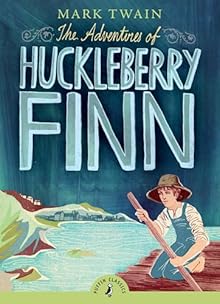
The Adventures of Huckleberry Finn by Mark Twain, 2008, Puffin Classics, originally published 1884 (Fiction Classics)


The Adventures of Huckleberry Finn is another story of racism in the Deep South, this time in the 1840s--the granddaddy of To Kill a Mockingbird, if you will. Huck Finn is a boy who, as the son of the town drunk, is allowed to live far from the reaches of polite society. This means that he’s free to do whatever he wants—fish in the river, sleep in the woods, answer to no one. When a wealthy widow decides to adopt him, Huck gives it his best shot and tries to mend his ways, even though the widow’s misguided kindness is almost more than he can bear. But when his unsavory father shows up again, Huck knows it’s time to hit the road—or in his case, the river, the mighty Mississippi that flows to freedom. And joining Huck in an even more desperate bid for an even more tangible freedom is Jim, a runaway slave who has no choice but to pin his hopes on a mere boy who, even if he is poor and “uncivilized,” is still the product of a society that sees very strongly in terms of black and white. Huck and Jim’s journey by raft downriver brings surprises for both of them—after encounters with crafty kings, feuding families, slave-hunters, and shipwrecks, it’s impossible to remain unchanged no matter how deeply the rules of their society are ingrained. Huck Finn’s story was written over one-hundred years ago; the language (particularly where race is concerned) is true to its time and has spurred non-stop controversy over the years. Author Mark Twain’s depictions of slavery, poverty, superstition, and ignorance reveal all the injustices of the pre-Civil War south, but Huck’s gradual realizations and understandings—not to mention his utterly original down-to-earth, literal, take-it-as-it-comes, comic observations—have made The Adventures of Huckleberry Finn a relevant, important, and completely entertaining work of literature.

The Curious Incident of the Dog in the Night-Time by Mark Haddon, 2003, Doubleday Books (Literary Fiction/ Mystery)


At fifteen years old, narrator Christopher Boone may be pushing the boundaries of childhood. But Christopher is also autistic, which means he’s even more socially awkward and emotionally distant than the average kid on the verge of adolescence. Christopher screams when he’s touched, refuses to eat brown or yellow foods, and takes everything at its face value. But he also copes extremely well (usually by doing math problems to relax) and when he is falsely accused of murdering his neighbor’s dog, Christopher’s supposed disability proves to be the best deductive tool of all. Armed with his innate (and at times obsessive) sense of logic, Christopher writes a book in order to solve the case. The result is a sparkling clear account of Christopher’s life, from his parents’ failed marriage to his own compulsions to the mysteries of his neighborhood to real insights into this boy’s unusual and unique view of the world. Christopher may not be able to understand anyone else’s emotions, but readers will feel very strongly about this truly authentic, even ground-breaking child narrator and his story.

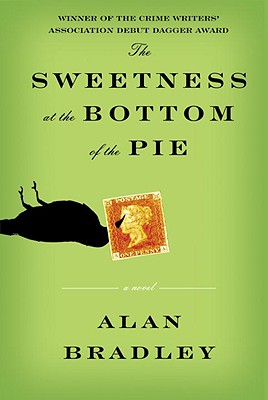
The Sweetness at the Bottom of the Pie by Alan Bradley, 2009, Delacorte Press (Historical Fiction/ Mystery)


Eleven-year-old Flavia de Luce is not the most loveable child. She’s sly, secretive, crafty, and her favorite hobby is concocting poisons in the upstairs laboratory of her old manor home. But Flavia is still more than capable of winning the hearts of her readers, armed as she is with an extensive vocabulary, a passion for chemistry, a knack for picking locks, and a childish confidence fostered by an unflappable determination. This means that when a dead bird with a postage stamp stuck through its beak is found on the doorstep, and a murdered man is found in the cucumber patch, Flavia is able to rise to the occasion like no detective, young or old, we’ve ever met before. Set in a small English village in the 1950s, The Sweetness at the Bottom of the Pie is peppered with characters who meet the standards of the classic mystery while adding their own bit of dash and pep to the story—the stoically amused police inspector, the devoted gardener with a mysterious past, the gossipy no-nonsense cook. Then there’s Flavia’s family—a deceased mother whose presence still lingers, a passive father who is most devoted to his stamp collection, and a pair of older sisters who cling to their own interests as obsessively as Flavia clings to her chemistry beakers and flasks. This is author Alan Bradley’s first book, and besides winning the prestigious Canadian Crime Writers’ Association Debut Dagger Award, The Sweetness at the Bottom of the Pie is, we’re delighted to learn, only the first in a planned series of mysteries that’s set to star this highly original girl sleuth.

Extremely Loud and Incredibly Close by Jonathon Safran Foer, 2005, Houghton Mifflin Harcourt Books (Literary Fiction)


In his bestselling debut novel Everything is Illuminated, author Jonathon Safran Foer told a tragic-comic tale about a dark period—World War II and the Holocaust. In his follow-up bestseller Extremely Loud and Incredibly Close, Foer does the same with a tragedy from the more recent past. His new hero, Oskar Schell, is the nine-year-old son of a man who died in the September 11th attacks at the World Trade Center. Struggling with his loss, Oskar maintains an offbeat sense of humor and an insatiable curiosity. When he finds a mysterious key in an envelope labeled “Black” in his father’s closet, Oskar sets out on a journey through New York City to interview every person with that last name—all 262 of them. As Oskar meets quirky character after quirky character, his story merges with those of his grandparents—his clinging, hoping grandmother who lives across the street and his long-absent, mute grandfather who survived a tragic event of his own. Oskar is aided on his journey by his many hobbies, including inventing, starring in Shakespearean plays, and letter-writing. He’s a brainy, daydreaming, worrywart whose story is scattered with black and white photographs, slangy kid-speak, and inventive uses of text like a two-page apology typed in numerical code. Jonathon Safran Foer is an extremely inventive and incredibly original writer, and sad though his story is at times (and there’s beauty there too), young Oskar is an irresistible narrator.

Paddy Clarke Ha Ha Ha by Roddy Doyle, 1994, Penguin Books (Fiction)


Paddy Clarke is a ten-year-old kid running rampant through the streets of Dublin suburb Barrytown with a pack of like-minded hooligans. Paddy and his mates Kevin, Liam, and Aidan write their names in wet cement, play cowboys and Indians, and hold funerals for dead rats. They tease Paddy’s brother, Sinbad, since it’s a requirement that big brothers hate their little siblings. Paddy is a hard nut to crack; though he seems the typical rough and rowdy, wannabe tough-guy boy, his thoughts, dreams, and observations of life in working-class Ireland in the 1960s reveal a keen power of observation and insight. At night, after Paddy and his gang have run amuck through the neighborhood construction sites that are their playgrounds, Paddy listens for the sounds of his parents fighting. He’s grown-up enough to know that their marriage is on the outs, and still childish enough to believe that if he stays vigilantly awake while they argue, his da won’t leave his ma after all. That combination of grown-up awareness and boyish innocence is what makes Paddy Clarke Ha Ha Ha so charming, along with author Roddy Doyle’s infamous and by now well-loved use of Irish slang and speech patterns, use of dark humor, and his vivid portrait of a little boy’s unique point-of-view. First published in 1993 in the U.K., Paddy Clarke Ha Ha Ha won that year’s prestigious Booker Prize.

The Color Purple by Alice Walker, 1992, Harcourt Books, originally published 1982 (Literary Fiction/ Historical Fiction)


The heroine of author Alice Walker’s Pulitzer Prize-winning novel is Celie, a young black girl in the deep south of the early 1920s. When the story begins, Celie is little more than a child, a fourteen-year-old who has already lived a life harsher than that of most adults in her time. Celie only escapes the rape and abuse of her stepfather when she is sold off as child-bride to the widowed “Mister,” a cruel man who expects her to raise his children and serve as his own private punching bag when he’s not off with his blues-singing, independent-minded mistress Shug Avery. Yes, this is a brutal story, but Celie (and the reader) find hope and comfort in the letters Celie writes, first to God (she has no one else to turn to) and later to her sister, Nettie, who’s been taken to Africa by a missionary family. The letters between the sisters form a striking contrast. Celie is poverty-stricken and writes in a limited—but ultimately expressive and hopeful—vocabulary, while Nettie has received an education and relates stories of a meaningful life in a faraway land. Words can only do so much to inspire Celie, but as the years pass, Celie is about to forge an unlikely and inspiring relationship with an unexpected friend. As Celie struggles to grow from childish, helpless victim to independent, free woman, her narrative voice becomes stronger and ultimately elegant in spite of—or perhaps because of—her natural uneducated, barely literate dialect, which Alice Walker renders in truly gracefully prose. The Color Purple is a painful story, but it’s a redeeming one as well.

St. Lucy’s Home for Girls Raised by Werewolves by Karen Russell, 2006, Knopf Books (Fiction/ Short Stories) 


Karen Russell’s ten short stories in this collection are narrated by children. And oh, what strange little children these are. In “Haunting Olivia,” Timothy Sparrow and his brother Waldo Swallow take turns wearing a pair of pink goggles to search Gannon’s Boat Graveyard for the ghost of their dead sister, Olivia Lark, while their parents escape from grief and marital problems by touring Third World countries. Jacob, in “from Children’s Reminiscences of the Westward Migration,” is the son of a Minotaur. When his family decides to move west, they hitch dear old dad to the wagon and set out for the great unknown, where Jacob’s father performs legendary feats of strength and usefulness on the trail, and is then accused of spreading lice to the children and titillating the cows. And in the whimsical title story, the daughters of werewolves are taken from their caves, renamed (GWARR! becomes Jeanette, for example), and taught how to behave in polite society, though there’s a part of them that would still rather run and howl and bite and scratch and snarl. Odd, quirky, and fanciful, these stories are still full of all the stuff and drama of real life. Things are not easily resolved in these stories; growing up is not a straight-forward, straight-laced business after all. Russell’s children are misfits who live in macabre worlds that are part myth; the stories they tell are strange and wonderful and entirely original. Even though the tales in St. Lucy’s Home for Girls Raised by Werewolves are fantastic in nature, they perfectly reveal the insightful glimmers of real life and the overwhelming imaginative powers that all children possess.